The Complete Standard for Building and Automating Clinic and Medical Center Systems
Medical systems vary depending on whether the organization is a single-doctor practice, clinic, medical center, hospital, or branch network. Medical data also requires stricter privacy and security controls than most business systems.
Level 1: Website and Booking
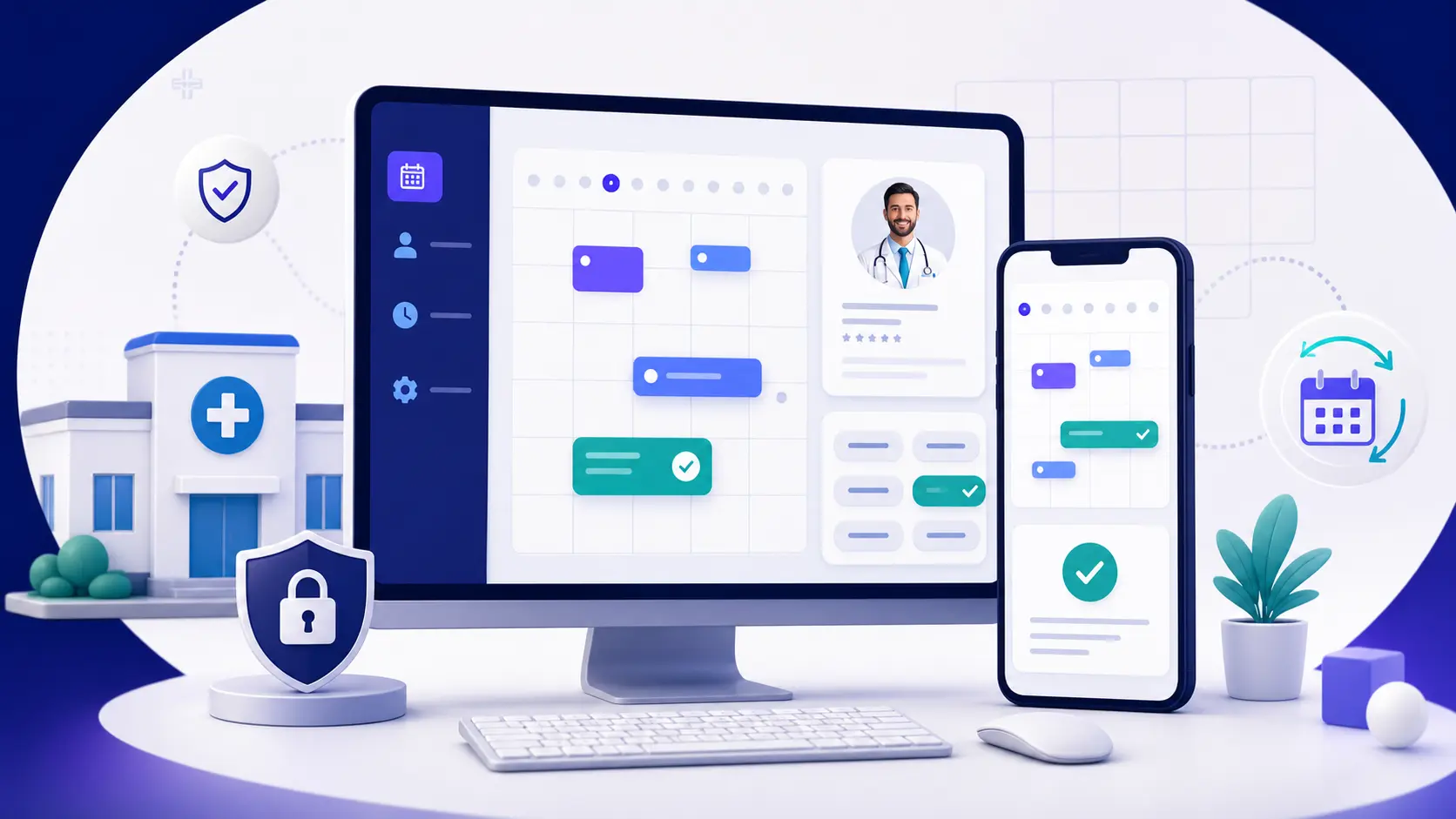
- Doctors.
- Specialties.
- Services.
- Clinic information.
- Appointment requests.
- Contact.
- Location.
Level 2: Appointment and Patient Management
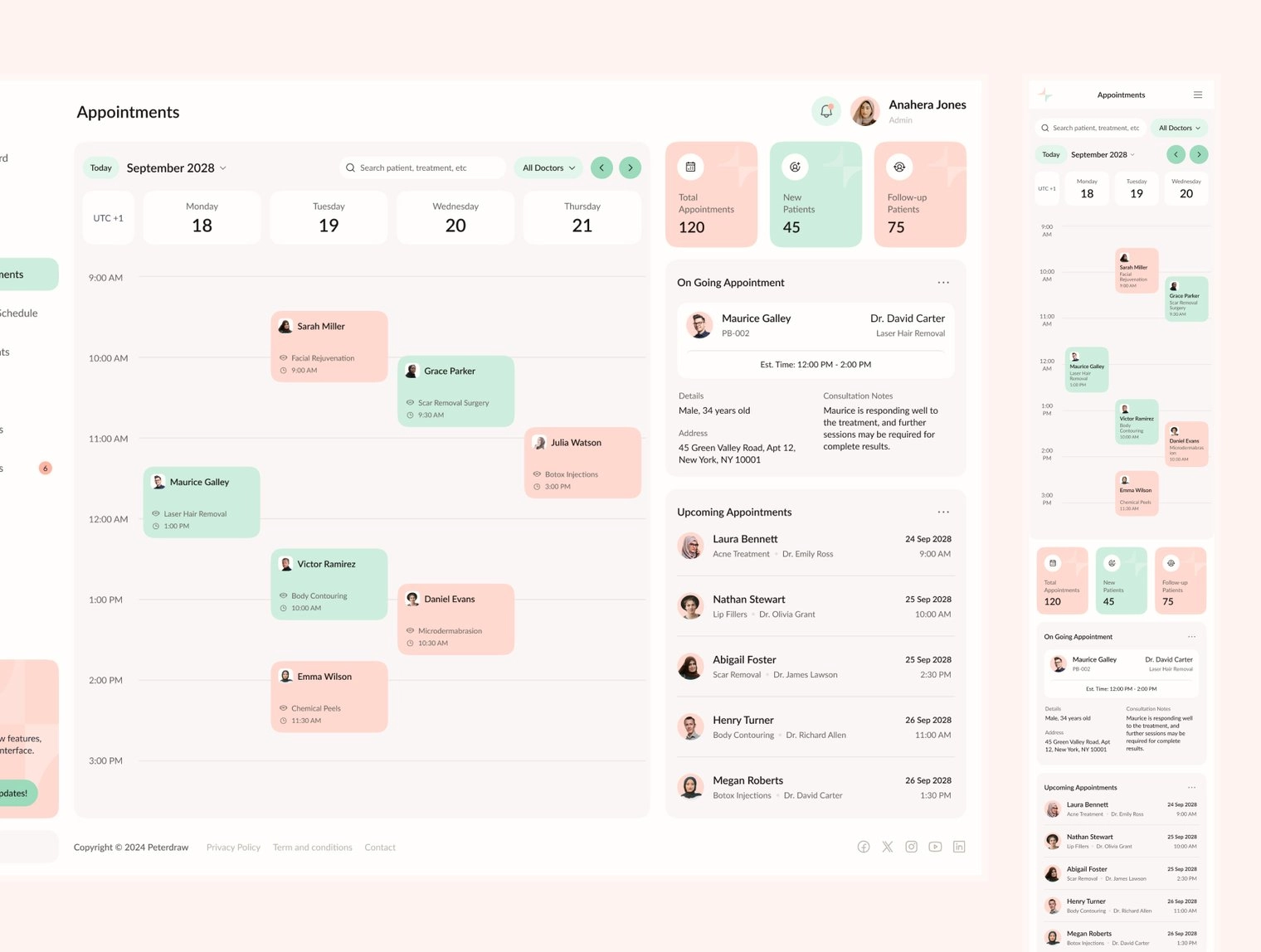

Centralized scheduling and patient management reduce administrative workload and improve continuity of care.
Appointment statuses may include Requested, Confirmed, Arrived, In Progress, Completed, Cancelled, and No Show.
Patient records may include identity information, contact details, emergency contacts, medical history, allergies, and previous visits.
Medical Records
- Diagnoses.
- Clinical notes.
- Prescriptions.
- Lab results.
- Imaging.
- Procedures.
- Attachments.
Permissions should be tightly controlled.
Level 3: Clinic Operations

A typical patient journey is Booking → Arrival → Check-in → Doctor → Diagnosis → Treatment → Billing → Follow-up.

Integrated healthcare systems connect clinical workflows with billing, diagnostics, inventory, and follow-up.
Appointment Reminders
Automated SMS or WhatsApp reminders can reduce no-shows.
Prescriptions
Manage medication, dosage, duration, and instructions.
Laboratory and Imaging
Integrate orders, results, and external diagnostic centers where required.
Level 4: Billing and Insurance

- Services.
- Prices.
- Invoices.
- Payments.
- Insurance providers.
- Coverage.
- Claims.
Branches and Medical Inventory
Multi-branch centers may need branch, doctor, room, device, and schedule management. Medical inventory can include medicines, consumables, expiry dates, and batch numbers.
Analytics
- Appointment utilization.
- No-show rate.
- Revenue per doctor.
- Revenue per specialty.
- Patient retention.
- Average waiting time.
Artificial Intelligence
AI can assist with note summarization, transcription, administrative coding, appointment prioritization, and patient communication. High-impact medical decisions should remain under qualified professional oversight.
Multi-Clinic Platform
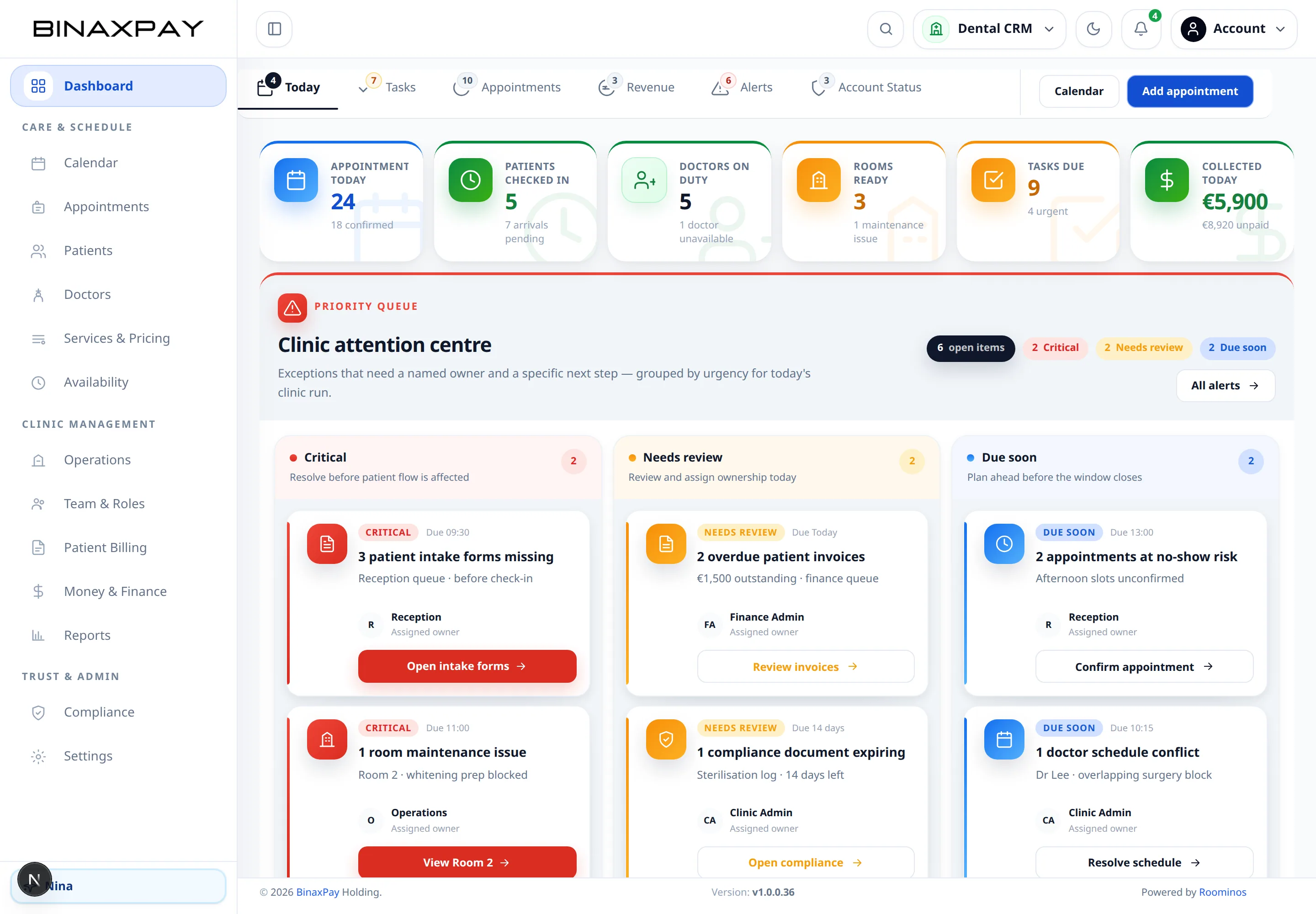
Multi-clinic platforms may support tenants, branches, doctor accounts, patient portals, subscriptions, and centralized billing.
Security and Privacy
- Encryption.
- Access control.
- Audit logs.
- Consent.
- Session controls.
- Data retention.
- Backups.
- Disaster recovery.
- MFA where appropriate.
Conclusion
The maturity path is: Doctor Profile + Booking → Appointments → Patient Records → Medical Records → Billing → Insurance → Inventory → Analytics → AI Assistance → Multi-Clinic Platform.