
AI Is Exposing the Real Limits of Enterprise Cloud Strategy
What happens when the technology that promised to make your business limitless suddenly hits a wall? Why are enterprises that invested heavily in cloud computing now finding that their AI ambitions are outgrowing their infrastructure? How can leaders adapt their cloud strategy to thrive in an era where data and compute demands are exploding beyond any previous projection? These are the pressing questions that every CIO, CTO, and digital transformation leader must confront in 2025. The reality is that artificial intelligence is not just another workload to be shoved into the existing cloud framework—it is a fundamental disruptor that is exposing the architectural, financial, and operational limits of how enterprises have approached the cloud over the past decade.
For years, the mantra was simple: move everything to the cloud, scale elastically, and pay only for what you use. But as AI models grow larger, training datasets become more complex, and inference demands surge, the cracks are appearing. Legacy assumptions about data gravity, network latency, and even the geographic distribution of workloads are being challenged. Enterprises are discovering that their cloud strategy, built for the era of web applications and databases, is not equipped for the era of generative AI, deep learning, and real-time analytics. This article delves into the technical and strategic reasons behind this upheaval, offering a roadmap for organizations to reinvent their approach before they are left behind.
The New Physics of AI: Data Gravity and Latency
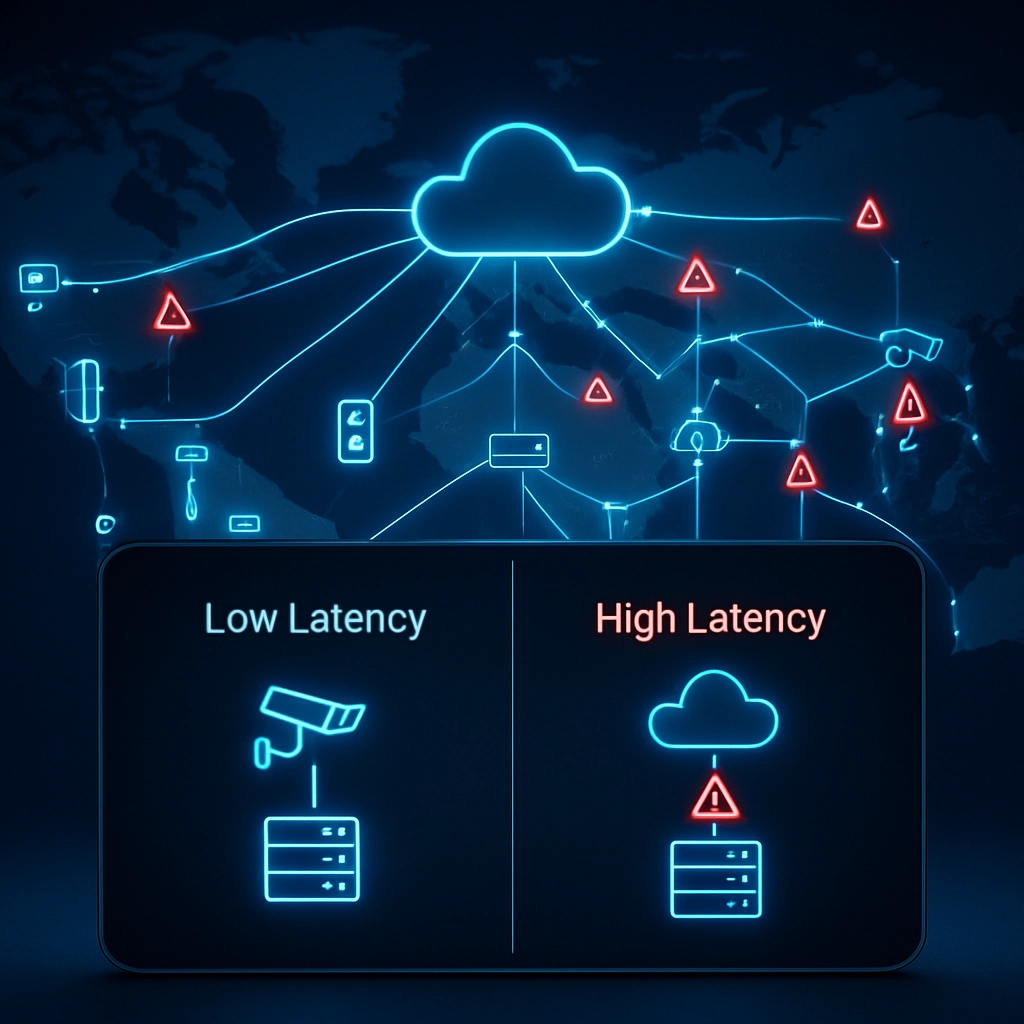
The first major limit is physical. AI, especially in its most powerful forms, thrives on data locality and minimal latency. Traditional enterprise cloud strategies often rely on centralized regions—a few hyperscale data centers in the US, Europe, and Asia—that serve as the backbone for all applications. But AI workloads, particularly for training and real-time inference, demand immense bandwidth and microsecond-level response times. When data has to travel from a user’s device to a distant cloud region and back, the latency can be catastrophic for applications like autonomous vehicles, industrial robots, or real-time fraud detection.
Moreover, the sheer volume of data generated by edge devices, IoT sensors, and customer interactions is growing exponentially. Transferring all this data to a central cloud for processing is not only slow but also incredibly expensive in terms of network egress fees. The result is a growing mismatch: your cloud strategy seeks to consolidate, while AI pushes for distribution. This is why we are seeing a rise in edge computing and hybrid architectures, but even these are band-aids on a deeper problem.
Consider a practical example: A global manufacturer implementing AI-powered quality control on its production lines. The AI vision models need to analyze high-resolution images in real-time, comparing them against defect patterns. If the data must be sent to a cloud server 500 miles away, the delay could mean thousands of defective products slipping through every hour. The enterprise’s existing cloud strategy, which routes everything through a central hub, becomes a bottleneck. In response, the company must deploy mini data centers at each factory, running virtualized AI servers with on-premises processing capabilities—a fundamental shift in cloud philosophy that many CIOs are unprepared for.
Thus, the question is not whether to use the cloud, but where to put the cloud. The answer lies in a distributed model, but that model requires a new way of thinking about networking, security, and data governance—areas that have traditionally been centralized.
The Cost Conundrum: AI's Insatiable Appetite for Compute
Why are CFOs suddenly sweating over cloud budgets? Because AI, particularly training large models, is a compute monster. A single training run for a state-of-the-art language model can consume thousands of GPU hours, costing millions of dollars in cloud resources. The pay-per-use model that made cloud computing so attractive for traditional workloads becomes a double-edged sword for AI. If you are iterating on a model daily, or even hourly, the costs spiral out of control. The elasticity that allows you to scale up instantly also allows your bill to scale up just as quickly.
Furthermore, AI workloads often require specialized hardware—GPUs, TPUs, or AI accelerators—which are not always available in sufficient quantities or at competitive prices in public clouds. The recent global GPU shortage, driven by the AI boom, has left many enterprises unable to procure the necessary compute, regardless of their budget. This is forcing a rethink: instead of relying solely on public cloud, enterprises are now considering a mix of on-premise GPU clusters, co-location facilities, and spot instances from multiple cloud providers to secure capacity.
Real-world data point: A leading financial services firm discovered that their AI fraud detection system, which runs millions of real-time predictions per minute, was consuming 30% of their entire cloud capacity and costing them over $40 million annually in compute costs alone. By analyzing the cost breakdown, they realized that inference (the act of running the model after training) was the biggest expense, not training. This led them to design a hybrid strategy where they purchased dedicated on-premises inference servers for the core banking channels, while using the cloud for burstable training jobs and seasonal peaks. This approach cut their AI-related cloud bill by 55% and improved performance due to reduced latency.
The key takeaway is that the financial calculus of cloud computing changes with AI. Financial modeling must account for not just storage and bandwidth, but also the burn rate of specialized compute. CIOs must develop a 'compute unit economy'—understanding the cost per AI prediction, per training epoch, and per inference request—to make rational decisions about where to run what workload. Without this, cloud spending on AI becomes a black hole.
Strategic CapEx vs. OpEx
The cloud's promise was to shift from capital expenditure (CapEx) to operational expenditure (OpEx), but AI is forcing a revisit. The unpredictability of AI costs, combined with the shortage of specialized hardware, is making many enterprises reconsider long-term leases on AI infrastructure. The challenge is that AI hardware becomes obsolete quickly, but committing to a two-year contract for a GPU cluster could be a wise financial hedge if you have stable, high-usage workloads. The decision between buying and renting is becoming a delicate balancing act that requires sophisticated forecasting.
The Operational Nightmare: Orchestrating Multi-Cloud AI
How do you manage AI workloads that span multiple clouds, edge locations, and on-premises data centers? Traditional cloud strategies relied on a single provider’s native tools, making orchestration straightforward. But AI introduces a new layer of complexity: data pipelines that need to move terabytes of data across environments, model training that may need to be split across different vendors, and inference engines that must always be available and fault-tolerant. This is what we call the 'orchestration nightmare.'
Enterprises that have embraced a multi-cloud approach for AI—to avoid vendor lock-in and to access specialized accelerators from different providers—are now facing significant operational challenges. Each cloud has its own API, its own security model, and its own data management tools. Ensuring that a training job can seamlessly failover from AWS to Azure, or that a model deployed in Google Cloud can rely on data stored in an on-premise Hadoop cluster, is a monumental engineering task. The orchestration layer becomes a software project in itself, often requiring Kubernetes-based platforms that are not yet mature for AI-specific workloads.
A practical example: A healthcare startup building a diagnostic AI model needed to process patient data, which had to remain on-premise due to compliance. They trained the model in a public cloud using de-identified data, but then needed to fine-tune the model on site with the full dataset. The process of setting up a secure, high-bandwidth connection between the on-premise GPU server and the cloud training cluster, combined with coordinating the two different environments, took their team three weeks to get right. Even then, any change in the cloud provider’s API caused disruptions. This is a common story—the operational overhead of AI in a hybrid/multi-cloud setup is drastically underestimated.
To solve this, enterprises need a new kind of abstraction—a 'workload orchestration platform' that can define AI tasks independent of the underlying infrastructure. This requires investment in Kubernetes with AI-specific operators, or adopting emerging platforms like Ray or Kubeflow. Yet, even with these tools, the burden of managing data flow, model versioning, and observability across multiple clouds remains a serious challenge that many IT teams lack the skills to handle.

The Security and Compliance Paradox
AI is not just a technical challenge; it is a governance nightmare. The cloud was already a concern for compliance officers, but AI amplifies these issues exponentially. Training data often includes sensitive personal information, model weights can contain hidden biases, and the output of AI models can be unpredictable. Where does the data reside? Which cloud provider is processing it? Is the model being used in compliance with data residency laws? These questions are harder to answer when your AI workloads are distributed across a multi-cloud environment.
Moreover, AI introduces new attack vectors. Adversarial attacks can fool models, data poisoning can corrupt training sets, and model inversion attacks can extract information from models. Traditional cloud security tools are not designed to handle these AI-specific threats. Enterprises are forced to build overlapping security layers—encryption at rest and in transit, differential privacy, federated learning, and secure enclaves—which add latency and reduce performance. This creates a paradox: the more you secure your AI, the less efficient it becomes, and the more it costs.
Regulatory pressure: The European Union’s AI Act, along with similar legislation in other regions, is imposing strict requirements on AI systems, especially those in high-risk sectors like healthcare and finance. This means that enterprises must be able to prove how their AI models were trained, what data was used, and how decisions are made. This 'explainability' requirement is nearly impossible to achieve when models are running across distributed clouds with data moving through various jurisdictions. CIOs are now facing the reality that their cloud strategy must be rewritten to ensure compliance, not just with traditional data laws, but with AI-specific regulations that are still evolving.
To navigate this, enterprises must implement a centralized 'AI governance' function that sits alongside their cloud architecture. This includes a data catalog that tracks data lineage across clouds, model registries that version and validate models, and continuous compliance scanning. The complexity is daunting, but those who embrace it will gain a competitive advantage by building trust with both regulators and customers.
Innovation at the Edge: The New Frontier for Cloud Strategy
Why is the future of enterprise cloud strategy not in the cloud at all, but at the edge? Because AI is shifting from centralized model training to distributed edge inference. In 2025, we are seeing a massive move toward 'tiny ML' and 'edge AI' where models are deployed directly on devices—smartphones, industrial controllers, smart cameras—to reduce latency and ensure privacy. This is not a replacement for the cloud, but a reimagination of it. The cloud becomes the training school, while the edge becomes the workplace.
This shift requires a new architectural paradigm: edge-to-cloud MLOps. Models must be continuously updated, shipped to thousands of edge devices, and monitored for performance and drift. This is a logistical nightmare that goes beyond simple deployment; it requires robust over-the-air update mechanisms, version control for models on devices, and sophisticated remote monitoring. Enterprises that thought they had mastered cloud DevOps are now realizing that AI at the edge is a completely different beast.
Real-world illustration: A retail chain deploying AI-powered shelf-monitoring cameras in hundreds of stores. Each camera runs a model that detects stockouts and misplacements. Initially, the model was trained in the cloud, but after deployment, the local conditions—lighting, store layouts—differed, causing accuracy drops. The team had to set up a continuous feedback loop where each camera sends 'edge-specific' data back to the cloud for fine-tuning, then receives an updated model regularly. This process, which spans cloud, edge, and network, must be completely automated to avoid manual intervention. The enterprise had to invest in a dedicated MLOps pipeline that could handle model distribution and updates across 1,000+ locations, and that integrated with their existing cloud infrastructure to manage the feedback data.
The consequences are profound: your cloud strategy must now include a strategy for managing a fleet of AI devices. This includes network connectivity planning (5G, Wi-Fi 6, or even satellite), data storage on the edge, and security protocols that protect both the device and the data. The cloud is no longer a destination but a control plane that orchestrates intelligence across a distributed network.

Redefining the Cloud Strategy: A Roadmap for 2025 and Beyond
So, what is the way forward? The answer is not to abandon the cloud, but to evolve it into something more flexible, cost-aware, and distributed. The first step is to conduct an 'AI workload audit' to classify every AI application in your portfolio based on its latency sensitivity, data residency requirements, compute density, and cost predictability. This audit will tell you which workloads should stay in the public cloud, which should be moved to on-premises or co-located facilities, and which should be pushed to the edge.
Next, you must design a 'hybrid multi-cloud' architecture that treats the cloud as a collection of capabilities, not a single destination. This involves building a common set of APIs for storage, compute, and networking that can be abstracted across vendors. Use Kubernetes or a similar orchestration tool as the foundation, and invest in a data fabric that enables seamless data movement and management across all environments. This architecture should be designed with AI in mind, meaning it must support GPU sharing, high-speed data transfers (infiniBand or modern ethernet), and low-latency links to edge devices.
Finally, you must invest in a 'FinOps for AI' program that provides real-time visibility into compute costs. Use unit economics to monitor the cost per training run, per inference, and per edge prediction. This data will empower you to make decisions on when to buy vs. rent, and which cloud provider to use for specific workloads. In addition, build a strong 'AI governance' layer that ensures compliance, security, and model lifecycle management is consistent across all environments. This is a significant investment, but it is necessary to prevent chaos.
Embrace the New Paradigm
The limitations exposed by AI are not a death knell for cloud computing; they are a catalyst for a more mature, nuanced, and powerful approach. The successful enterprises will be those that treat the cloud as a dynamic ecosystem, not a static architecture. They will embrace edge computing, adopt multi-cloud orchestration, and master the financial and operational complexities that come with it. The era of 'lift and shift' is over; the era of 'intelligent distribution' has begun. Every CIO must ask themselves: Is your cloud strategy a source of innovation, or a bottleneck to it? The time to answer this is now.

In summary, AI is not just a challenge to your cloud strategy; it is a mirror that reflects all its weaknesses. From data gravity and cost to orchestration and security, the issues are real and pressing. However, with a thoughtful, evolutionary approach, you can turn these limits into opportunities for innovation and resilience. The future belongs to those who can navigate the new landscape, where the cloud is everywhere, but nowhere in particular, and the key to success lies not in the infrastructure itself, but in how you orchestrate it.