What Is the New Recipe for Enterprise AI Success? Why Are Chipmakers and Service Giants Joining Forces?
In the rapidly evolving landscape of modern business, a fundamental question is being asked in boardrooms and IT departments alike: What does it take to move Artificial Intelligence from a promising experiment to a core engine of the corporation? More importantly, How can enterprises ensure a tangible Return on Investment (ROI) from their AI initiatives? And finally, Why are partnerships between hardware titans and global service providers becoming the new standard for achieving this?
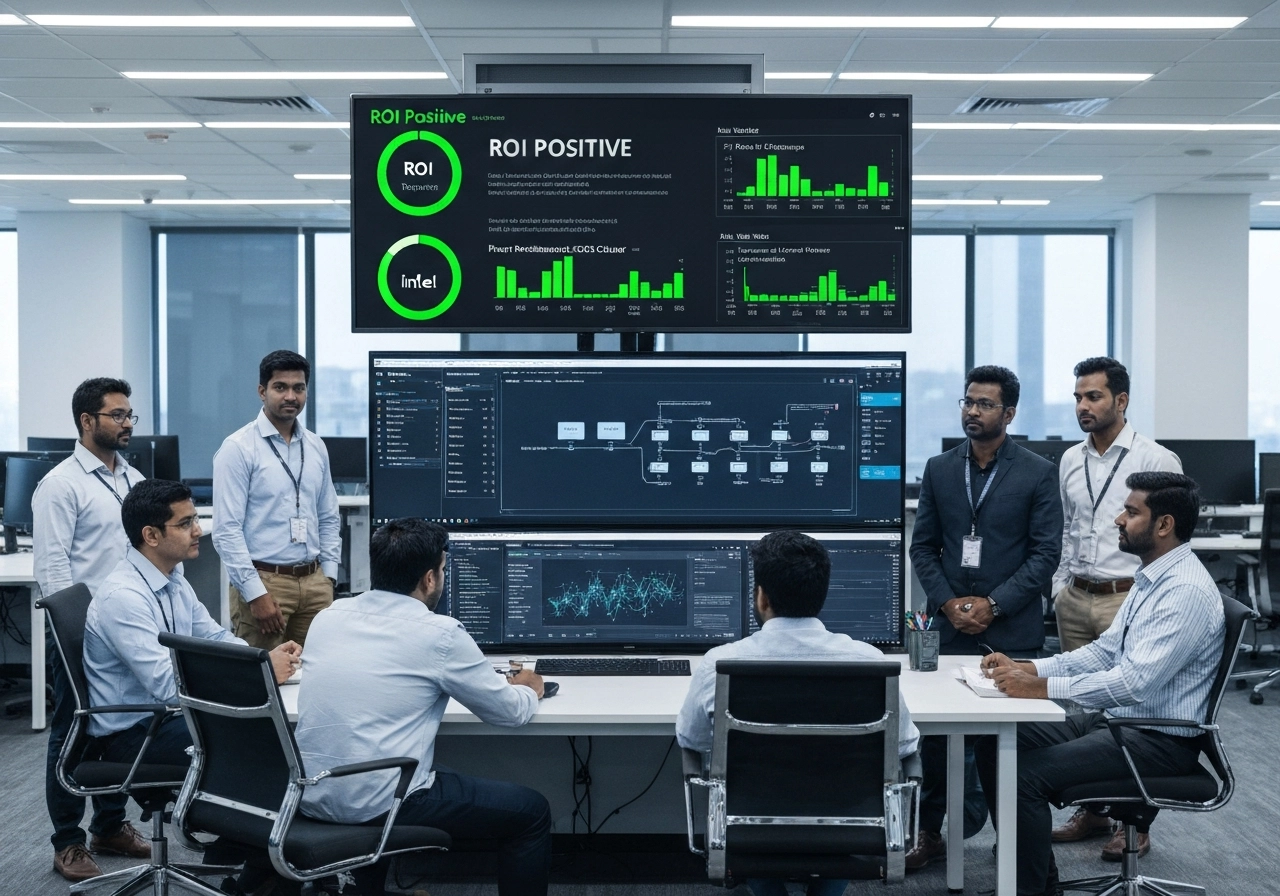
The answer to these questions is reshaping the entire tech industry. For years, AI was largely the domain of data scientists and cloud-native startups. However, the enterprise is a different beast. It requires massive scalability, extreme reliability, robust security, and, above all, a clear path to profitability. A recent collaboration between Wipro, a global leader in information technology, consulting, and business process services, and Intel, the world’s largest semiconductor chip manufacturer, provides a powerful case study for this new paradigm. Their focus is not just on deploying AI, but on delivering what they call 'ROI-first AI for the Enterprise.' This article delves into the mechanics, implications, and real-world impact of this strategic alliance.
The core premise is simple yet revolutionary: Hardware and software must be co-optimized for business outcomes. Wipro brings deep domain expertise in enterprise systems, application development, and business process management. Intel provides the foundational silicon—from advanced Xeon processors to specialized AI accelerators like the Gaudi line and FPGAs. Together, they are engineering solutions that start with a business problem, not a technical spec sheet.
Section 1: The Evolution of AI in the Enterprise – From Pilot to Production
The journey of enterprise AI can be divided into two distinct eras. The first era was characterized by exploration. Companies conducted countless proof-of-concepts (POCs) to predict customer churn, optimize supply chains, or automate back-office tasks. While many POCs showed promise in a sandboxed environment, they often failed to scale into production systems that could handle real-world data volumes and latency requirements. This created what is commonly known as the 'AI chasm'—a gap between a successful demo and a profitable deployment.
The second era, which we are entering now, is defined by a production-first mentality. This is the era of Wipro and Intel’s collaboration. The focus has shifted from 'Can we do it?' to 'How do we do it profitably and securely at scale?' This shift requires a fundamental rethinking of the entire technology stack, from the chip up to the cloud.
Real-World Application: Consider a global financial institution processing millions of transactions per second. A traditional AI model for fraud detection, running on a general-purpose server, might take 100 milliseconds to analyze a transaction. While fast, this introduces unacceptable latency in a high-frequency trading environment. By leveraging Intel’s DL Boost technology integrated directly into Xeon processors and Wipro’s optimized inference software, the same analysis can be completed in under 10 milliseconds, allowing for real-time action without compromising security.
This optimization is not a minor upgrade; it is a paradigm shift. It means that AI workloads are no longer bolted onto existing systems. Instead, the underlying platform is architected specifically to accelerate them, leading to lower total cost of ownership (TCO) and faster time-to-value.
Section 2: The ROI-First Framework – Redefining Success Metrics
The 'ROI-first' approach championed by Wipro and Intel is a direct response to the failure of previous AI projects. Historically, companies invested in AI infrastructure hoping for abstract benefits. The ROI-first framework flips this, demanding that every AI initiative be tied to a specific, measurable business KPI before a single dollar is spent. This could be cost reduction in manufacturing, revenue increase from personalized recommendations, or risk mitigation in compliance.
This framework operates on three core principles:
- Solution Co-creation: Engineers from Wipro and Intel work directly with client teams to define the problem. They map the business requirement to a specific AI workload and then design the optimal hardware-software stack to execute that workload. This eliminates the 'hammer looking for a nail' syndrome.
- Bottleneck Analysis: A deep dive into the client’s existing data pipeline is performed. The partners identify if the bottleneck is in data ingestion (I/O), model training (compute), or model inference (latency). Based on this, they recommend the right mix of Intel hardware—from high-memory Xeons for large language models to Gaudi accelerators for high-throughput training.
- Outcome-Based Roadmap: The final output is not just a technical proposal, but a business case. It includes projected cost savings, increased throughput, and a timeline for achieving a positive ROI. The client can see exactly when the investment will break even and begin generating profit.
Practical Example: A large industrial manufacturer wants to use computer vision to detect defects in assembly lines. Instead of buying a generic GPU server, Wipro and Intel conduct a site assessment. They discover the current bottleneck is not processing power, but the speed of feeding high-definition images from the 50 cameras to the server. The solution involves deploying Intel OpenVINO toolkit to optimize the model for inference on edge devices (powered by Intel Core processors) directly at the camera, sending only anomaly data to the central server. This reduces network load by 90% and cuts inference latency from 500ms to 15ms, directly resulting in a 50% reduction in scrap rate and a clear ROI within 6 months.
Section 3: The Hardware Advantage – Intel’s Full Stack Silicon Strategy
Intel’s contribution to this partnership goes far beyond a single processor. The company has evolved its silicon strategy to offer a heterogeneous computing platform tailored for the diverse needs of AI. Wipro leverages this breadth to build bespoke solutions.
3.1 The Foundation: Intel Xeon Scalable Processors
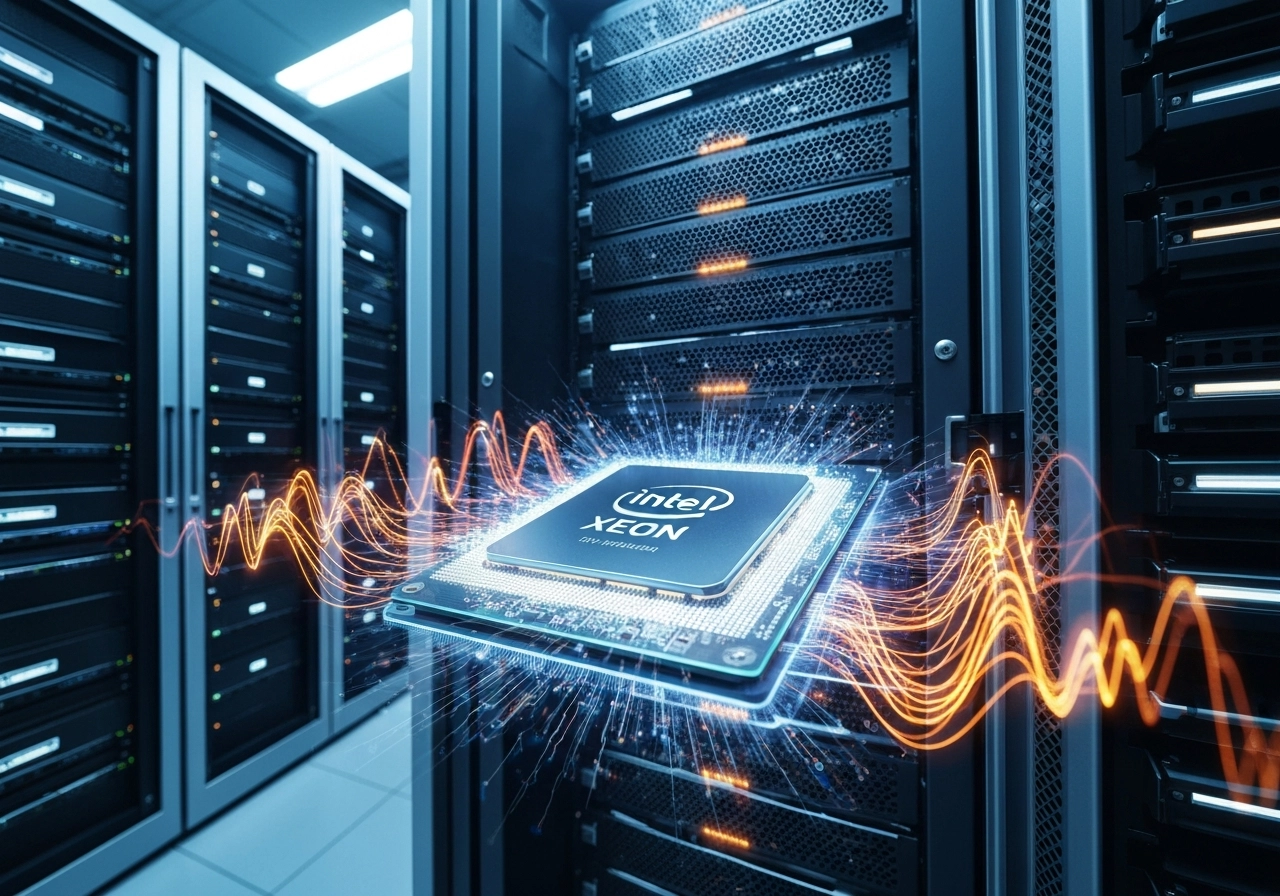
The latest 4th and 5th Gen Intel Xeon processors are not just CPUs anymore. They come with built-in AI accelerators like Advanced Matrix Extensions (AMX). This allows them to handle many inferencing tasks that previously required a separate GPU, dramatically simplifying the infrastructure and reducing power consumption. For enterprise applications like NLP for a chatbot or real-time sentiment analysis, this is a game-changer.
3.2 The Accelerators: Intel Gaudi and Habana Labs
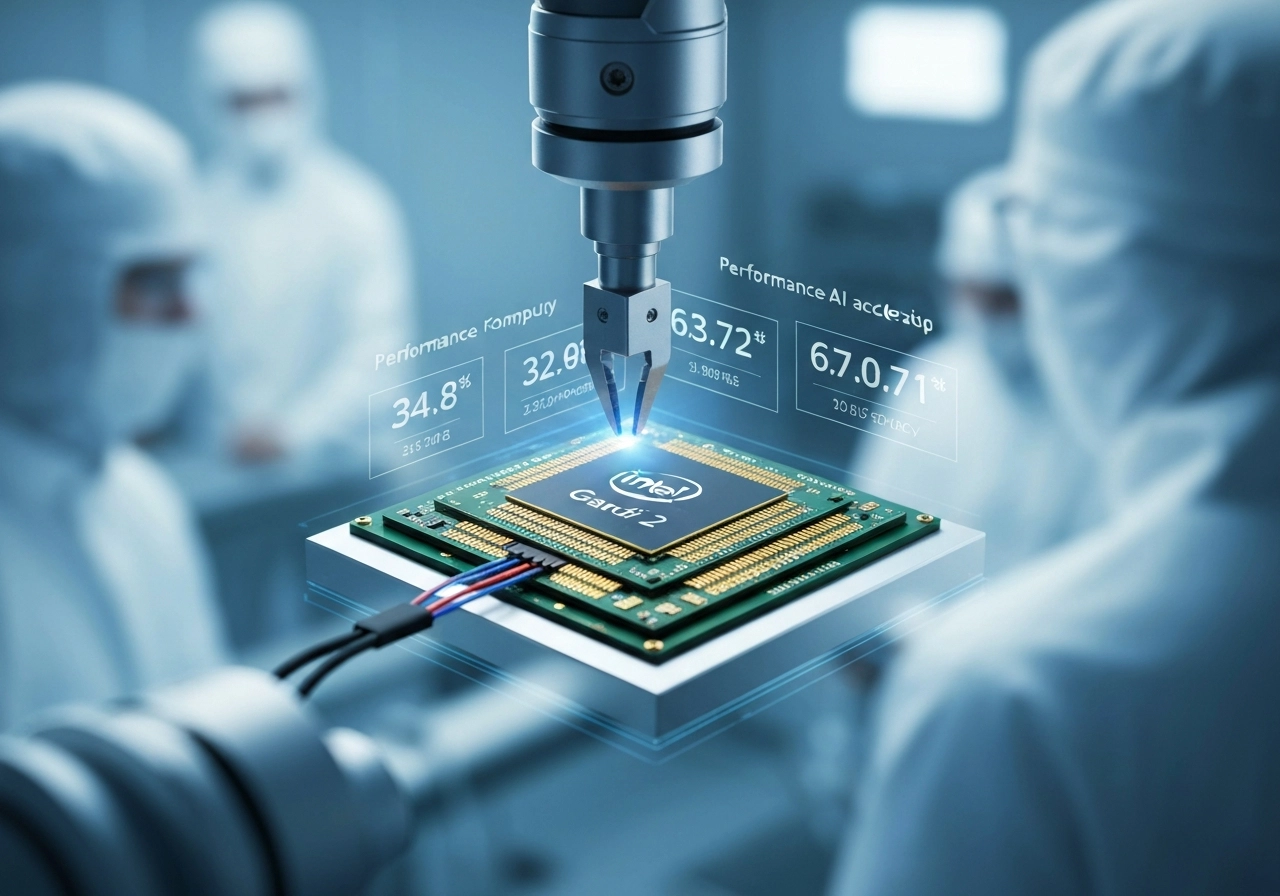
For the heavy lifting of training large-scale models, Intel acquired Habana Labs, now producing the Gaudi 2 and Gaudi 3 AI accelerators. These are designed from the ground up for deep learning, offering a compelling price-to-performance ratio versus NVIDIA GPUs. Wipro is one of the first major integrators to build enterprise-ready AI supercomputing clusters around Gaudi, offering clients a powerful alternative in a market often dominated by one player.
3.3 The Edge: Intel Core and Xeon D
As seen in the manufacturing example, not all AI happens in the cloud. For real-time decisions, AI must run at the edge—on a factory floor, a retail store, or a medical device. Intel’s broad portfolio includes low-power Core processors and ruggedized Xeon D processors that can run optimized AI models locally, ensuring low latency and data privacy.
Section 4: Wipro’s Orchestration – The Service Layer for Success
Having the best silicon is useless without the expertise to deploy it. This is where Wipro’s global delivery model and deep consultancy come into play. Wipro brings three crucial capabilities to the table.
4.1 The Wipro AI Accelerator Platform
Wipro has developed its own proprietary platform, the Wipro AI Accelerator, which acts as a middleware layer. It abstracts away the complexity of the underlying Intel hardware, allowing data scientists to deploy models without needing to be hardware experts. It handles model optimization, orchestration, and scaling automatically across different Intel architectures (Xeon for inference, Gaudi for training). This dramatically speeds up the deployment cycle from months to weeks.
4.2 Domain-Specific Solutions
A retailer has different AI needs than a healthcare provider. Wipro has packaged its expertise into pre-built solutions for specific industries. For example, in the healthcare sector, a joint solution with Intel allows for the analysis of medical imaging (MRI, CT scans) using AI models optimized on Xeon processors, deployed in a HIPAA-compliant environment. In banking, it focuses on real-time fraud detection and regulatory reporting automation.
4.3 The Wipro C3Lab (Cloud, Captech, Consulting)
Wipro’s internal innovation hub, the C3Lab, serves as the R&D engine for this partnership. Here, engineers from both companies work on proof-of-concepts for emerging technologies, such as Large Language Models (LLMs) for enterprise knowledge management. They are constantly refining the ROI-first framework by testing new Intel hardware and software stacks against real-world enterprise data sets.
Real-World Impact: An energy company wanted to use machine learning to predict equipment failure in wind turbines. Wipro used its Accelerator platform to take the client's bespoke ML model and optimize it for Intel Xeon processors. They then deployed the optimized model on edge gateways (using Intel Atom processors) at each turbine. The result was a 40% reduction in unplanned downtime and a 15% increase in energy output due to better predictive maintenance. The ROI was realized within the first year.
Section 5: The Future of Enterprise AI – Scalable, Secure, and Sustainable
Looking ahead, the Wipro-Intel partnership is positioning itself to tackle the next grand challenges of enterprise AI. Three trends are particularly notable.
5.1 Generative AI for the Enterprise
While everyone talks about consumer-grade LLMs like ChatGPT, the enterprise needs secure, private, and controllable models. Wipro is working on 'EnterpriseGPT' solutions powered by Intel hardware. They are building Retrieval-Augmented Generation (RAG) architectures that allow companies to train a model on their own proprietary data (technical manuals, customer records, legal documents) without sending that data to a third-party cloud. This ensures data sovereignty and compliance.
5.2 Sustainability and Green AI
Power consumption is a massive concern for AI data centers. The ROI-first framework now includes a 'Green ROI' component. By using Intel’s most power-efficient accelerators and Wipro’s optimized software that reduces the number of compute cycles needed for a task, companies can significantly lower their carbon footprint. Intel’s Xeon processors with built-in accelerators are inherently more energy-efficient for inference than using a separate, power-hungry GPU.
5.3 The Software-Defined Data Center
Finally, the partnership is enabling the software-defined data center for AI. Using tools like Kubernetes, Intel’s oneAPI, and Wipro’s orchestration platform, compute resources (Xeon CPUs, Gaudi accelerators, FPGAs) can be dynamically allocated to different AI workloads based on real-time demand. This ensures that hardware is never idle, maximizing utilization and further improving ROI.

Conclusion: The New Standard for AI Investment
The collaboration between Wipro and Intel represents a mature, pragmatic, and highly effective approach to enterprise AI. It moves beyond the hype of algorithms and focuses on the brutal realities of deployment, cost, and business value. By asking the questions 'What is the problem?', 'How do we solve it profitably?', and 'Why this hardware?', they have created a framework that offers a clear path to success.
For the C-suite executive, this partnership provides a blueprint for AI investment. It demonstrates that AI is not just a project for the IT department, but a company-wide business strategy. By co-creating solutions with specialists who understand both the chip and the business process, companies can avoid the common pitfalls of the AI chasm and enter a new era of predictable, profitable innovation.
The era of 'Think Big, Start Small, Show ROI' is truly here. Wipro and Intel are not just building chips and writing code; they are building the very engine of the intelligent enterprise.