
How Australian CIOs Can Unlock the Agentic AI Advantage
What is the next frontier in artificial intelligence that promises to redefine how businesses operate? Why are Australian CIOs uniquely positioned to harness this transformation? How can they strategically deploy Agentic AI to gain a competitive edge, drive efficiency, and foster innovation?
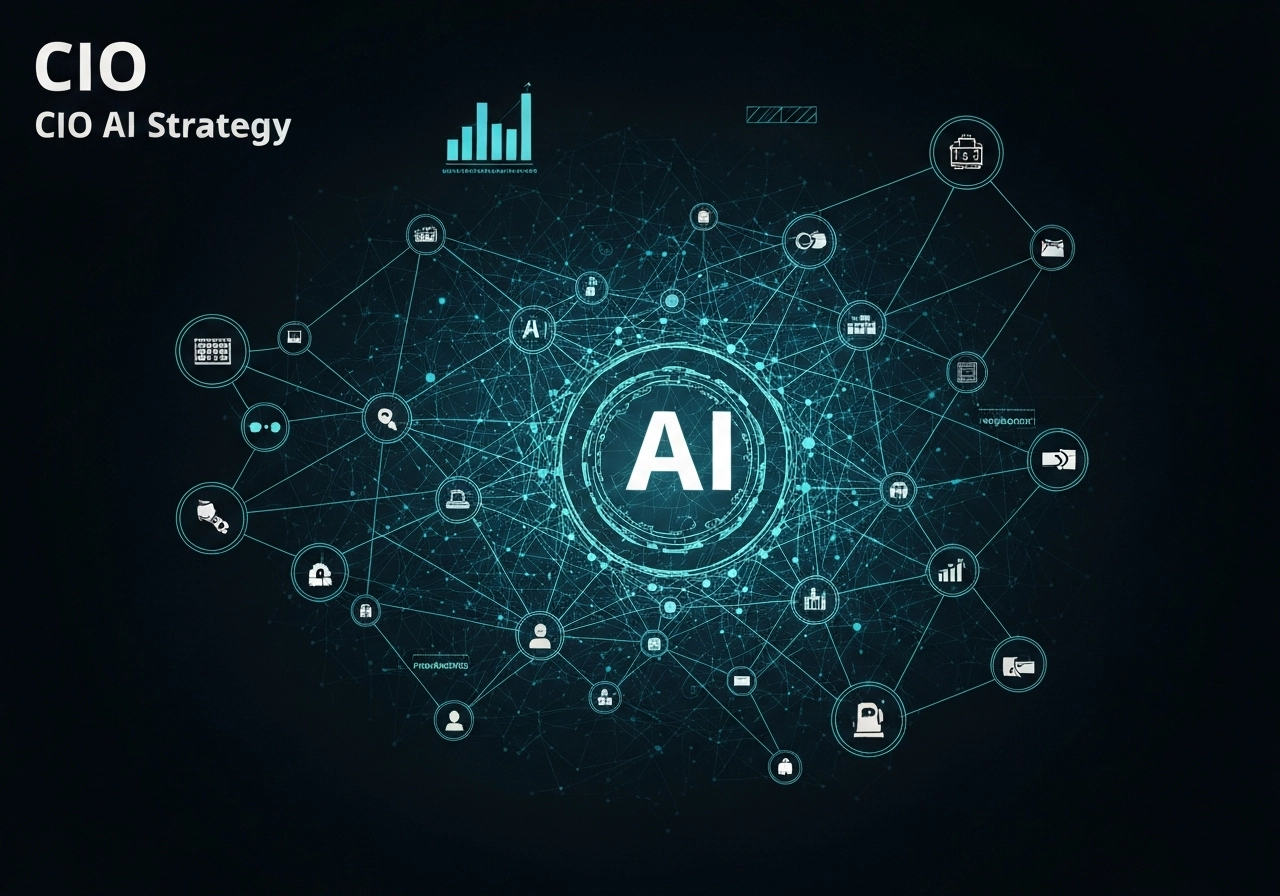
Agentic AI represents a paradigm shift from passive, reactive systems to proactive, autonomous agents that can plan, reason, learn, and execute complex tasks with minimal human intervention. For Australian Chief Information Officers, this technology offers a powerful toolkit to navigate the complexities of digital transformation, overcome legacy system constraints, and unlock unprecedented levels of operational agility. This article delves into the core concepts, strategic benefits, implementation challenges, and real-world applications that define the Agentic AI advantage for Australian enterprises.
Understanding the Agentic AI Paradigm
What is Agentic AI?
Agentic AI, often referred to as autonomous agents or AI agents, moves beyond Large Language Models (LLMs) that generate text or images. An Agentic AI system is designed to perceive its environment, set goals, create and execute multi-step plans, and learn from outcomes. It combines reasoning, memory, tool use, and action into a cohesive architecture. Unlike a chatbot that waits for a prompt, an agent can proactively initiate actions—such as querying databases, sending alerts, or adjusting supply chain parameters—based on predefined objectives or real-time data analysis.
Why It Matters for Australian CIOs
Australian organizations face unique challenges: a vast geography, a highly regulated environment, a tight talent market, and the need to compete globally from a relatively small domestic base. Agentic AI can help bridge these gaps by automating complex workflows, augmenting scarce human expertise, and enabling data-driven decision-making at scale. For example, a mining company can deploy agents to monitor equipment health across remote sites, schedule predictive maintenance, and even negotiate with parts suppliers—all without constant human oversight.
A critical point is that Agentic AI is not about replacing human workers but about amplifying their capabilities. A CIO can use agents to offload routine analytical tasks, freeing their data science and engineering teams to focus on strategic innovation and complex problem-solving.
Strategic Benefits of Agentic AI: Efficiency, Innovation, and Resilience
Unprecedented Operational Efficiency
Agentic AI excels at optimizing processes that involve multiple steps, handoffs, and decision points. Consider the procurement cycle. An agent can be tasked with sourcing materials, comparing vendors based on price and sustainability criteria, issuing purchase orders, and tracking delivery timelines. If a shipment is delayed, the agent can automatically reschedule production lines and inform stakeholders, dramatically reducing manual coordination overhead. This level of automation can lead to 30-50% reductions in process cycle times, according to early adopters.
Driving Innovation Through Autonomous Experimentation
Beyond efficiency, Agentic AI can accelerate innovation. In R&D, agents can autonomously run simulations, analyze results, and suggest next experiments. A pharmaceutical company could deploy agents to screen thousands of molecular compounds for potential drug interactions, with each agent learning from previous attempts and adjusting its search strategy. This accelerates the discovery cycle and allows human scientists to focus on the most promising leads.
Building Business Resilience
In a volatile global economy, resilience is paramount. Agentic AI systems can continuously monitor risk factors—supply chain disruptions, cyber threats, regulatory changes—and autonomously enact contingency plans. For instance, if a port strike threatens inventory flow, an agent can automatically reroute shipments to alternative ports, adjust manufacturing schedules, and notify customers of potential delays. This proactive risk management ensures business continuity with minimal human latency.
Real-World Applications in the Australian Context
Financial Services: Personalised Banking and Fraud Prevention
Australian banks are massive repositories of sensitive data and face intense competition from fintechs. An agentic AI system can serve as a personal financial advisor for each customer. It can monitor spending patterns, offer budget recommendations, pre-approve loans based on future income projections, and detect anomalous transactions in real-time. If fraudulent activity is suspected, the agent can temporarily freeze the account, contact the customer via their preferred channel, and initiate a dispute process—all within seconds.
Healthcare: Virtual Care Coordinators
In Australia’s public and private healthcare systems, agents can manage patient journeys. From initial symptom triage via a hospital app, to scheduling specialist appointments, sending medication reminders, and coordinating follow-up care after discharge. An agent could also interface with My Health Record to ensure clinicians have the most up-to-date patient data, dramatically reducing administrative burden on nurses and doctors.
Agriculture: Autonomous Farm Management
Australia’s agricultural sector, from wheat farms to vineyards, can benefit hugely from Agentic AI. Drones and sensors collect data on soil moisture, pest levels, and crop health. Agents can analyze this data to determine precise irrigation schedules, trigger targeted pesticide applications, and predict optimal harvest times. The system can even interface with weather APIs and commodity markets to adjust planting strategies and storage decisions, maximizing yield and profitability.
Implementation Roadmap for CIOs
Phase 1: Pilot Discovery and Use Case Selection
The first step is to identify a high-value, low-risk use case. Common starting points include customer service triage, IT ticket resolution, or supply chain exception handling. The CIO should assemble a cross-functional team comprising business stakeholders, data engineers, and AI specialists. A clear success metric—such as reducing average resolution time by 40%—must be established from the outset.
Phase 2: Infrastructure and Data Readiness
Agentic AI is data-hungry. The CIO must ensure the organization has a robust data platform that can provide clean, accessible, and well-governed data. Integration with existing systems (ERP, CRM, HRIS) is critical so agents can “act” within those systems via APIs. Additionally, a strong governance framework is required to define what agents can and cannot do, with human-in-the-loop checkpoints for high-stakes decisions.

Phase 3: Development, Testing, and Guardrails
Implementing agents requires a shift from traditional software development to a more iterative, reinforcement-learning-based approach. CIOs should invest in platforms like LangChain or AutoGPT, or work with specialist vendors. Rigorous testing in a sandboxed environment is essential to ensure agents behave as expected. Fail-safes and kill switches must be built in to prevent runaway actions. Cultural change is also necessary: teams must learn to trust and collaborate with autonomous agents.
Overcoming Challenges and Managing Risks
Technical Challenges: Hallucinations and Reliability
Agentic AI systems can “hallucinate” or make flawed decisions, especially when operating outside their training data. CIOs must implement multiple layers of validation—such as checking agent outputs against ground truth databases or using a separate verification agent—to ensure reliability. This is particularly crucial in regulated industries like finance and healthcare.
Data Privacy and Security
Agents often need access to sensitive corporate and customer data to function effectively. CIOs must enforce strict data access controls and anonymization techniques. Zero-trust architecture is a natural fit: every access request from an agent must be authenticated and authorized just like a human user. Additionally, organizations must comply with Australia’s Privacy Act and other relevant regulations.
Talent and Change Management
Finding people with the right blend of AI engineering, domain expertise, and product management skills is a major bottleneck. CIOs should consider upskilling existing staff, creating internal centers of excellence, and partnering with universities. Furthermore, a transparent communication strategy is vital to alleviate fears that AI will displace jobs, emphasizing instead how agents will augment roles and create new opportunities.

The Future of Agentic AI in Australia
From Agents to Agent Ecosystems
In the near future, we will see entire ecosystems of specialized agents collaborating to run entire business units. Imagine a “Digital CIO” agent that coordinates a “Digital CFO” agent, “Digital Operations” agent, and “Digital HR” agent, each with their own objectives and constraints. These multi-agent systems will require sophisticated orchestration and negotiation protocols to ensure alignment with corporate goals.
Long-term Implications for Australian CIOs
Agentic AI will fundamentally change the CIO’s role. The focus will shift from managing IT infrastructure and projects to designing, training, and governing autonomous systems that deliver business outcomes. Success will depend on a CIO’s ability to blend technical acumen with strategic vision, ethical leadership, and change management expertise. Those who master this shift will drive their organizations to new heights of performance and innovation.
In conclusion, Agentic AI is not a distant fantasy—it is a practical, powerful tool available to Australian CIOs today. By starting small, building robust foundations, and learning from each deployment, CIOs can unlock a significant competitive advantage. The question is no longer if Agentic AI will transform your industry, but how quickly you can integrate it into your strategic arsenal.