Why Mortgage Rates Are Rising, Not Falling, with Oil Under $70
What is going on in the housing market? Why are mortgage rates stubbornly climbing even as oil prices tumble below $70 per barrel? How can borrowers and investors make sense of this apparent contradiction? These questions are at the heart of a perplexing trend that has left many homeowners, buyers, and market analysts scratching their heads. Traditionally, lower oil prices signal weaker demand or a slowing economy, which often leads the Federal Reserve to cut interest rates, making borrowing cheaper. Yet in recent months, mortgage rates have defied this expectation, rising instead of falling. This article delves into the key drivers behind this disconnect, exploring the complex interplay of global inflation, monetary policy, and market sentiment.
Section 1: The Oil-Mortgage Rate Paradox Explained
To understand this paradox, we must first recognize that oil and mortgage rates are connected through a chain of economic mechanisms, not a direct line. Oil prices are a bellwether for global demand and energy costs. When oil falls, it typically reduces inflationary pressure because transportation and production costs drop. This would normally give the Federal Reserve room to ease policy by lowering the federal funds rate, which influences short-term lending rates. However, mortgage rates are tied more closely to long-term bond yields, specifically the 10-year Treasury yield, which does not always follow short-term rate moves.
The recent rise in mortgage rates, even as oil dips below $70, is largely due to persistent inflation outside the energy sector. Core inflation—which strips out volatile food and energy prices—remains sticky above the Fed's 2% target. Wages, housing costs (shelter), and services inflation have proven resilient. As a result, the Fed has maintained a hawkish stance, signaling that rates will stay higher for longer. This pushes up long-term bond yields because investors demand a premium for holding debt in an environment where purchasing power is eroding. Thus, falling oil does not automatically translate to lower mortgage rates when broader inflation is stubborn.
Real-world example: In the spring of 2023, oil prices fell sharply amid banking sector turmoil, but the 30-year fixed mortgage rate continued to hover near 7%. Homebuyers hoping for relief were disappointed as the bond market priced in continued tightening by the Fed.
Section 2: The Federal Reserve's Tightening Cycle vs. Falling Oil
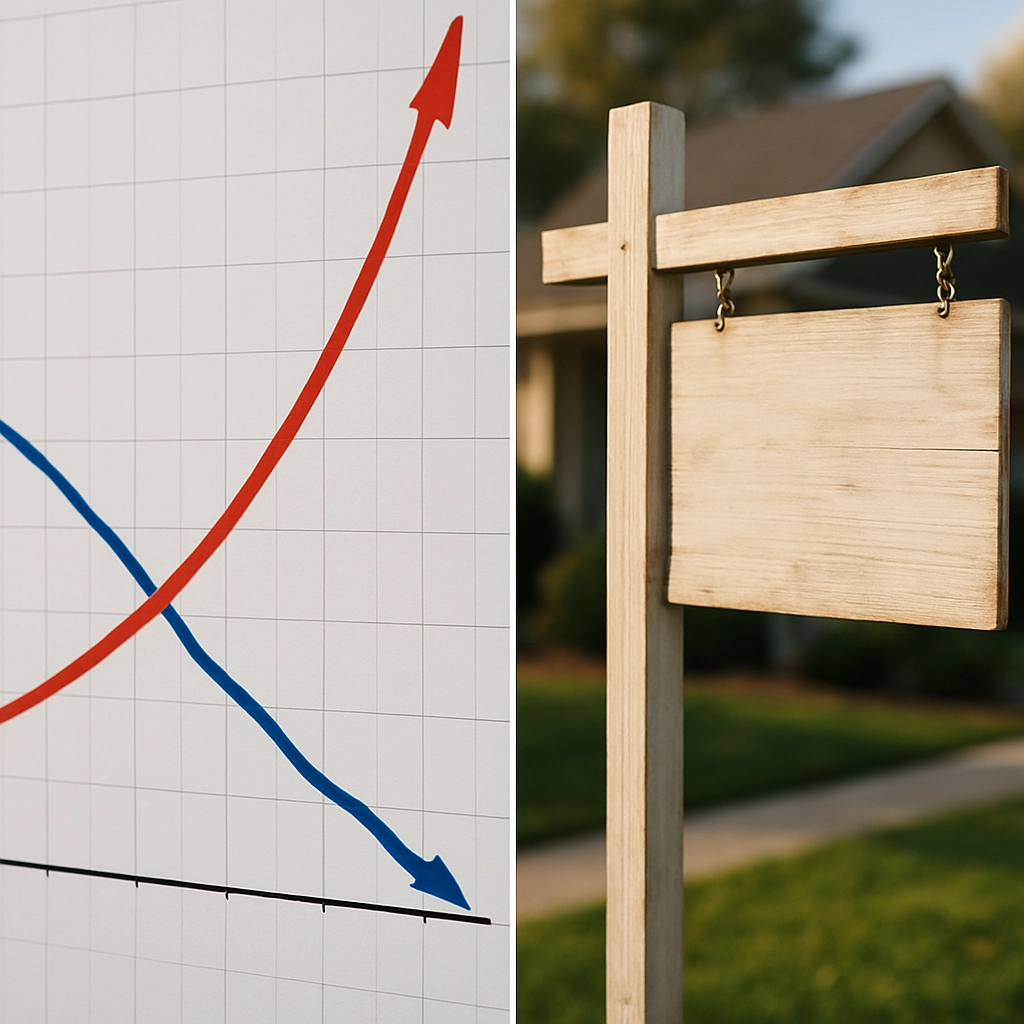
Falling oil prices often create a 'good news/bad news' scenario for the Fed. The good news is reduced headline inflation; the bad news is that it may indicate slowing global growth, which can be a drag on the U.S. economy. However, the Fed's primary mandate is price stability and maximum employment. If core inflation remains elevated, the Fed cannot pivot to rate cuts just because oil dropped. In fact, the central bank may view lower oil as a temporary tailwind that does not solve the underlying wage-price spiral.
Since early 2023, the Fed has raised the federal funds rate from near zero to over 5%, but mortgage rates have surged even higher—sometimes by an additional 1-2 percentage points. This divergence tells us that mortgage rates are not just reacting to the Fed's short-term rate but to the market's expectation of future inflation. The yield curve remains inverted, meaning long-term bonds yield less than short-term treasuries, but the absolute level of yields has climbed. Investors are demanding a higher term premium to compensate for uncertainty surrounding fiscal policy, inflation, and the debt ceiling.
Practical application: A homeowner considering a refinance in mid-2023 might have seen oil prices drop to $68 and expected mortgage rates to follow, only to find that the best available rate was still 7.5%. This mismatch forced many to stay put, contributing to a lock-in effect where few homeowners are willing to sell and give up their low fixed rates.
Section 3: The Role of Shelter Inflation in Keeping Mortgage Rates High
One of the most significant culprits behind stubbornly high mortgage rates is shelter inflation (housing costs), which makes up a large portion of the Consumer Price Index (CPI). While oil prices fall, the cost of owning or renting a home continues to rise. Shelter inflation is driven by tight inventory, strong demand from demographic trends (Millennials forming households), and a lack of new construction. Until shelter costs moderate meaningfully, the Fed is unlikely to declare victory over inflation.
Even as oil declines, the housing market remains overheated in many regions. Home prices hit new highs in several metro areas during 2023 and 2024, despite high mortgage rates. This is because demand from buyers with locked-in finances (such as cash buyers or those with high incomes) keeps upward pressure on prices, while supply remains constrained. The result: shelter inflation persists, and the Fed keeps rates higher for longer, directly impacting mortgage rates.
Real-world example: In cities like Miami, Phoenix, and Nashville, home prices rose by 20-40% post-pandemic. Even with mortgage rates above 7%, these markets saw minimal price corrections because of migration and limited supply. The resultant shelter inflation means the central bank cannot ease policy just because gasoline prices fell.

Section 4: Global Bond Markets and Unconventional Pressures
Mortgage rates in the U.S. are heavily influenced by global investors who buy and sell government bonds. When geopolitical tensions, such as the Russia-Ukraine war or Middle East instability, create uncertainty, investors often flee to safe assets like U.S. Treasuries, buying bonds and driving yields down—which would lower mortgage rates. However, the recent dynamic is different: falling oil prices are partly due to a global economic slowdown, particularly in China and Europe, which reduces demand for energy. This slowdown makes investors worry about a recession, which might normally lead to lower yields.
But a new factor has emerged: fiscal policy in the U.S. The government is running large deficits, which requires massive debt issuance. This flood of supply puts upward pressure on bond yields, as the market needs to absorb trillions of dollars in new debt. The Treasury's borrowing needs are pushing yields higher, counteracting the downward pull from lower oil and a slowing global economy. Additionally, the Bank of Japan’s recent policy tweaks have caused Japanese investors, major holders of U.S. debt, to repatriate funds, further squeezing the bond market.
Practical application: For a mortgage originator, understanding that global bond supply and international capital flows can overwhelm the impact of oil prices is crucial. They must advise clients that mortgage rates are not just a function of domestic inflation but of global portfolio dynamics.
Section 5: Market Sentiment and the 'Higher for Longer' Narrative
Perhaps the most powerful force keeping mortgage rates elevated is the narrative itself. Once a consensus forms that rates will stay high, it becomes a self-fulfilling prophecy. The Federal Reserve’s communication, known as the 'dot plot' and speeches by officials, consistently suggests that rate cuts are not imminent. Market participants internalize this and adjust their expectations. Even if oil prices fall, bond traders are reluctant to bet on lower yields because they fear being wrong if inflation rebounds.
This 'higher for longer' narrative also affects the housing market’s psychology. Potential sellers delay listing because they would have to trade their cheap mortgage for a much more expensive one. This limits supply, which keeps home prices high and shelter inflation elevated, reinforcing the need for tight policy. Meanwhile, buyers face affordability challenges, but many still compete for limited inventory, preventing a sharp downturn in demand. This feedback loop means mortgage rates remain stuck at elevated levels regardless of oil price movements.
Real-world example: In late 2023, West Texas Intermediate (WTI) crude fell to $65, but the 30-year fixed mortgage rate climbed to 7.8%. Homebuilder sentiment fell, but they could not cut prices due to high lumber and labor costs. The market adjusted to the new reality that rates would not fall quickly.
Section 6: What This Means for Homebuyers and Investors in 2024 and Beyond
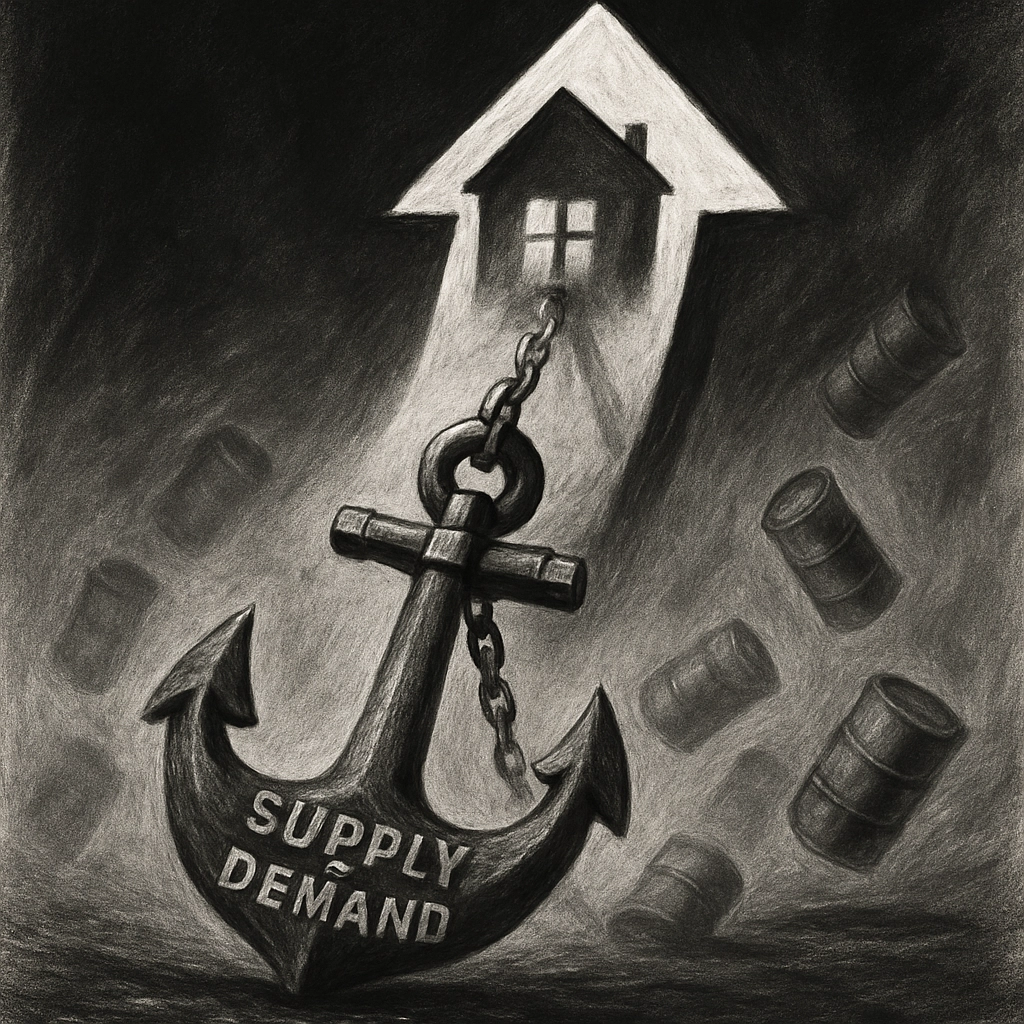
Understanding the disconnect between oil and mortgage rates is crucial for making informed decisions. For homebuyers, waiting for mortgage rates to fall might be a long wait. The key takeaway is that mortgage rates are more tied to core inflation, fiscal policy, and global bond yield behavior than to oil prices. If you need a home, buying when rates are high allows you to refinance later if rates drop. For real estate investors, this environment favors cash flow strategies over appreciation plays, as high financing costs eat into leverage gains.
Investors should also watch the Fed’s preferred inflation gauge (PCE) and shelter inflation components, not just headline CPI or oil prices. A scenario where oil stays low but shelter and wages remain sticky means the Fed holds the line, and mortgage rates stay near 6-8% for the foreseeable future. However, if a recession hits hard enough to cause a sudden collapse in demand, the Fed might cut rates aggressively, but that would likely coincide with falling home values, so it's a double-edged sword.
Practical application: A first-time homebuyer in 2024 might look at current rates and be discouraged, but locking in a purchase now, even with a 7% rate, could be beneficial if home prices continue to rise 3-5% annually due to supply constraints. Refinancing in two years might yield a 5.5% rate if the economy slows. Conversely, waiting for rates to fall could mean paying 10-20% more for the same house later. This logic applies to investors as well, who should seek properties with strong cash-on-cash returns to weather the high-rate period.
In conclusion, the surprising rise in mortgage rates despite falling oil is a complex interplay of persistent core inflation, shelter costs, global bond supply, and the power of narrative. It reinforces that investors and homebuyers must look beyond headline numbers and understand the structural forces in today’s economy. As the saying goes, low oil is no longer the friend of the homeowner—at least not until the broader inflation picture changes.