AI, Mimi, and the Dawn of Truly Inclusive Television: What, Why, and How?
What does it truly mean to watch television in the 21st century? For millions of people in Japan who are Deaf or hard of hearing, the experience is often fragmented, frustrating, and far from inclusive. What if AI could bridge that gap, not just by transcribing words, but by understanding context, emotion, and intent? This is the revolutionary promise of Microsoft’s ‘Mimi’ project—a groundbreaking initiative to build inclusive TV experiences that go far beyond traditional closed captioning.
In a world increasingly driven by digital content, accessibility is not an afterthought; it is a fundamental design principle. This article explores the profound transformation underway in Japan, driven by Artificial Intelligence. We will answer the What (the specific technology and its features), the Why (the deep-seated need and cultural context), and the How (the technical and collaborative process behind Mimi). Prepare to discover how AI is not just transcribing audio, but actively co-creating a richer narrative experience for everyone.
Section 1: The Silent Struggle: Why Traditional Captioning Fails the Deaf Community in Japan
For decades, closed captioning has been the standard. But for the Deaf and hard-of-hearing community in Japan, this standard has significant shortcomings. The problem is not just the lack of captions; it is the quality, timing, and lack of emotional depth.
The Limitations of Text-Only Transcription
Traditional captions often strip away crucial audio cues. Imagine watching a live news report or a high-tension drama. You see the words, but you miss the urgency in a reporter’s voice, the whisper of a secret, or the sarcasm in a comedian’s tone. The intonation, pitch, and emotional context are lost. For a Deaf viewer, this means a significantly reduced experience. Furthermore, live TV captions often suffer from accuracy issues, delays, and missing specialized terms. The ‘Why’ of Mimi stems directly from this deep user frustration. The goal is not just to provide text, but to provide contextual, emotional, and accurate real-time information that mirrors the full auditory experience.
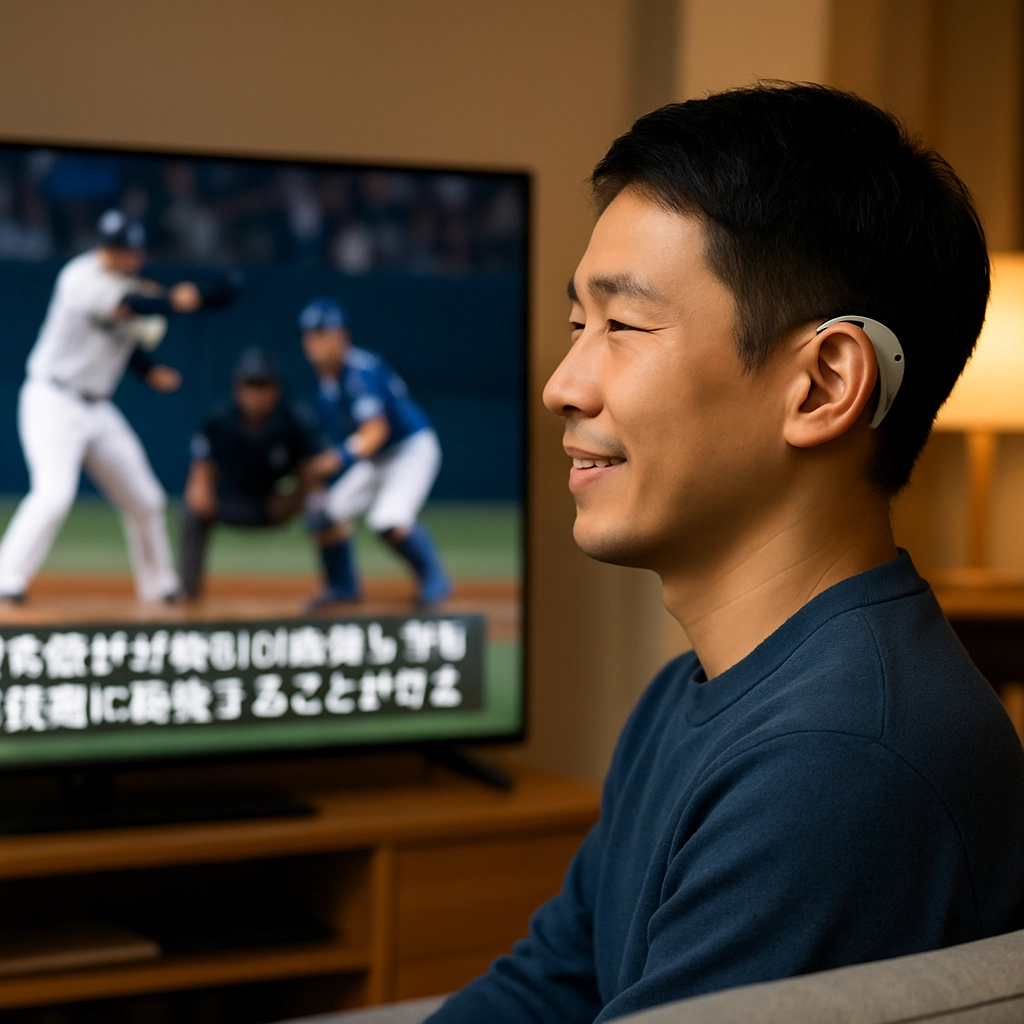
Real-World Example: Consider a live sports broadcast in Japan. A baseball pitcher is in a high-stakes moment. The crowd roars. The traditional caption might simply say, “[Crowd cheering loudly].” But Mimi’s AI would generate subtitles that describe the crescendo of the crowd, the tension in the announcer’s voice, and the specific roar as the ball approaches the plate. It differentiates a cheer of excitement from a groan of disappointment, providing a significantly richer understanding of the game’s atmosphere.
Section 2: Enter Mimi: How Microsoft’s AI is Redefining the Viewing Experience
So, how does Mimi work? At its core, Mimi is not a static captioning tool; it is an intelligent, adaptive AI system. It leverages advanced speech recognition, natural language processing (NLP), and emotional AI to analyze audio in real-time.
The Technology Stack: Speech, Emotion, and Context
Mimi’s secret sauce is its ability to understand paralinguistic features. This means it doesn’t just transcribe words; it analyzes pitch, volume, tone, and even the rhythm of speech. For example, when a speaker’s voice trembles, the AI detects fear. When the volume rises abruptly, it detects anger or excitement. This data is then translated into visual cues. Subtitles can change color (e.g., red for anger, blue for sadness), increase in size for loud moments, or use dynamic typography to convey whispering. Furthermore, the system is designed to be highly accurate in both Japanese and English, handling dialects, industry jargon, and background noise effectively. This is a huge leap from simple text boxes.
Practical Application: Imagine a Japanese drama where a character confesses love. The words “I love you” are simple, but the context matters. Mimi would detect the speaker’s hesitancy, the soft background music, and the gentle pause. It would then display the subtitles in a soft, pastel pink, with a slight delay to show hesitation, and perhaps a small symbolic heart animation to represent the emotion. The Deaf viewer now understands not just the words, but the emotional weight of the confession.
Section 3: Collaboration and Co-Creation: Building with, not for, the Community
The development of Mimi is a testament to a crucial principle in accessibility technology: nothing about us without us. Microsoft did not develop Mimi in a vacuum. They engaged in deep, iterative collaboration with Deaf and hard-of-hearing users in Japan.
User-Centric Design and Feedback Loops
This collaborative process was the ‘How’ of the project. Microsoft conducted extensive user research, focus groups, and beta testing with diverse members of the Deaf community. They asked: “What are your biggest frustrations with current TV captions?” and “What would make a real difference in your viewing experience?” The feedback was invaluable. Users wanted better color contrast, the ability to customize font size and background opacity, and most importantly, emotional context. They sought a richer, more human connection to the content. Mimi’s final design was a direct result of this feedback. For instance, the team discovered that simple color coding was distracting, so they developed a smooth, integrated animation system that changes subtitles subtly to match the mood.
Real-World Example: A user who is a sign language interpreter joined the testing. She pointed out that Japanese sign language (JSL) has its own grammatical structure and incorporates facial expressions and body movements. Mimi’s team used this insight to refine the AI’s understanding of non-verbal cues and emotional subtext, further enriching the caption output for a broader audience. This iterative loop ensures the technology is not a gimmick, but a genuinely useful tool.

Section 4: Beyond Television: The Wider Implications of Inclusive AI
The impact of Mimi extends beyond the living room. This technology is a harbinger of change for every audio-visual platform. Imagine the applications in education, public announcements, live events, and even online meetings.
Expanding to Digital Transformation
In a world where Digital Transformation is reshaping every industry, inclusive AI like Mimi is a key pillar. For example, consider a crowded Tokyo train station where a last-minute announcement about a train delay is made. Currently, the announcement is audio-only, leaving Deaf travelers confused and anxious. A version of Mimi could be integrated into digital signage, displaying clear, emotion-aware subtitles that convey the urgency or calmness of the message. Similarly, in schools, a Deaf student could use a similar system to follow a live teacher’s lecture with rich contextual cues, making education more equitable.
Practical Application: Large corporations in Japan are already looking at Mimim-like technology for their internal meetings. In a typical hybrid meeting, a Deaf employee might feel left out. With an AI that provides not just transcription but emotional context—showing when a manager is being serious about a deadline versus when they are joking—the communication gap narrows significantly. This is a clear example of Automation and AI serving a higher purpose of human connection, moving beyond simple task automation to social transformation.
Section 5: Challenges and the Road Ahead: What Does the Future Hold?
While Mimi is a breakthrough, the journey to full accessibility is long. What challenges remain, and how can we overcome them?
Technical and Cultural Hurdles
One primary challenge is real-time accuracy in noisy environments. Live TV is unpredictable; there can be music, overlapping voices, and extreme background noise. The AI must be resilient. Microsoft continues to refine the models using massive datasets of Japanese TV broadcasts. Another challenge is cultural. Website Optimization for accessibility is not just a technical task. The design of the subtitles must be culturally sensitive to Japan. For example, direct displays of emotion in subtitles might be considered too dramatic for some Japanese broadcasts, while a more subtle, restrained animation might be preferred. Balancing user desire with cultural norms is an ongoing discussion.
Furthermore, scalability is a huge task. Making Mimi available on every TV channel, streaming service, and device in Japan is a monumental infrastructure challenge. It requires not just AI improvements, but deep partnerships with broadcasters, content providers, and hardware manufacturers. The future vision is a world where this kind of rich, inclusive experience is the default, not an exception. This aligns perfectly with global trends in Digital Transformation and the push for equitable technology.
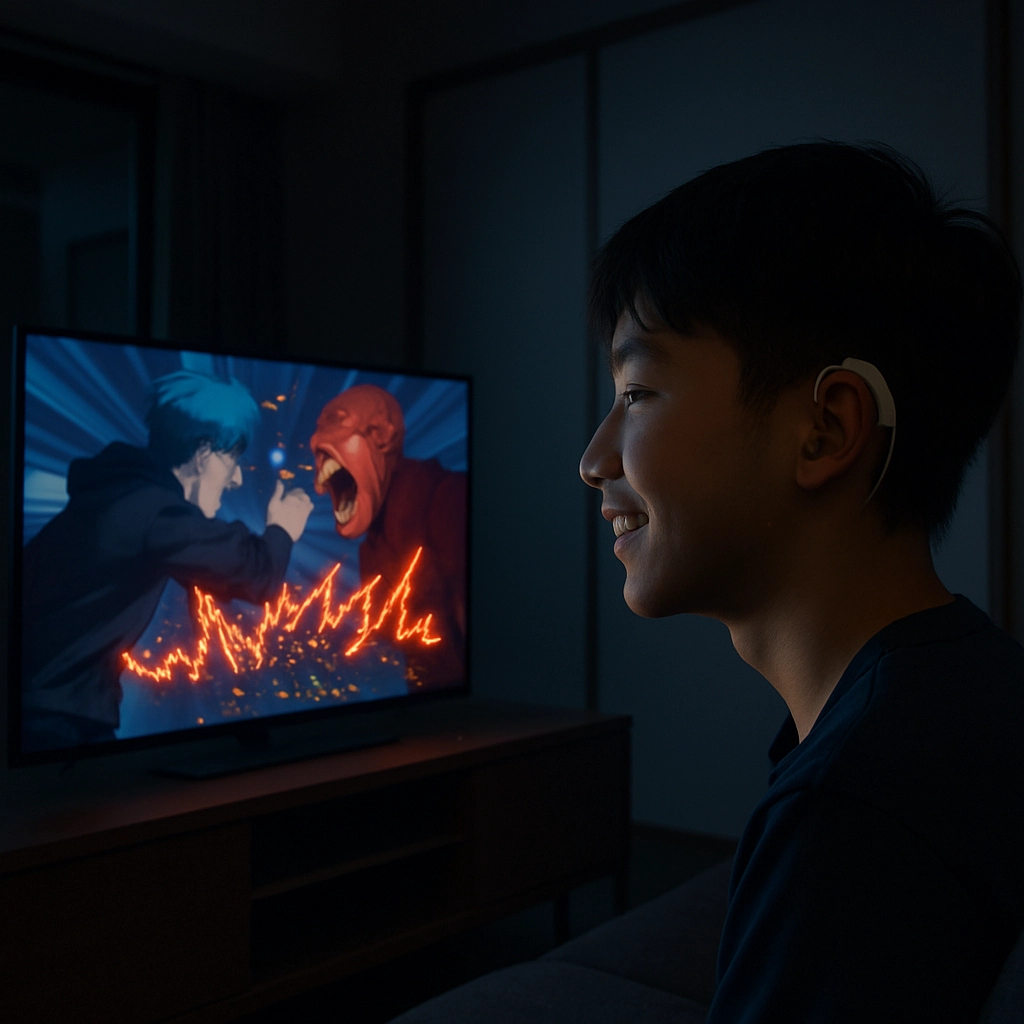
Real-World Example of the Future: Imagine a Deaf teenager in rural Japan who wants to watch a popular anime like “Demon Slayer.” With future Mimi technology, they wouldn’t just get subtitles; they would see the captions morph with the character’s emotions—turning jagged and dark for a villain’s voice, or shimmering with light for a hero’s courageous shout. The raw power of the story would be fully accessible. This future is not just a dream; it is a technological roadmap being built today.
Conclusion: A World Where Everyone Can Listen with Their Eyes
Mimi is more than a piece of software; it is a philosophy. It states that accessibility is not about lowering the bar, but about raising it for everyone. By combining advanced AI with deep human empathy, Microsoft is crafting a future where the silent gaps in our media are filled with understanding, emotion, and connection. The ‘What’ is an intelligent AI subtitle system. The ‘Why’ is to eliminate the inequities in media consumption. The ‘How’ is through relentless collaboration and technological innovation. As Japan leads this charge, the world watches, eager to see how AI can truly make television—and by extension, the world—a more inclusive place for all.
The journey of Mimi reminds us that the most profound technological innovations are not always about speed or efficiency, but about feeling included. For the Deaf and hard-of-hearing community in Japan, the lights just got a little brighter, the stories a little clearer, and the silence a little less isolating.