What Is Eedi and Why Is It Transforming Math Education with AI? How Does It Work?
What if a simple online math quiz could instantly diagnose exactly where a student is struggling, personalize their learning journey in real-time, and even predict their exam performance—all while being completely free for teachers? Why are educators around the world turning to a platform that blends formative assessment with the power of artificial intelligence? And how exactly does the Eedi online math quiz platform achieve what traditional paper-based tests cannot?
This article dives deep into the workings of Eedi, a Microsoft AI partner that is reshaping how students learn mathematics and how teachers reclaim their time. We will explore the engine behind its adaptive questioning, the data-driven insights it provides, and the real-world impact seen in classrooms.
Section 1: What is Eedi? The Next Generation of Formative Assessment
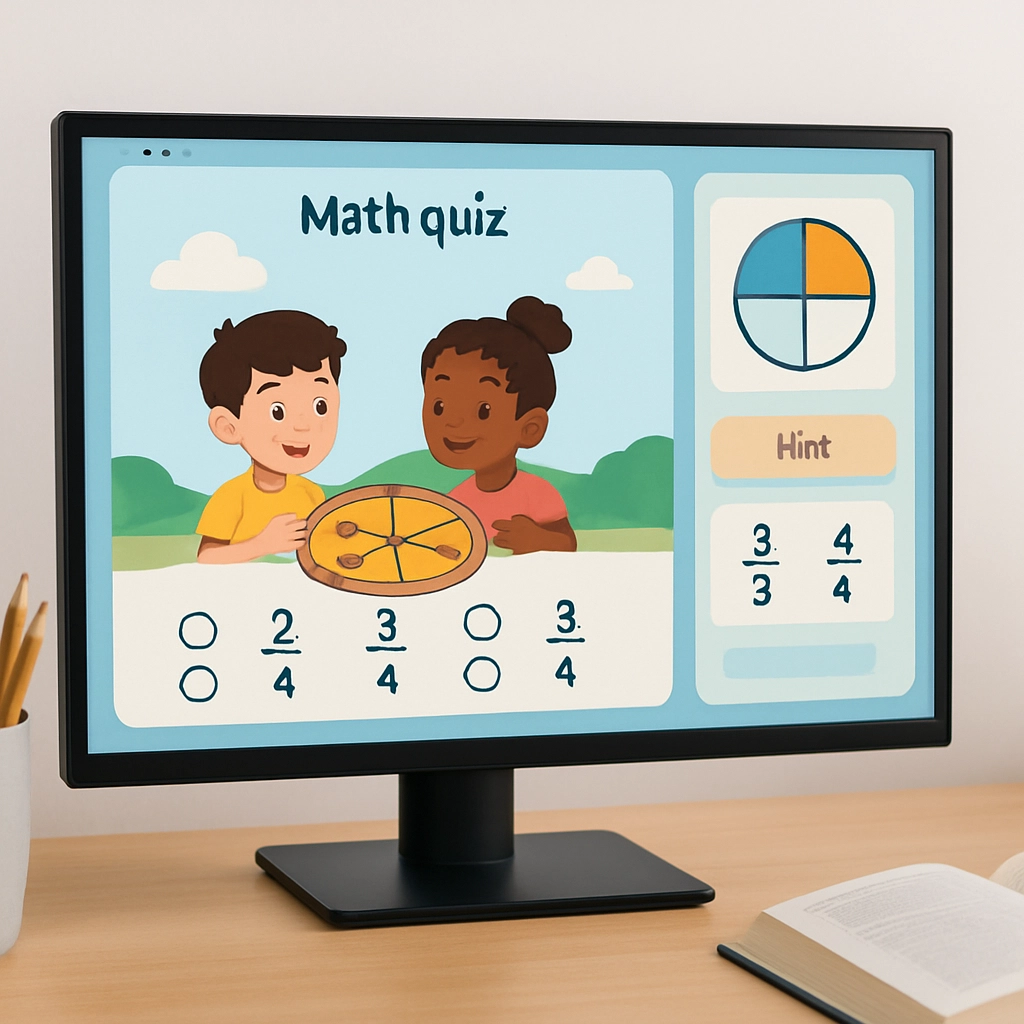
Eedi is an online math quiz platform designed specifically for schools. Its core purpose is to transform formative assessment from a static snapshot of student knowledge into a dynamic, intelligent, and actionable process. Unlike traditional quizzes that simply grade a student's final answer, Eedi uses a diagnostic engine that analyzes every step of the student's thinking process. This allows the system to identify precise misconceptions—not just whether a student got the answer right or wrong, but *why* they made the mistake.
The platform was born from a collaboration between educators, cognitive scientists, and Microsoft AI engineers. It leverages the power of machine learning to refine its question bank and adapt to individual student needs. The result is a tool that supports teachers by providing granular data on class-wide and individual student understanding, allowing for targeted intervention rather than generic instruction.
Section 2: Why Use AI for Math Assessment?
Traditional math assessment often falls into two traps: it is either too broad (a single final grade) or too slow (feedback arrives days later when the material is no longer fresh). Eedi addresses these issues by introducing real-time analysis at scale. The platform's AI identifies patterns in student responses that human teachers might miss. For example, it can distinguish between a student who misread a decimal point and one who fundamentally misunderstands place value.
This level of granularity is crucial for effective teaching. Research shows that spaced repetition and immediate, specific feedback are among the most powerful learning techniques. Eedi automates this process without adding extra workload to the teacher. Furthermore, the platform's algorithms are constantly learning from the millions of student interactions it processes, improving its diagnostic accuracy over time.
A key reason for its adoption is the reduction of teacher burnout. By automatically generating detailed reports on student performance, Eedi frees up educators to focus on what they do best: direct instruction, mentoring, and providing emotional support to students.
Real-World Example: The Impact of Instant Data
Consider a teacher who assigns a 20-question Eedi quiz on multiplication of fractions. One year, a student might get 12 out of 20 correct, and the teacher wouldn't know which concepts were misunderstood. With Eedi, the teacher immediately receives a heatmap showing that this student understands the algorithm of multiplying numerators and denominators but consistently fails to simplify the final answer. The AI suggests targeted resources for simplifying fractions. The teacher can then group this student with a peer who has the same misconception for a focused mini-lesson, turning a quiz into a catalyst for learning, not just an evaluation.
Section 3: How Does the Adaptive Questioning Engine Work?
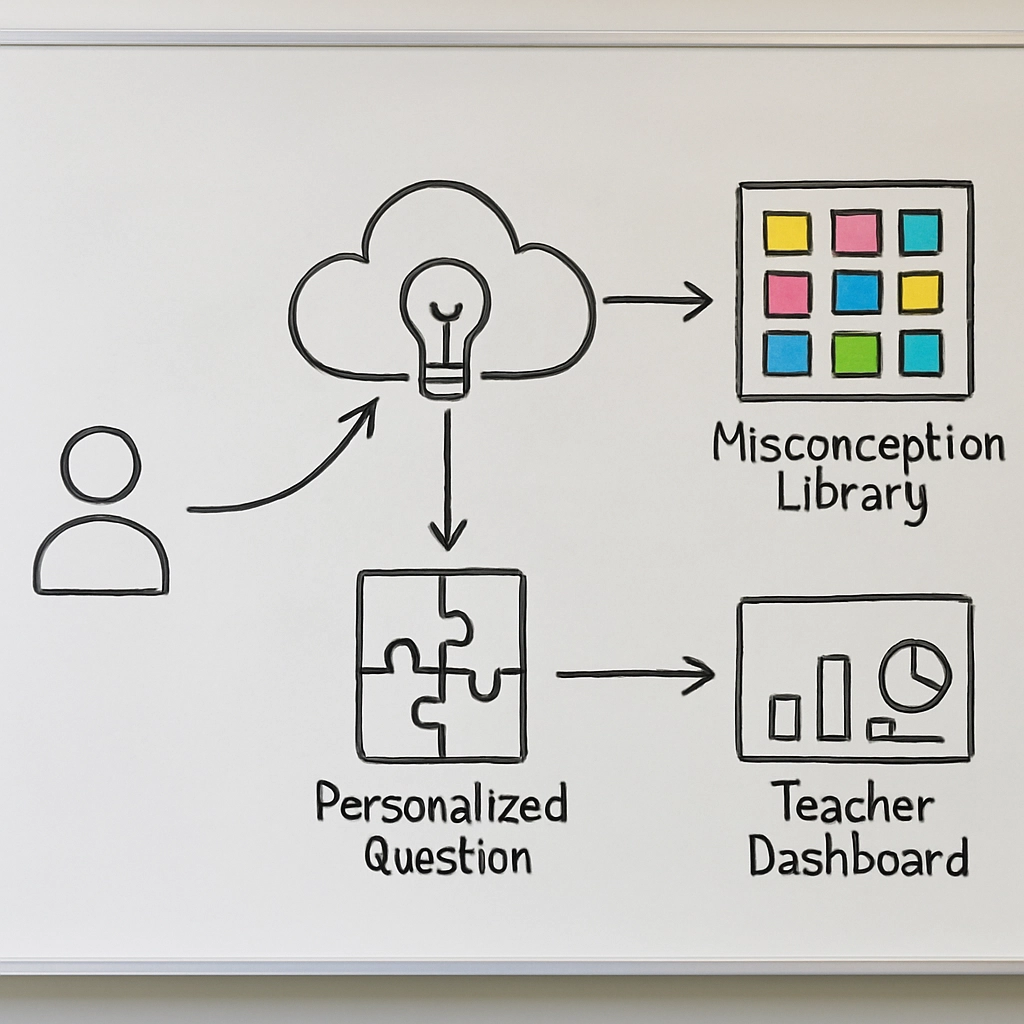
At the heart of Eedi is its adaptive question engine, powered by Microsoft's Azure AI. When a student starts a quiz, the system doesn't just follow a fixed set of questions. Instead, it uses a Bayesian Knowledge Tracing model to estimate the student's current knowledge state for each skill being assessed. Based on this estimate, it selects the next question that will provide the most information about the student's ability.
If a student answers a question correctly and quickly, the system might present a more challenging problem to test the depth of their understanding. If a student struggles, the engine branches to simpler questions or provides procedural hints. This creates a truly personalized question path for every student. The data collected is not just aggregated; it is used to iteratively improve the engine itself. The platform's AI model processes millions of responses to identify common error patterns, which are then tagged and used to generate specific, actionable feedback for both students and teachers.
Section 4: Detailed Breakdown of Key Features
To truly understand Eedi's value, we need to look at its features in detail:
- Misconception-Specific Feedback: Unlike generic feedback like 'Try again', Eedi identifies specific mistake types (e.g., 'adding fractions by adding numerators and denominators instead of finding a common denominator'). The system then provides a short video or text explanation that directly addresses that error.
- Actionable Teacher Dashboard: Teachers see a color-coded dashboard (green, yellow, red) indicating proficiency levels for every student across every standard. Clicking a red cell shows which misconception is causing the problem. This enables targeted intervention in the very next lesson.
- Spaced Repetition and Retrieval Practice: Eedi automatically schedules review questions for concepts the student has previously struggled with. This spacing effect is scientifically proven to enhance long-term memory retention.
- Printable Worksheet Generation: For classrooms with limited technology or for homework, Eedi can generate personalized worksheets based on the quiz data, ensuring offline practice is also targeted.
These features save teachers hours of grading and data-entry time, allowing them to focus on high-impact instructional strategies. Students also report higher engagement because they see immediate, relevant feedback that helps them improve right away, rather than waiting for a graded test paper a week later.
Section 5: Real-World Applications and Success Stories
The impact of Eedi is not theoretical. It has been deployed in thousands of schools worldwide. One particularly powerful example comes from a school in the UK that was struggling with low math scores in Year 7 (ages 11-12). After implementing Eedi for formative assessment, the school saw a 15% increase in average scores on national standardized tests within one academic year. The key was that teachers were able to use Eedi's data to create targeted 'intervention groups' that met for just 20 minutes three times a week, focusing on specific misconceptions identified by the platform.
Another success story involves a school in rural India where teacher training was limited. Eedi's self-contained, AI-driven quizzes allowed students to receive high-quality, personalized feedback without requiring the teacher to be an expert in every mathematical nuance. The platform's diagnostic data also helped the school identify systemic issues in their curriculum sequencing, leading to a restructured syllabus that better supported student progression.

Section 6: The Future of Eedi and AI in Education
The future development of Eedi points towards even deeper integration with classroom systems. Microsoft and Eedi are exploring how to connect the platform with larger school management systems (SMS) and Learning Management Systems (LMS) like Microsoft Teams for Education. This would allow for seamless data flow, where a student's progress on Eedi automatically updates their portfolio and triggers personalized assignments in other platforms.
Furthermore, the team is working on generative AI to create new question types and misconceptions on the fly. Instead of relying solely on a pre-built bank of questions, the AI could generate unique problems adapted to the specific curriculum a school uses. This would make Eedi infinitely scalable and customizable for any educational standard.
Another frontier is predictive analytics. By analyzing a student's pattern of misconceptions across several weeks, the AI could predict their performance on upcoming high-stakes exams with remarkable accuracy. This would allow schools to identify at-risk students months before a final exam, giving them time to implement intensive remediation.
In conclusion, Eedi represents a paradigm shift in assessment: from static to dynamic, from generic to personalized, and from summative to formative. By leveraging AI, it not only enhances learning outcomes for students but also empowers teachers with the data and time they need to make a real difference. The question is no longer *why* use AI in education, but *how soon* can it be adopted to benefit every classroom.