Beyond the Code: What the Future of AI Really Looks Like
What does the next era of artificial intelligence actually entail? Why is Microsoft investing so heavily in this technology, and how will it reshape our world? These are the fundamental questions that Kevin Scott, Microsoft's Chief Technology Officer, tackles in a recent, insightful conversation. This article deconstructs that dialogue, exploring the profound shifts occurring beneath the surface of the AI revolution.
The Shifting Paradigm: From Tool to Collaborator
For decades, our interaction with computers has been transactional. We give a command, the machine executes it. Kevin Scott argues that the most significant shift underway is the transition from this model to one of collaboration. AI is moving from being a mere tool that we use, to becoming a partner that works with us. This isn't about robots taking over; it's about AI amplifying human creativity, problem-solving, and productivity in ways we are only beginning to understand.
The core of this change lies in the emergence of foundation models. These massive, pre-trained models, like GPT-4, are not purpose-built for a single task. Instead, they serve as a versatile starting point—a 'primordial brain,' if you will—that can be fine-tuned and adapted for thousands of different applications. This is a fundamental departure from the past, where you needed to build a separate model for language translation, another for image recognition, and yet another for code generation. Now, one central intelligence can learn to do all of these things, and even combine them in novel ways.
Real-World Example: Consider GitHub Copilot. It's not just an autocomplete tool. It is a collaborative coding partner that understands the context of the entire project, suggests entire functions, and even explains complex code blocks. It doesn't replace the developer; it removes the 'grind work' of remembering syntax and boilerplate code, freeing the engineer to focus on architecture, system design, and creative problem-solving. This is AI as a co-pilot, not an autopilot.

Democratizing Capability: The 'Great Unlocking'
A key theme in Scott's conversation is the idea of democratizing access to AI's immense power. He calls it a 'great unlocking' of human potential. The goal is not to create a handful of super-intelligent entities, but to put a powerful 'thinking' assistant in the hands of every student, teacher, doctor, farmer, and engineer. By making these AI models available through APIs, cloud services, and user-friendly interfaces, Microsoft is attempting to level the playing field.
Why is this so crucial? Because the constraints of time, expertise, and resources are what often bottleneck progress. A small business owner may not have a team of data scientists to analyze customer trends. A rural doctor may not have access to the latest medical research. A teacher may not have the hours to create individualized lesson plans for every student. AI, deployed correctly, can dissolve these bottlenecks. It provides a lever, enabling individuals and small teams to accomplish what previously required a large organization.
This democratization is not automatic; it requires careful stewardship. It means building models that are more accessible, lowering the compute costs, and creating interfaces that are intuitive. Scott emphasizes that the interface is the new 'killer app.' The most powerful AI in the world is useless if no one can talk to it. This is why the Copilot brand is so central; it's not just a product name, it's a design philosophy. The AI should feel like a natural extension of the user's intent.
Practical Application: Imagine a high school student in a remote village. Using an AI-powered educational assistant on a cheap tablet, they can get immediate, personalized tutoring in advanced physics. The AI can explain a complex concept in five different ways, generate practice problems, and give instant feedback. This one student now has access to a quality of instruction that was previously only available to wealthy, urban schools. This is the 'great unlocking' in action.
Responsibility at the Core: Safety, Alignment, and 'AI for Good'
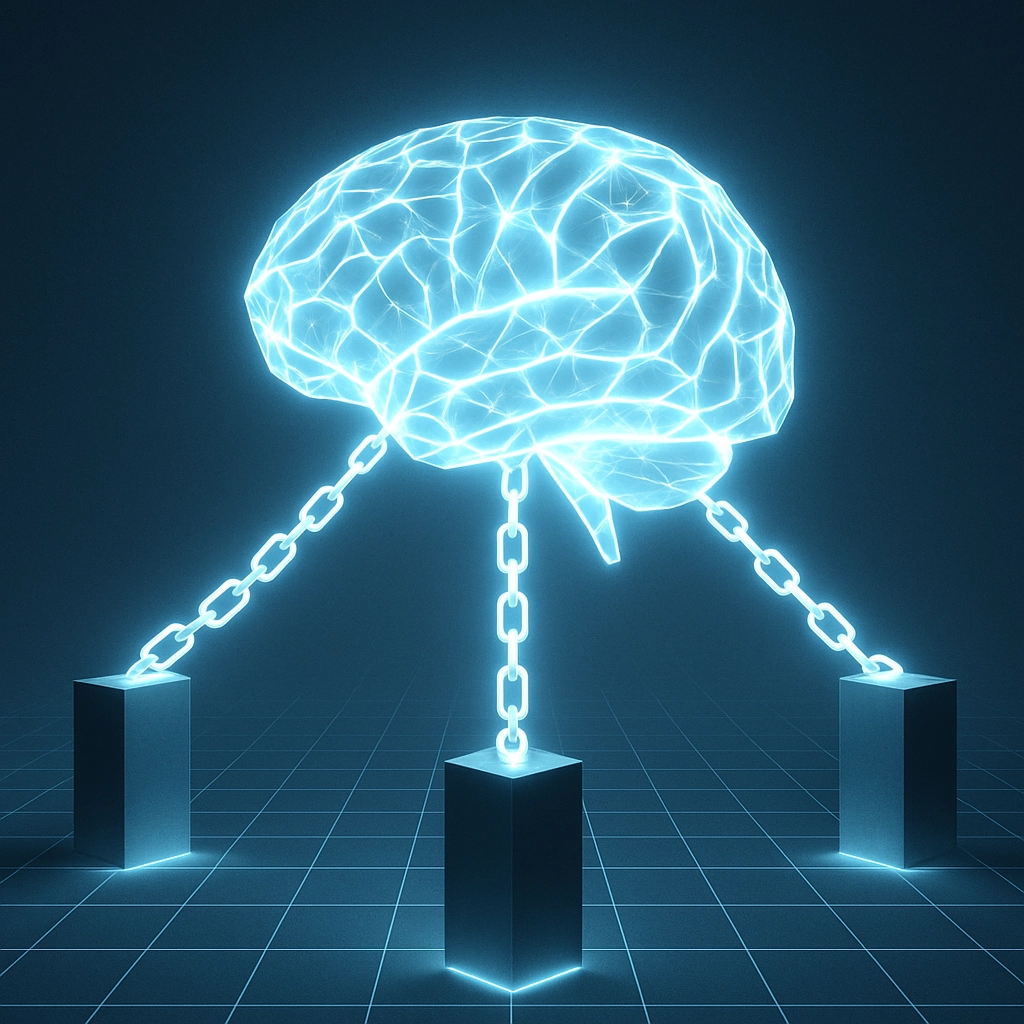
With immense power comes immense responsibility. Kevin Scott is remarkably candid about the inherent risks and challenges. The conversation extensively covers Microsoft's multi-layered approach to responsible AI. This is not an afterthought or a PR checkbox; it is woven into the engineering process from the very beginning. It is the hardest part of the problem.
There are three pillars to this responsibility. First is safety and alignment. How do you ensure a model with nearly infinite knowledge and generative capability behaves in a way that is helpful, harmless, and honest? This involves rigorous pre-training filtering, reinforcement learning from human feedback (RLHF), and constantly evolving red-teaming—where internal experts try to trick the AI into misbehaving. The goal is to build 'guardrails' that are effective yet not overly restrictive, allowing for creativity within safe boundaries.
Second is bias and fairness. A model trained on the entire internet will inevitably learn its biases. Microsoft is investing heavily in research to understand, measure, and mitigate these biases. This is an ongoing, iterative process. It's not about achieving perfect neutrality (which is philosophically impossible), but about being transparent about the limitations and actively working to reduce harmful stereotypes and discriminatory outcomes.
Third is privacy and security. How can you provide powerful AI services without compromising user data? Microsoft is building on its enterprise-grade security infrastructure, offering options for running models locally or in private clouds where data never leaves the customer's control. They are pioneering techniques like differential privacy, which allows the AI to learn from a dataset without ever seeing or remembering an individual person's specific data.
The Economic Imperative: Solving Labor Shortages and Creating New Jobs
One of the most common fears about AI is job displacement. Scott addresses this head-on, framing the narrative around labor augmentation and solving the looming demographic and labor shortage crisis. Many developed economies are facing shrinking workforces as Baby Boomers retire. AI is not just a threat to existing jobs; it is a necessary tool to maintain economic productivity and growth with fewer human workers.
The conversation pivots from 'What jobs will AI destroy?' to 'What new, more interesting jobs will it create?' Scott draws an analogy to the industrial revolution. The tractor didn't eliminate farming; it eliminated the back-breaking, manual labor of millions of farmers, and created new professions in agronomy, engineering, logistics, and biochemistry. Similarly, AI will automate the most repetitive, mundane tasks across every industry—data entry, basic content generation, simple customer service queries—and in doing so, free up humans to focus on higher-value work: strategic thinking, complex negotiation, creative design, emotional intelligence, and hands-on care.
Real-World Impact: In Japan, which faces a severe labor shortage, AI-powered robots are already being deployed in elder care facilities. They assist with physical lifting, monitor patients for falls, and provide simple companionship through conversation. The AI does not replace the human caregiver; it augments them, allowing a single human to care for more people with less physical strain, and to spend their time on the emotional and relational aspects of care that a machine cannot provide. This is AI addressing a critical societal need.
The Infrastructure Wave: The 'New Electricity' Moment
Kevin Scott makes a compelling argument that we are living in an infrastructure moment similar to the electrification of America in the early 20th century. What is new is not just the AI itself, but the full stack required to run it at scale. This includes the specialized hardware (like NVIDIA's H100 GPUs and Microsoft's new Azure Maia AI accelerators), the massive datacenters designed to handle thousands of megawatts of power, the cooling systems for these hot-running chips, and the global network of fiber optic cables.
Microsoft is investing billions of dollars in this infrastructure. Why? Because they believe AI will be as transformative as electricity. Once you had a universal, reliable electrical grid, you could plug in any number of new inventions—the lightbulb, the radio, the washing machine, the computer. The AI platform, accessible via the cloud, is the new grid. The 'killer applications' that will be built on top of this grid are still largely unimaginable. We are in the era of the thousand-watt lightbulb, not the smartphone.
This infrastructure is not just for the tech elite. It's being designed for global scale. Scott talks about 'pervasive computing' where intelligence is embedded everywhere—in your phone, your car, your factory floor, your city's traffic lights. This requires a fundamentally new architecture where computation can happen at the 'edge' (on a local device) or in the 'cloud' (a massive datacenter), depending on the need for speed, latency, and privacy.
Multimodality: Seeing, Hearing, Reading, and Creating
A major leap forward discussed by Scott is the move from pure text-based models to multimodal AI. This means an AI that can not only read and write, but also understand images, audio, and video. It can listen to a conversation, watch a video, and generate a new image or piece of music. This is a critical step toward AI that perceives the world more like we do—through a rich, layered sensory experience.
The implications are vast. In healthcare, a multimodal model could analyze a patient's medical scan (image), their doctor's notes (text), and their recorded symptoms (speech) to provide a more holistic diagnosis. In manufacturing, it could watch a robot assembly line (video) and listen to a machine's vibrations (audio) to predict a failure before it happens. In content creation, a designer can describe a scene, upload a rough sketch, and hum a tune, and the AI can create a short animated video with music.
Practical Application: Imagine a blind person using an app. They point their phone's camera at a street intersection. The AI not only describes the environment in text: 'There is a red stoplight on the left, a blue sedan stopped in the crosswalk, and a sign that says 'City Hall 2 blocks.' but it can also answer follow-up questions: 'What color is the car? Is the light changing? Is there a path for me to cross?' This is multimodal AI providing a richer, safer, and more intuitive sense of the world for someone with a visual impairment.
Conclusion: A Human-Facing Future
If there is a single, overriding takeaway from Kevin Scott's conversation, it is this: The future of AI is not about creating a cold, autonomous intelligence. It is about creating a tool that is fundamentally human-facing. It's about building technology that helps us learn faster, create more, solve bigger problems, and connect more deeply. The challenges are immense—from safety and bias to infrastructure and economic disruption. But the potential reward is a world where every individual has a powerful, intelligent companion to help them navigate life's complexities.
The 'what' is a new generation of powerful foundation models. The 'why' is to democratize capability and solve critical human challenges. The 'how' is through a monumental investment in infrastructure and a relentless, non-negotiable commitment to responsibility. The journey has just begun, but the destination, as outlined by Microsoft's CTO, is a future where technology truly partners with humanity to flourish. The code is being written, but the story is, and always will be, about us.