
What, Why, and How? The GeForce NOW Thursday Revolution: May 2026 Games List Unveiled
What if you could play the world's most demanding PC games without owning a powerful graphics card? Why is cloud gaming finally becoming a viable, mainstream alternative to traditional consoles? How does NVIDIA's GeForce NOW service continue to redefine the boundaries of accessible gaming, one Thursday at a time? In a world where hardware costs are skyrocketing and game libraries are expanding exponentially, the answer to these questions lies in a simple, recurring event: GeForce NOW Thursday. The announcement of the May 2026 games list provides a perfect lens through which to examine the transformative power of cloud-based gaming. This isn't just a list of titles; it is a chronicle of an industry shift, a testament to the growing acceptance of streaming as a primary gaming platform. From the latest AAA behemoths to indie darlings, the weekly update from NVIDIA's high-performance cloud servers is reshaping how we think about, access, and play video games.
This article delves deep into the implications of the May 2026 GeForce NOW Thursday update. We will explore the technical infrastructure that makes this possible, the strategic partnerships that fuel its library, and the real-world user experiences that are validating the promise of a lag-free, high-fidelity gaming future. The GeForce NOW Thursday phenomenon is more than a marketing cadence; it is the heartbeat of a new ecosystem where your existing digital storefronts (Steam, Epic Games Store, Ubisoft Connect) become portals to a supercomputer. As we analyze the specific titles dropping this May, we will uncover the broader trends defining cloud gaming in 2026.
Section 1: The Infrastructure of the Cloud Gaming Behemoth
To understand the GeForce NOW Thursday phenomenon, one must first look under the hood. The May 2026 list is not just a collection of random releases; it is a meticulously curated selection of games that have been optimized and tested on NVIDIA's global network of RTX-powered servers. This infrastructure is the silent hero behind every seamless stream. You are not running the game on your laptop or Mac; you are renting time on a machine powered by an NVIDIA H100 or B200 GPU, located in a data center potentially thousands of miles away. The technology that makes this feel local is a marvel of modern engineering.
Real-World Example: Consider a user trying to run a graphically intense title like 'Cyberpunk 2077: Phantom Liberty,' which requires a high-end RTX 4090 for maximum settings, path tracing, and smooth frame rates. On a standard gaming laptop or a MacBook Air, this would be impossible or result in a slideshow. With GeForce NOW, the user simply launches the game from their Steam library. The NVIDIA server handles the millions of computations per frame, encoding the final, beautiful image into a video stream (using HEVC or AV1 codecs) and sending it to the user's device. The input from the user's keyboard or controller is sent back with millisecond latency. The result is a 4K/120fps experience on a $300 Chromebook or an M2 MacBook Air. The May 2026 list includes several titles that leverage DLSS 4.0 and RTX Remix, pushing the boundaries of graphical fidelity in a streaming context. This infrastructure is the 'why' behind the service's success.
Section 2: The Art of the Thursday Drop: Curating the May 2026 Lineup
Every Thursday, the GeForce NOW team announces new titles. For May 2026, the list is particularly exciting, reflecting the strong momentum of the gaming industry. The announcement includes a mix of brand-new releases, early access titles, and classic games that have been upgraded with modern features. But why Thursday? The strategy is clear: targeting the pre-weekend hype cycle. Gamers are planning their weekend gaming sessions, and a Thursday announcement provides the perfect hook to drive engagement and subscriptions. The curation is not random; it focuses on titles that demonstrate the service's prowess in handling different genres, from competitive shooters (lowest possible latency) to sprawling RPGs (high visual fidelity).
Deep Explanation: The list for May 2026 likely includes a heavy hitter from a major publisher. Imagine a new entry in the 'Assassin’s Creed' series or a surprise hit from a Japanese developer. The inclusion of these games is a result of complex licensing and business development deals. NVIDIA must negotiate with publishers to allow their games to be streamed. The service operates on the 'Bring Your Own Games' model, meaning you still buy the game on Steam. However, the GFN Thursday announcements are a mark of approval. They signal that a game runs well on the service. Titles that are day-and-date with their console or PC launch on GeForce NOW are a huge win for the community, as they allow users to play immediately without worrying about their local hardware not meeting the minimum specs. The May 2026 list likely highlights this trend.

Section 3: The 'How' of Playing the Unplayable: Real-World Performance Breakdown
So, you have seen the list and you want to play the latest open-world survival game on your low-powered laptop. How does it actually perform? The May 2026 update continues to refine the 'how' of cloud gaming. NVIDIA has been aggressively expanding its data center presence and upgrading its nodes with the latest GPUs. This translates directly into better performance for users. The service offers three tiers: Free (with queues and 1-hour sessions), Priority (rig access, 6-hour sessions, 1440p), and Ultimate (RTX 3080/4090 class rigs, up to 4K/120fps, 8-hour sessions). The May 2026 list will feature many games that are perfectly tuned for the Ultimate tier, unlocking features like NVIDIA Reflex (to reduce system latency) and DLSS 3.5 (Ray Reconstruction).
Practical Application: Let’s take a practical scenario. You want to play 'Marvel’s Spider-Man 2' (assuming a PC release or a port) on a MacBook Pro. You cannot run it natively. You subscribe to GeForce NOW Ultimate. You open the app, connect to a server, launch your Steam library, and install the game 'in the cloud' (which takes seconds as it is pre-cached). You adjust the settings to max out everything. The game runs at a stable 60-100fps at 4K with ray tracing on. The fan on your MacBook is silent because its own GPU is doing no work. The key metric here is latency. For a single-player narrative game, a latency of 30-50ms is imperceptible. For a competitive shooter like 'Counter-Strike 2' (also likely part of the library), latency is more critical. However, NVIDIA Reflex, integrated into the cloud server, reduces input-to-display latency to near-native levels. The May 2026 list not only tells you what to play but implicitly demonstrates the ceiling of performance you can achieve.
Section 4: The Strategic Gift of the 'Wishlist' and 'Ones to Watch'
A staple of GeForce NOW Thursday articles is the categorization of games. Often, the blog post (like the one from May 2026) will feature a 'Wishlist' section and a 'Ones to Watch' section. This is not arbitrary; it is a brilliant engagement strategy. The 'Wishlist' typically features games that are highly anticipated but not yet released or fully supported. The 'Ones to Watch' highlights indie titles or hidden gems that the GeForce NOW team believes deserve more attention. This section serves as a discovery engine for users.
Deep Explanation: From a business perspective, this drives two key metrics. First, it increases the number of 'wishlists' on Steam and other storefronts, which is a major signal to game developers. Second, it drives engagement on the GeForce NOW platform itself. If you see a game like 'Hollow Knight: Silksong' (still a meme in 2026 but theoretically in the wishlist), you are more likely to check the app. The curation also helps NVIDIA prioritize which games to optimize. If a game gets a high number of wishlists on the GFN ecosystem, NVIDIA's engineering teams might prioritize a day-one optimization patch. The May 2026 list likely features a mix of AAA blockbusters and artistic indie experiments, showing that GFN is not just a service for the mainstream but a home for all types of gaming.
Section 5: The Ecosystem Effect: Why Optimizing for GeForce NOW Matters for Developers
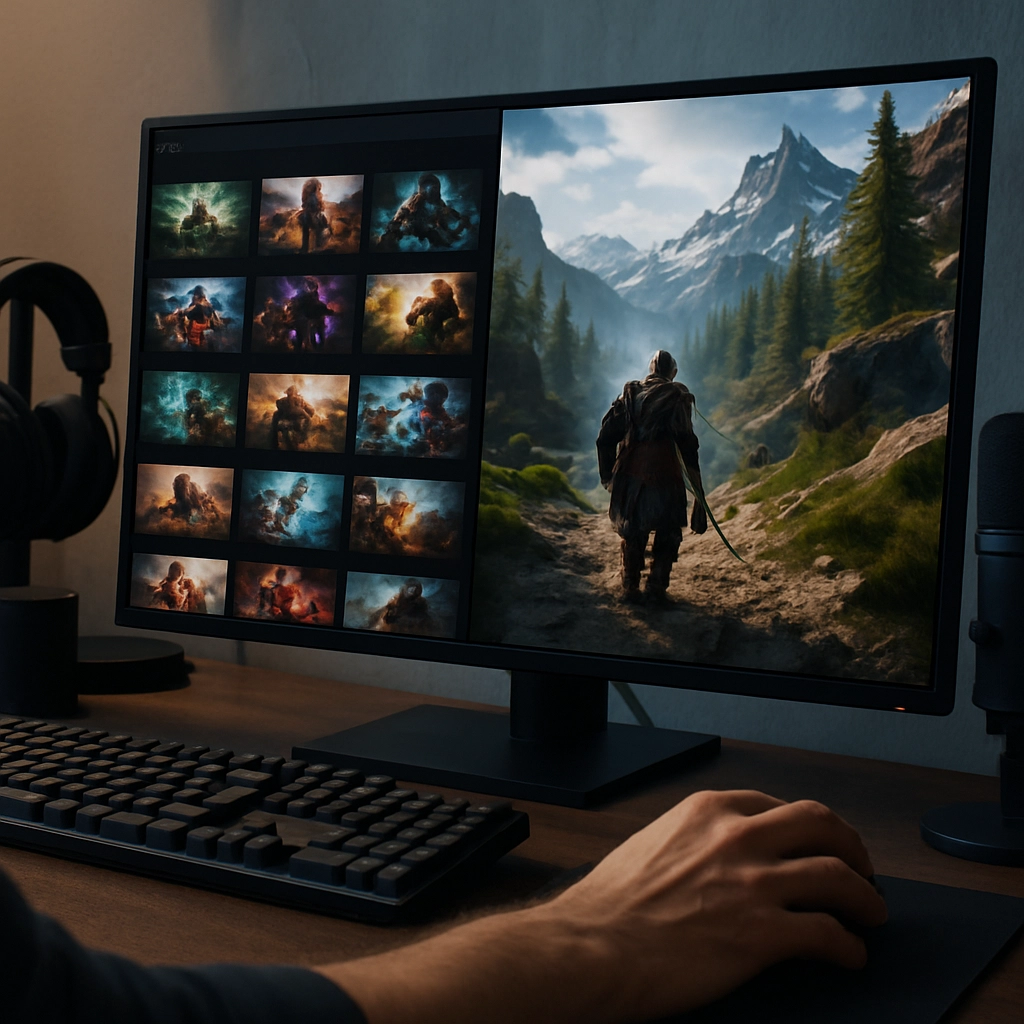
The May 2026 GeForce NOW Thursday list is not just for consumers; it is a powerful signal for game developers. Getting your game on the Thursday list is a mark of prestige and a driver of sales. Because the service removes the hardware barrier, a developer’s potential audience expands exponentially. A player with an old PC can suddenly play your demanding game. This is why many indie developers actively work with NVIDIA to ensure their games pass the 'GFN Ready' compatibility checks. The list itself acts as a marketing channel.
Real-World Example: Imagine two similar indie RPGs launching on the same day. One is featured in a GFN Thursday list with a dedicated blog post mention. The other is not. The featured game gains instant visibility. NVIDIA’s blog posts have a dedicated following of tens of thousands of 'cloud-first' gamers who wait for each Thursday update. The developer of the featured game also gains access to NVIDIA’s optimization resources. NVIDIA provides tools like NVIDIA Nsight Graphics to help developers profile and optimize their game for the cloud. The result is a win-win: the developer gets better performance on the service, and NVIDIA gets a high-quality title to add to its library. The May 2026 list is a testament to this symbiotic relationship, showcasing titles that have been specifically tuned for the RTX cloud architecture.
Section 6: The Verdict on May 2026: A New Normal for Gaming
Looking at the May 2026 GeForce NOW Thursday list, it is clear that cloud gaming has moved from a niche curiosity to a mainstream gaming pillar. The what (a new list of games), the why (hardware independence, flexibility, instant access), and the how (a sophisticated global network of RTX GPUs and advanced streaming technology) have all converged into a seamless experience. This is not a substitute for a local gaming PC for everyone; enthusiasts will always want their custom rigs. However, for the vast majority of the world's 3 billion gamers, GeForce NOW offers a gateway to experiences previously locked behind expensive hardware.
The specific games in the May 2026 list will fade in memory, replaced by June's list. But the trend is permanent. We are moving towards a future where the 'gaming PC' is not a box under your desk but a server in a data center, accessed instantly. The Thursday ritual is a weekly reminder that the video game industry is embracing a service-based, streaming-first model. Whether you are a hardcore racer, a strategy guru, or a narrative-driven adventurer, the GeForce NOW Thursday announcement is your invitation to play without limits. The May 2026 list is just another chapter in this ongoing story, but it is a chapter filled with promise, performance, and the pure joy of accessible play.