How ServiceNow and NVIDIA Are Revolutionizing Enterprise Automation with Autonomous AI Agents
What happens when the world's leading AI computing platform joins forces with a premier enterprise workflow automation company? How can businesses transform their operations with autonomous AI agents? And why should every enterprise leader pay attention to this partnership? Let's dive into the groundbreaking collaboration between NVIDIA and ServiceNow that is setting a new standard for AI-driven productivity and efficiency in the modern workplace.
Enterprise automation has long been a goal for businesses seeking to streamline operations, reduce costs, and improve service delivery. However, traditional automation solutions often fall short of delivering true intelligence and adaptability. The introduction of autonomous AI agents—powered by NVIDIA's advanced GPUs and AI software, and seamlessly integrated into ServiceNow's platform—represents a quantum leap forward. This article explores the what, why, and how of this transformative partnership, offering deep insights, real-world applications, and a vision for the future of work.
Understanding Autonomous AI Agents: The What and Why
Autonomous AI agents are intelligent software entities that can perceive their environment, make decisions, and take actions to achieve specific goals without continuous human intervention. Unlike traditional automation that follows rigid, pre-defined rules, these agents learn from data, adapt to new situations, and handle complex, unstructured tasks. The partnership between NVIDIA and ServiceNow focuses on embedding these agents into enterprise workflows, enabling them to handle everything from IT incident resolution to HR requests and customer service inquiries.
Why This Matters for Enterprises
The business case for autonomous AI agents is compelling. According to ServiceNow, organizations using AI-driven automation can reduce operational costs by up to 30% while improving response times and accuracy. For example, in IT operations, an autonomous agent can detect a server failure, diagnose the root cause, and even initiate a fix—all in seconds, rather than the hours it might take a human team. This not only boosts efficiency but also frees up skilled employees to focus on higher-value strategic work.
Moreover, these agents are not just about speed; they bring consistency and scalability. In a global enterprise, one agent can manage thousands of similar tasks across different regions, ensuring uniform quality and compliance. NVIDIA's contribution—its powerful A100 and H100 GPUs, along with the NVIDIA AI Enterprise software suite—provides the computational backbone needed to train and run these sophisticated models at scale.

How the Partnership Unlocks True Autonomy
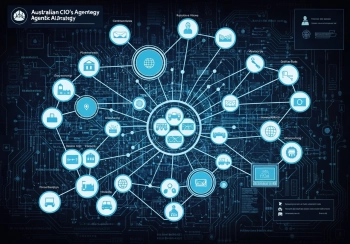
The collaboration between NVIDIA and ServiceNow is built on three key pillars: advanced AI modeling, real-time inferencing, and seamless integration. ServiceNow's Now Platform provides the workflow engine and the vast repository of enterprise data, while NVIDIA brings its expertise in deep learning and GPU-accelerated computing. Together, they create agents that can understand natural language, process visual data (like screenshots or documents), and execute actions across multiple enterprise systems.
Training and Fine-Tuning
A critical aspect of autonomy is the ability to learn from enterprise-specific data. Using NVIDIA's NeMo framework, ServiceNow customers can fine-tune large language models (LLMs) on their own historical tickets, knowledge bases, and process logs. This ensures the AI agent understands the unique jargon, policies, and workflows of that organization. For instance, a bank could train an agent to handle mortgage application queries using its specific forms and compliance rules.
Real-World Example: IT Incident Management
Consider a typical IT incident: a user reports that their laptop won't connect to the network. A traditional bot might reset the network adapter, but if that fails, it escalates to a human. An autonomous AI agent, however, can check the user's credentials, verify network permissions, inspect the configuration of the router they're connected to, and even simulate a connection to diagnose the issue. If the problem is a misconfigured VLAN, the agent can automatically correct it through the network management API. This level of autonomous problem-solving is now possible thanks to NVIDIA's powerful inferencing capabilities and ServiceNow's deep integration with IT systems.
The impact is measurable: ServiceNow reports that enterprises using these agents have seen a 40% reduction in mean time to resolution (MTTR) for IT incidents, while also increasing the percentage of incidents resolved without human intervention from 20% to over 70%.
Practical Applications Across the Enterprise
The potential for autonomous AI agents extends far beyond IT. ServiceNow and NVIDIA have identified several key domains where these agents can deliver immediate value.
Customer Service and Support
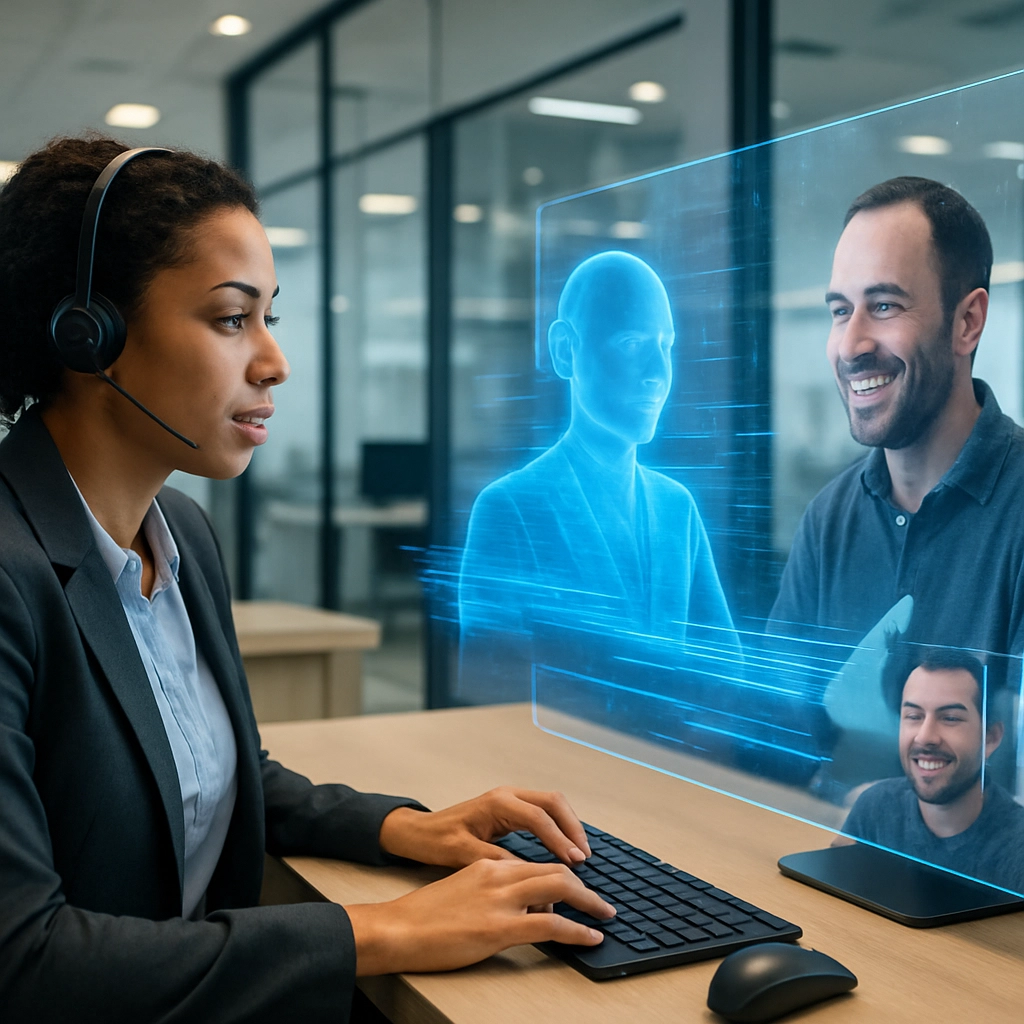
Customer service is a natural fit for autonomous agents. By integrating with ServiceNow's Customer Service Management (CSM) module, an agent can handle incoming inquiries via chat, email, or phone. It can access customer histories, product databases, and return policies to provide instant, accurate responses. For example, a telecom company might deploy an agent that can troubleshoot internet issues, schedule technician visits, or even process account changes—all without a human agent. If the customer's issue is complex, the agent can seamlessly hand off the conversation to a human, complete with a summary of what has been tried.
Human Resources and Employee Onboarding
HR departments often struggle with repetitive tasks like answering benefits questions, processing leave requests, and onboarding new employees. An autonomous agent can take over these tasks. When a new hire joins, the agent can automatically create their accounts, assign training modules, send welcome emails, and answer typical questions about company policy. NVIDIA's technology allows the agent to learn from interactions over time, becoming more efficient at predicting employee needs.
The Technology Behind the Magic: NVIDIA's Role
To truly appreciate this partnership, it's essential to understand the technical foundation NVIDIA provides. The core challenge in autonomous AI is real-time inferencing—the ability to process a request, run a large language model, and produce a response in milliseconds. NVIDIA's Triton Inference Server and TensorRT software optimize this process, running on powerful GPUs to deliver low-latency performance even for complex multi-modal tasks.
Data Privacy and Security
One of the biggest concerns for enterprises adopting AI is data privacy. Many organizations are hesitant to send sensitive data to public cloud APIs. NVIDIA and ServiceNow address this by enabling on-premises deployment. Using NVIDIA's certified systems and ServiceNow's private instance, companies can run autonomous agents entirely within their own infrastructure. The AI models are fine-tuned and executed locally, ensuring that confidential data never leaves the corporate network. This is particularly crucial for industries like healthcare, finance, and government.
Example: Healthcare Administration
A hospital could deploy an autonomous agent to handle patient appointment scheduling, insurance verification, and lab result notifications. The agent would need to access sensitive patient data (PHI) and comply with HIPAA regulations. By running on-premises with NVIDIA GPUs and ServiceNow's healthcare-specific workflows, the agent can operate securely and efficiently. It could, for instance, automatically reschedule appointments when a doctor calls in sick, notify patients via their preferred channel, and update the electronic health records—all while maintaining full audit trails.
What the Future Holds: Beyond Automation to Autonomous Operations
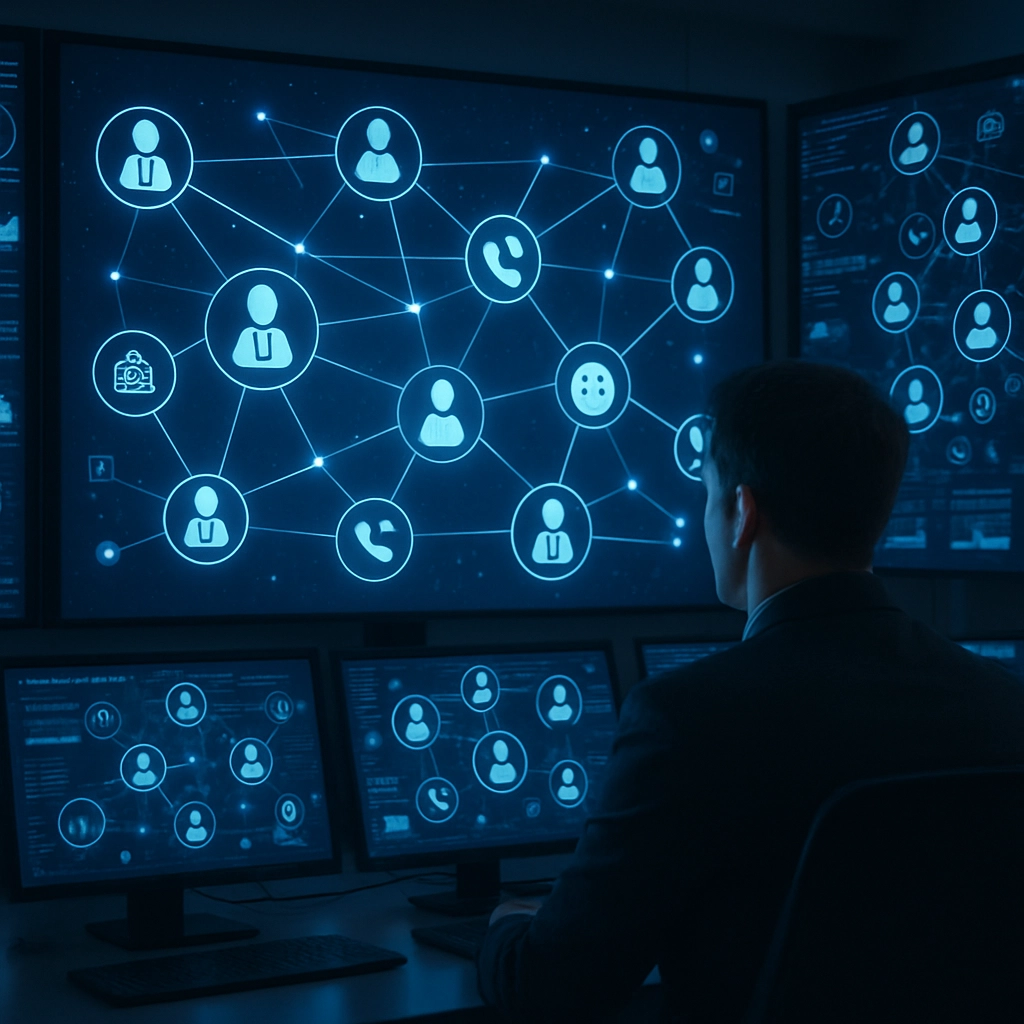
This partnership is not just about automating individual tasks; it points toward a future of autonomous operations, where entire business processes are managed by a symphony of AI agents working together. Imagine an IT department where an agent monitors server health, another manages user access, and a third handles security incidents. These agents could communicate with each other, share insights, and coordinate responses without human oversight.
NVIDIA's ongoing advancements in AI—like the development of larger, more capable foundation models and techniques for multi-agent collaboration—will only accelerate this trend. ServiceNow's platform is designed to orchestrate these agents, providing a central nervous system for the enterprise.
Challenges and Considerations
Of course, this vision is not without challenges. Enterprises must invest in data quality and governance to ensure agents have access to clean, reliable information. Trust in autonomous decisions is another hurdle; businesses need robust monitoring and explainability tools. ServiceNow's platform includes features for auditing agent actions and providing transparency, which helps build confidence. Additionally, human oversight remains critical for handling edge cases and strategic decisions.
Despite these challenges, the trajectory is clear. The collaboration between NVIDIA and ServiceNow is democratizing access to advanced AI, making it possible for any enterprise to build and deploy autonomous agents that deliver tangible business outcomes. The companies are also offering a set of pre-built agent templates for common use cases, significantly reducing the time and expertise required to get started.
Getting Started: A Practical Guide for Enterprises
For organizations eager to embrace autonomous AI agents, the path forward is clearer than ever. ServiceNow and NVIDIA offer a bundled solution that includes the necessary software, pre-trained models, and integration tools. The first step is usually a proof of concept focusing on a high-volume, repetitive task with clear success metrics—like password resets or ticket categorization.
Recommended Implementation Steps
- Identify a Use Case: Select a process that is well-documented, has ample historical data, and where automation can show quick wins. Examples include IT incident triage, employee onboarding, or customer refund processing.
- Prepare Data: Clean and label historical data from the ServiceNow platform. Use ServiceNow's native data tools to export and preprocess training examples.
- Fine-Tune the Model: Use NVIDIA's NeMo to fine-tune a base LLM (like Llama 2 or a specialized model from NVIDIA) on your specific data. This step can be done on-premises or in NVIDIA's cloud.
- Deploy and Integrate: Use NVIDIA Triton Inference Server to deploy the model, and connect it to ServiceNow's workflow engine via APIs. Configure the agent to handle specific triggers (e.g., new incident created, new ticket submitted).
- Monitor and Optimize: Use ServiceNow's Performance Analytics and dashboards to track the agent's success rate, resolution times, and user satisfaction. Continuously feed new data back into the training loop to improve performance.
Real-world pioneers are already seeing results. One global manufacturing company used this approach to automate 80% of its IT helpdesk requests, reducing costs by $2 million annually while improving employee satisfaction scores by 15 points. Another, a large financial services firm, deployed agents in its compliance department to automatically review and flag suspicious transactions, cutting false positive rates by 60%.
The era of autonomous enterprise operations is not a distant future—it is arriving now. With the combined power of NVIDIA's computing and ServiceNow's workflow expertise, businesses of all sizes can harness the full potential of AI to become more agile, efficient, and responsive. The question is no longer "if" you should adopt autonomous AI agents, but "how quickly can you start?"