What Is the Future of AI and Energy? Why Is the US Government Investing in Supercomputing? How Will This Transform Our World?
What happens when a nation's energy secretary and a pioneering AI researcher sit down for a conversation? Why is the US government pouring billions into supercomputing and artificial intelligence? How will these investments reshape the way we generate, store, and consume energy? These are not just rhetorical questions. They are at the heart of a critical dialogue between Energy Secretary Chris Wright and Ian Buck, vice president of hyperscale and HPC at NVIDIA, as explored in a recent blog post from NVIDIA. Their discussion reveals a strategic vision where AI is not just a tool for efficiency but a transformative force for the entire energy sector.
In a world grappling with climate change, rising energy demands, and the need for grid modernization, the intersection of AI and energy is perhaps the most consequential frontier of the 21st century. This article dives deep into that conversation, unpacking the strategy, the technology, and the real-world implications. From data centers powering the AI revolution to the promise of nuclear fusion, we will explore how the US government and industry leaders are charting a new course. The goal is not simply to optimize the current system but to fundamentally reimagine it.
The core premise is simple: AI requires massive computational power, which requires enormous amounts of energy. However, the same AI that drives this demand is also our best hope for making energy systems cleaner, cheaper, and more reliable. This article will break down this complex relationship into five key sections, providing deep explanations, practical examples, and a clear vision for the future.
Section 1: The Unprecedented Energy Demands of AI and Supercomputing
The first and most obvious question is: How much energy does AI actually consume? The answer is staggering. Training large language models like GPT-4 or running simulations for climate research requires data centers that are essentially small cities of electricity. These facilities consume gigawatts of power, placing immense strain on local and national grids. Energy Secretary Chris Wright and Ian Buck directly address this challenge. They argue that while AI's energy footprint is massive, it is a necessary cost for achieving broader national goals like energy security and technological leadership.
Deep Explanation: The energy consumption of a supercomputer like NVIDIA's DGX SuperPOD is not just about the compute nodes. It includes the power for cooling, networking, and storage. A single NVIDIA H100 GPU can draw up to 700 watts under full load, and a cluster of thousands of these GPUs can draw tens of megawatts. Buck explains that NVIDIA's approach involves co-designing hardware and software to maximize efficiency. For example, using high-bandwidth memory and advanced networking reduces the energy wasted on data movement. The conversation highlights that the industry's goal is not to reduce absolute energy use but to improve the efficiency of computation per watt.
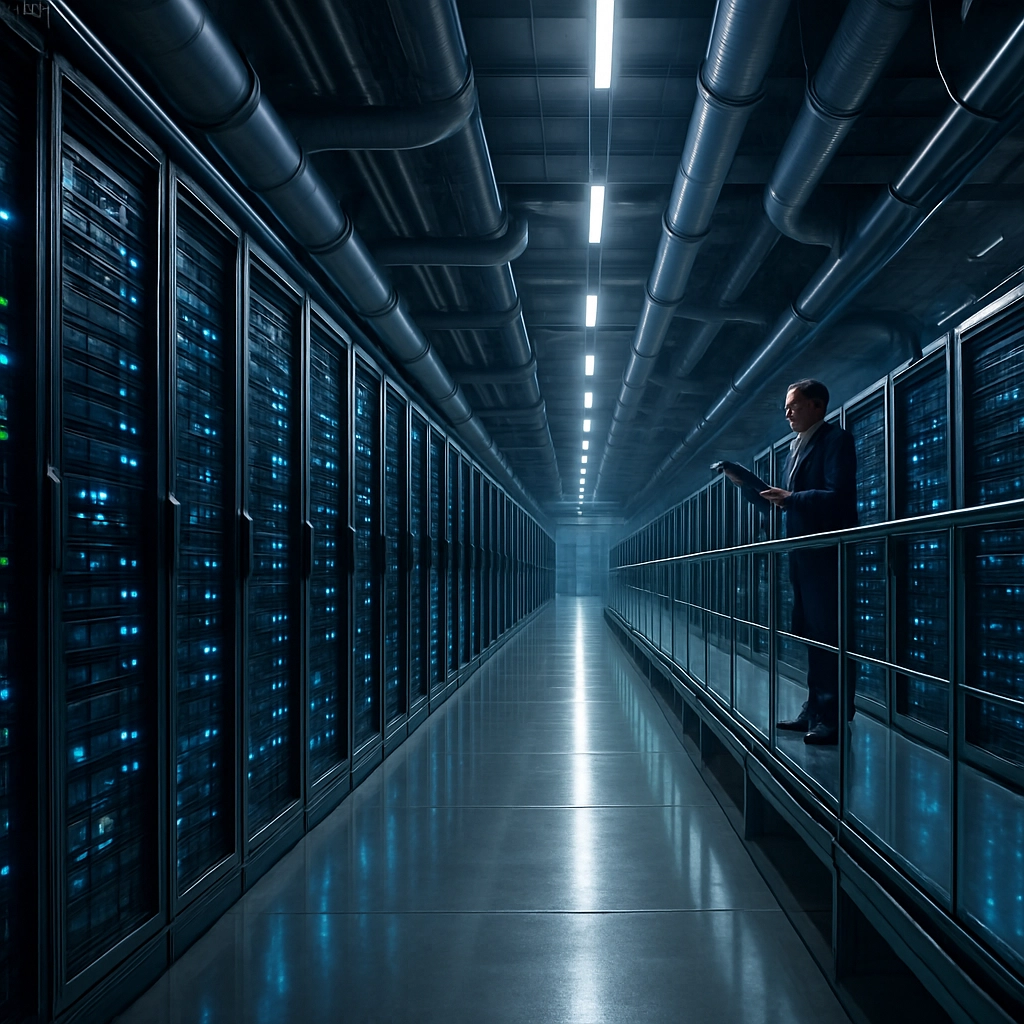
Real-World Example: The Poland National Supercomputing Center is a prime example. They are using NVIDIA's technology to build one of the most energy-efficient supercomputers in the world. By liquid cooling the GPUs and optimizing the power delivery, they aim to achieve a Power Usage Effectiveness (PUE) of 1.05, meaning almost all the energy goes directly to computing rather than being wasted as heat. This is a practical demonstration of the principles discussed by Wright and Buck.
Section 2: The Grand Challenge of Grid Modernization and Reliability
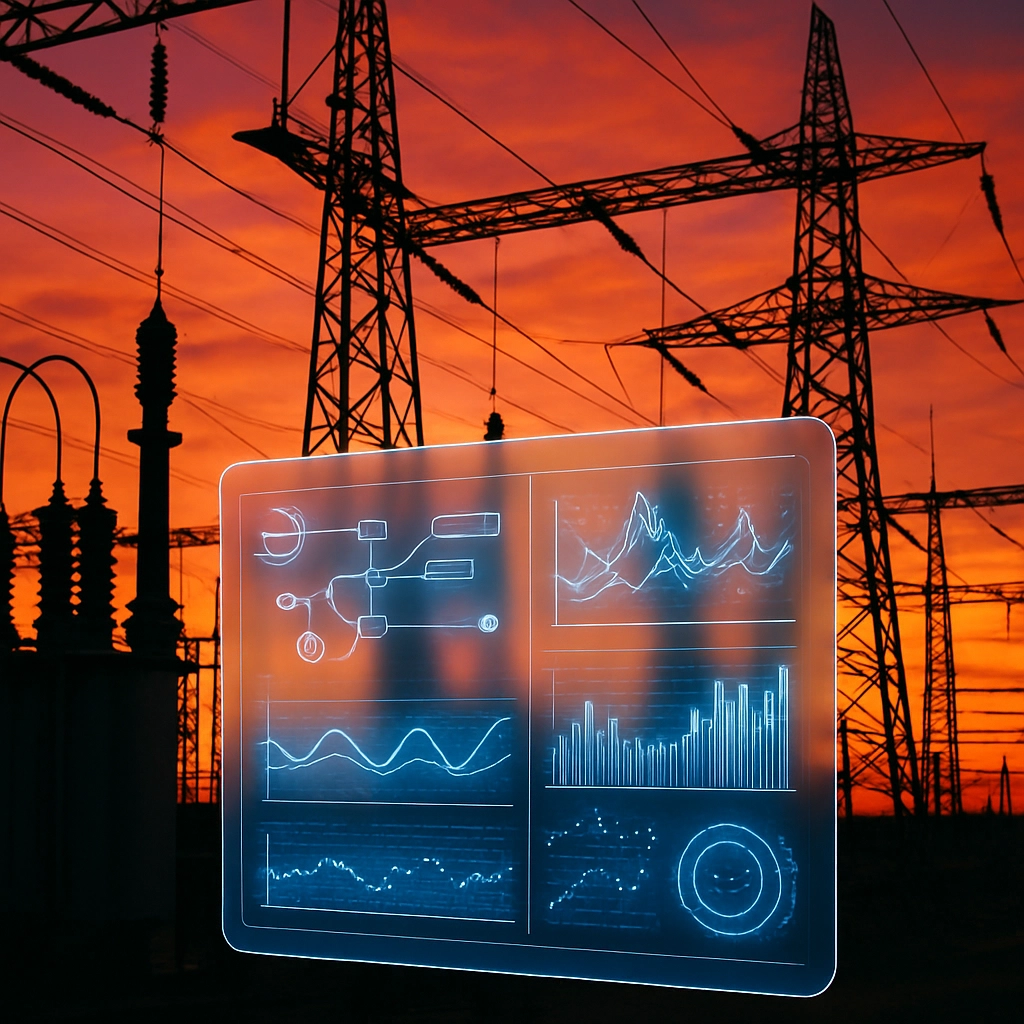
Why is the current energy grid struggling to support this boom? The grid was built for a different era—one of centralized power plants and predictable demand. Today, we have variable renewable energy sources like solar and wind, plus the unpredictable spikes from AI data centers. Secretary Wright emphasizes that grid reliability is the number one priority. Without a stable grid, nothing else works—not AI, not electric vehicles, not economic growth.
Deep Explanation: The conversation between Wright and Buck delves into the concept of grid modernization through AI. Buck explains that AI can be used to predict energy demand with incredible accuracy, forecast renewable energy generation (e.g., predicting cloud cover for solar farms), and detect faults in transmission lines before they cause outages. This is not theoretical. NVIDIA's platform, combined with utilities like PG&E, is being used to create digital twins of the entire electrical grid. These digital twins allow operators to simulate thousands of scenarios, from a heatwave to a cyberattack, and find the optimal response.
Real-World Example: In Texas, the ERCOT grid is using AI-powered forecasting to better manage the integration of wind and solar power. During Winter Storm Uri, the grid failed because natural gas plants froze. AI models can now predict the probability of such failures based on weather data and plant maintenance logs, allowing operators to proactively secure backup power or reduce load. This directly addresses the reliability concerns raised by Wright.
Section 3: AI as a Catalyst for New Energy Technologies (Fusion and Beyond)
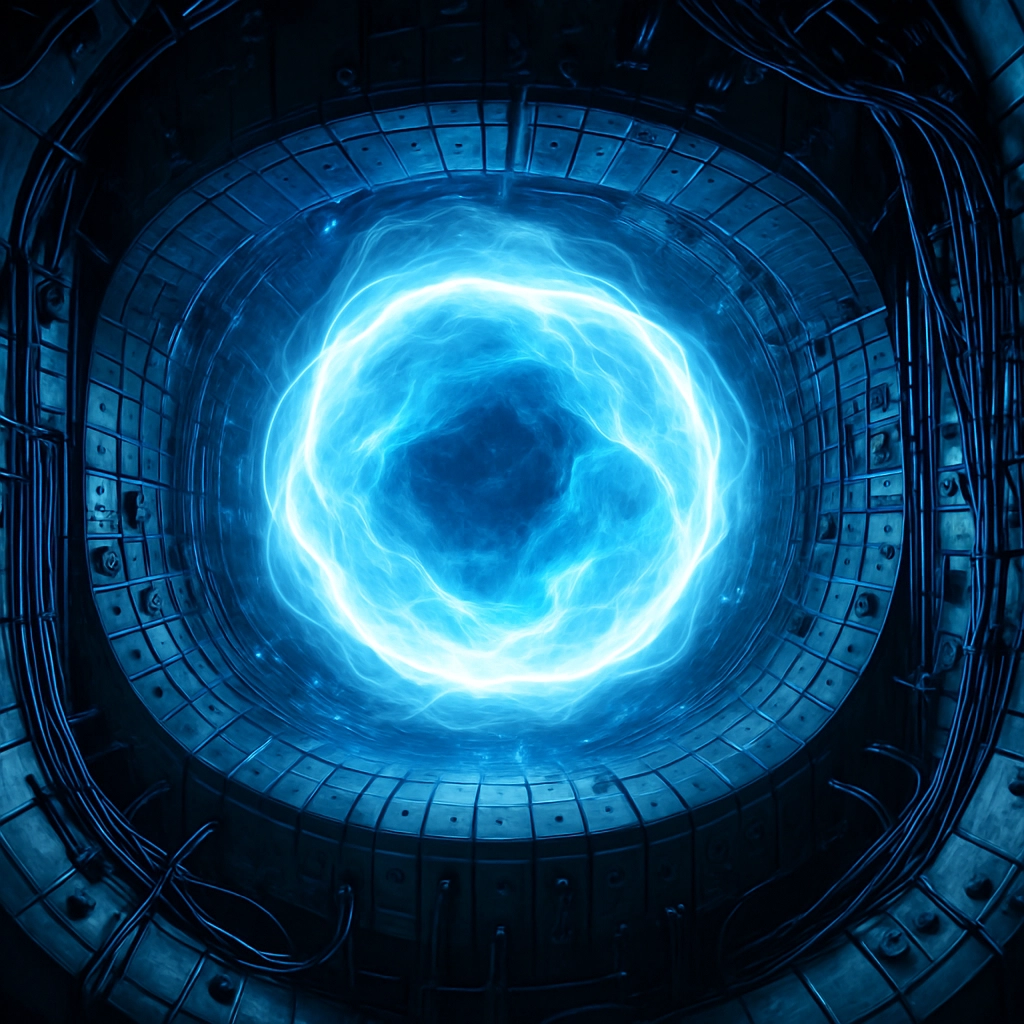
How can AI help us invent the energy sources of the future? This is perhaps the most exciting part of the conversation. Secretary Wright is deeply interested in nuclear fusion—the holy grail of clean, limitless energy. Ian Buck confirms that NVIDIA's GPUs are already being used by leading fusion labs like Commonwealth Fusion Systems and TAE Technologies to simulate the incredibly complex physics of plasma confinement.
Deep Explanation: Fusion requires containing a plasma that is hotter than the sun (100 million degrees Celsius) inside a magnetic field. The mathematics behind this is so complex that traditional CPU-based simulations can only run for a few milliseconds of real time. With GPU acceleration, researchers can now simulate hours of plasma behavior. They can use AI to optimize the shape of the magnetic field or to predict and avoid plasma instabilities that would destroy the reactor. Buck calls this the "lab-to-fab" pipeline for energy—using simulation to radically accelerate the engineering cycle of new power plants.
Real-World Example: Fermi National Accelerator Laboratory is using NVIDIA’s technology to improve the efficiency of particle accelerators, which are critical for materials science and medical isotopes. They have developed AI models that can automatically adjust the accelerator's magnets in real-time, saving thousands of hours of human tuning and reducing the energy needed to run the facility by a significant margin. This is a small-scale example of the same principles applied to fusion.
Section 4: How AI Optimizes Existing Energy Infrastructure (Oil, Gas, and Renewables)
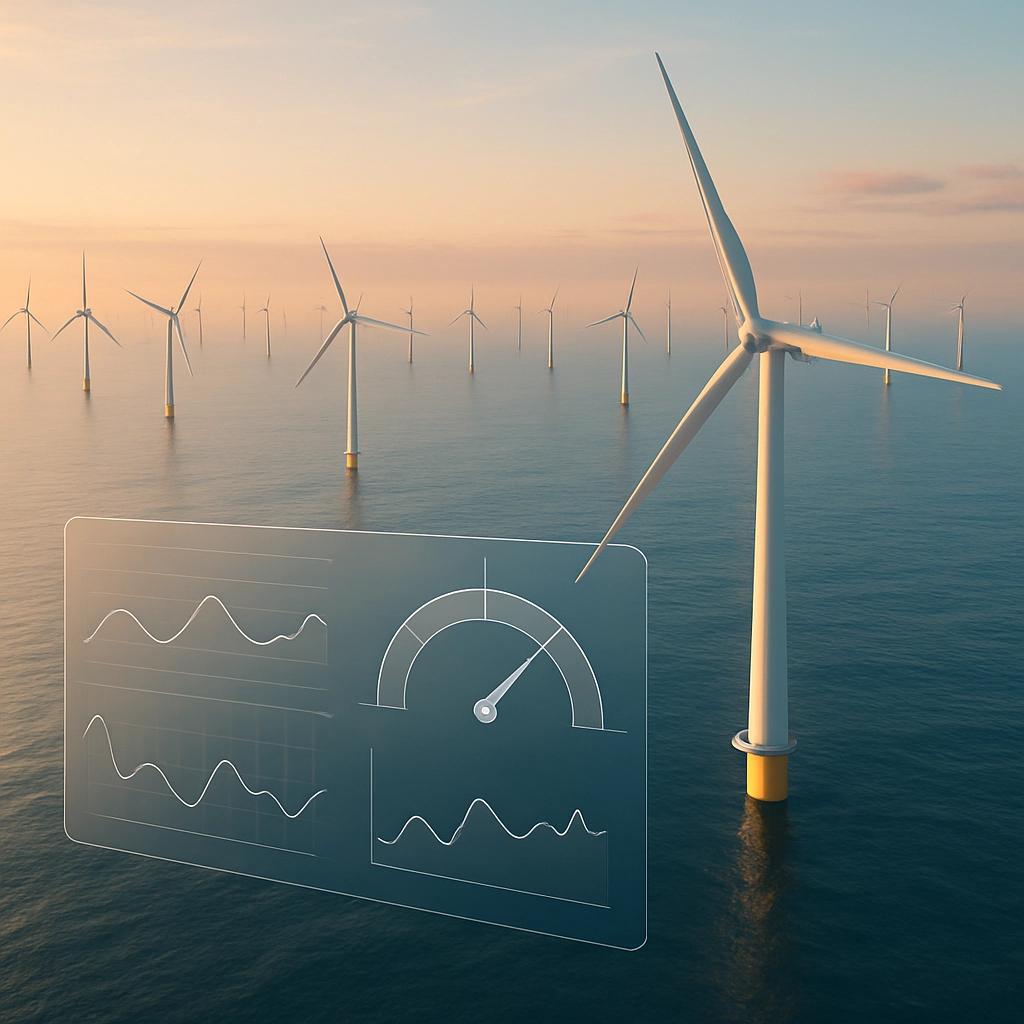
While fusion is the long-term dream, AI is also making a massive impact on the energy we use today. Secretary Wright, coming from a background in energy, understands that we must improve the current system while building the next one. Ian Buck explains that AI is being deployed across the entire spectrum of energy production—from oil and gas exploration to wind farm management.
Deep Explanation: In oil and gas, AI can analyze seismic data to find new oil fields with 80% higher accuracy than traditional methods, reducing the number of dry wells drilled and the associated environmental impact. In renewable energy, AI optimizes the angle of solar panels in real-time based on the sun's position and cloud patterns, increasing energy harvest by up to 15%. It also predicts mechanical failures in wind turbines by analyzing vibrations and sound data, allowing for predictive maintenance that prevents costly downtime. The conversation highlights that AI is not displacing human expertise but augmenting it, making operators vastly more effective.
Real-World Example: Shell uses NVIDIA GPUs to run massive simulations of their deep-sea drilling platforms. They create digital twins of the entire platform, including the subsea equipment, to train AI models that can detect early signs of equipment wear or potential leaks. This proactive approach saves millions of dollars in maintenance costs and significantly reduces the risk of environmental disasters. This is a direct application of the principles discussed by Wright and Buck.
Section 5: The National Security and Economic Imperative
Why is this a matter of national security? The conversation between Wright and Buck strongly emphasizes that energy independence and technological leadership are two sides of the same coin. Secretary Wright frames the AI-energy nexus as a strategic asset for the United States. If the US can lead in both AI and clean energy, it will have a competitive advantage over other nations for decades.
Deep Explanation: Ian Buck points out that the US Department of Energy is one of the largest funders of basic science. By building AI supercomputers like Perlmutter at NERSC, the DOE is enabling breakthroughs in materials science, chemistry, and biology that will lead to new battery technologies, more efficient solar cells, and better carbon capture methods. This creates a virtuous cycle: AI accelerates energy research, better energy powers more AI, and the nation benefits from both. The partnership between the government and companies like NVIDIA is described as a public-private partnership that is essential for the country's future.
Real-World Example: The National Nuclear Security Administration (NNSA) uses NVIDIA supercomputers to simulate nuclear weapons performance without actual testing, ensuring the safety and reliability of the US nuclear stockpile. The same simulation technology is now being applied to energy problems, like simulating the combustion process in a hydrogen turbine or the heat transfer in a nuclear reactor core. This transfer of technology from national security to energy is a powerful driver of innovation.
Section 6: The Path Forward: Collaboration, Investment, and a Shared Vision
How do we get from here to a future of abundant, clean, and intelligent energy? The final section of the conversation outlines a concrete roadmap. It requires continued investment in R&D, streamlined permitting for new infrastructure, and deep collaboration between the public and private sectors. Secretary Wright and Ian Buck agree that the technology already exists or is on the horizon. The real challenge is deployment at scale.
Deep Explanation: Buck calls for a massive expansion of computing infrastructure, which will require a corresponding expansion of energy generation. He suggests that new data centers should be built adjacent to new power sources, such as nuclear or geothermal plants, to reduce transmission losses. Wright emphasizes the need for a regulatory framework that encourages innovation while ensuring safety and reliability. They both stress that the solution is not to slow down AI but to use AI to speed up the deployment of clean energy. This includes automating the permitting process for solar farms, using AI to select the best sites for wind turbines, and accelerating the environmental review process.
Real-World Example: The Inflation Reduction Act in the US provides tax credits for both clean energy generation and for building domestic supply chains for things like batteries and solar panels. Coupled with the Department of Energy's loan program for innovative energy technologies, this is creating a powerful financial incentive for companies to invest in the AI-energy synergy. Companies like Google and Microsoft are already signing contracts to power their data centers with next-generation geothermal and small modular nuclear reactors, directly responding to the call for a new energy paradigm.
In conclusion, the dialogue between Energy Secretary Chris Wright and NVIDIA's Ian Buck is not just a conversation; it is a blueprint for the 21st century. It acknowledges the massive energy challenge posed by AI while simultaneously identifying AI as the most powerful tool we have to solve it. The path forward is clear: we must build more supercomputers, modernize our grid, invent new energy sources, and do it all with a sense of urgency and a spirit of collaboration. The future is not a pre-determined destination; it is something we are building right now, one GPU and one gigawatt at a time. The questions are no longer theoretical. The answers are being coded, simulated, and deployed today.