What Are Specialized AI Agents and How Are They Transforming Enterprise Business Applications?
What exactly are specialized AI agents, and why is the corporate world buzzing about them? How do they differ from the general-purpose chatbots we have become accustomed to? And most importantly, how can a business implement these agents without disrupting existing complex systems like SAP? These are the critical questions facing CIOs and digital transformation leaders today. As we stand on the cusp of a new era in enterprise automation, the conversation has shifted from simply using AI to answer questions to deploying intelligent agents that can act—performing specific tasks, making decisions, and collaborating with each other to achieve complex business outcomes.
The Dawn of the Agentic Era: Moving Beyond Chatbots
For the past few years, generative AI has largely been synonymous with conversational interfaces. We ask a chatbot a question, and it generates a text response. While powerful, this model is inherently passive. The agentic era changes this dynamic entirely. A specialized AI agent is an autonomous software program designed to perform a specific function or set of functions without requiring human prompting at every step. These agents are not just thinking; they are doing.
The fundamental difference lies in their architecture. A traditional AI model is a reasoning engine. A specialized agent is a reasoning engine equipped with tools, memory, and a defined set of goals. It can perceive its environment (through APIs and data feeds), make decisions based on its training and context, and execute actions that change that environment. This transition from passive to active intelligence is what makes agents such a disruptive force in enterprise software, especially when connected to mission-critical systems like SAP.

NVIDIA and SAP: A Partnership Focused on Specialized Agents
The collaboration between NVIDIA and SAP is a landmark development that perfectly illustrates the power of specialized agents. According to the blog post from NVIDIA, this partnership is not about replacing SAP systems but about augmenting them with intelligence. The core idea is to deploy specialized agents that interact with SAP's vast repository of enterprise data—covering finance, supply chain, HR, procurement, and more.
This partnership leverages the NVIDIA AI Enterprise software platform, which provides the necessary infrastructure for developing and deploying these agents. On top of this, SAP's Business AI framework—including components like the Joule copilot and the AI Core infrastructure—provides the enterprise-grade foundation. The result is a new class of applications where specialized agents can navigate the complexity of SAP modules to automate workflows that previously required manual intervention by multiple human experts.
The Core Technology Stack
Creating these agents requires a robust technological foundation. The stack typically includes:

Breaking Down the Workflow: A Real-World Example
To understand how this works in practice, consider the complex process of a supplier contract renewal, a scenario often discussed in enterprise agent use cases. This is a multi-step process that traditionally involves procurement, legal, finance, and operations teams. With specialized agents, this workflow can be transformed:
Step 1: The Orchestrator Agent receives a signal that a contract is due for renewal. It activates a set of specialized sub-agents.
Step 2: The Procurement Agent queries the SAP S/4HANA system to pull historical data on the supplier's performance, pricing, and delivery times.
Step 3: The Finance Agent checks the company's budget, analyzes market rates, and recommends an optimal price range based on financial models.
Step 4: The Legal Agent reviews the existing contract against a database of preferred clauses and flags any non-standard terms that require human review.
Step 5: The Orchestrator Agent compiles all findings into a comprehensive report and action plan, which is then presented to the human procurement manager through the Joule copilot interface. The human can review, approve, or modify the plan before the agent executes the renewal in the system.
This entire process, which might have taken days or weeks of back-and-forth emails and meetings, can be reduced to hours. The key insight is that the agents do not replace the human decision-maker. Instead, they handle the heavy lifting of data gathering, analysis, and process execution, allowing the human to focus on high-value judgment calls and strategy.

The Critical Components of a Successful Agent
Not all agents are created equal. For an agent to be effective in a high-stakes enterprise environment like SAP, several critical components must be in place.
Memory and Context
An agent must have a concept of memory. Short-term memory allows it to understand the context of the current conversation or task. Long-term memory, often enabled by a vector database, allows it to recall past interactions, historical data, and company policies. Without robust memory, an agent acts as an amnesiac, requiring all context to be provided with every request, which defeats the purpose of automation.
Tool Use and API Integration
An agent is useless if it cannot interact with the world. This is where tool use comes into play. An agent can be given a set of tools, which are essentially API calls to external systems. For an SAP agent, these tools might include functions like 'CheckInventoryLevels', 'CreatePurchaseOrder', 'UpdateCustomerRecord', or 'RunFinancialReport'. The agent's reasoning engine determines which tool to use and when. The elegance of this approach is that the agent's language capabilities allow it to understand complex instructions, and its tool use capabilities allow it to execute them.
The Orchestrator Pattern
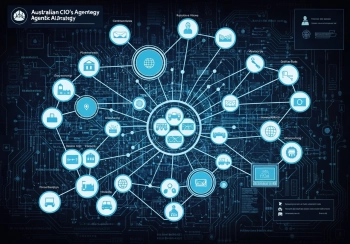
A single agent is rarely sufficient for complex tasks. The most powerful pattern is the Orchestrator Pattern, where a 'boss' agent delegates tasks to specialized 'worker' agents. The orchestrator is responsible for planning, breaking down a large task into smaller sub-tasks, assigning them to the correct worker agent, and then synthesizing the results. This delegation model mirrors human organizational structures and allows for massive scalability and specialization.
Overcoming the 'Hallucination' Problem in Actions
One of the greatest fears with AI in enterprise systems is hallucination—when the AI fabricates an answer. In a conversational setting, this is a nuisance. In an SAP setting where an agent might generate a purchase order or update a financial record, a hallucination could be catastrophic. NVIDIA and SAP are tackling this through rigorous guardrail systems and structured outputs.
The approach involves constraining the agent's actions to a predefined set of validated functions. The agent does not 'write' code to interact with SAP; it calls a specific, pre-audited API function. Furthermore, the orchestrator agent can implement a 'human-in-the-loop' check for high-stakes actions, such as executing a payment over a certain threshold. This combination of structural constraints and human oversight creates a safe operating environment that mitigates the risk of costly errors while still delivering significant efficiency gains.
The Future of Work: Collaboration Between Humans and Agent Swarms
The ultimate goal of this technology is not to create fully automated 'lights-out' enterprises, but to create a symbiosis between human expertise and machine efficiency. We are moving toward a future where every knowledge worker has a 'swarm' of specialized agents at their disposal.
Imagine a supply chain manager who has a team of agents: one monitors global shipping routes for disruptions, another tracks raw material prices, a third manages inventory levels based on demand forecasts, and a fourth handles communication with logistics partners. The manager's role shifts from being a manual laborer in spreadsheets to being a conductor of an intelligent orchestra. They set the strategy, define the goals, and handle exceptions, while the agents execute the continuous, data-intensive tasks.
This is the vision that NVIDIA and SAP are building towards. It is a vision that promises to unlock significant value from existing enterprise software investments, reduce operational friction, and empower employees to focus on the creative and strategic work that drives innovation. The agentic era is not about replacing humans; it is about giving them superpowers.