
The NVIDIA Grace CPU: What It Means and How It Will Transform Computing
What if the future of computing wasn't just about making chips faster, but about making them smarter, more efficient, and purpose-built for the most demanding tasks on the planet? Why is a company best known for its graphics cards suddenly building a central processor? And how will this single chip change everything from scientific research to the way we run global data centers? These are the questions surrounding the announcement of the NVIDIA Grace CPU, a landmark moment in the history of modern computing. This article dives deep into the announcement, exploring the technology, its purpose, and its profound implications for the world of high-performance computing and beyond.
The announcement of the NVIDIA Grace CPU is not merely a product launch; it is a strategic declaration. For decades, NVIDIA has dominated the world of accelerated computing with its GPUs. The Grace CPU represents a pivot from being a supplier of specialized components to becoming a creator of holistic, powerhouse computing systems. This ambitious new processor is designed from the ground up to solve the most brutal bottlenecks in modern AI and HPC (High-Performance Computing) workloads.
The Why and What: Understanding the Need for Grace
The most immediate question is: why does the world need a new CPU from NVIDIA? The answer lies in the massive gap between the hunger of modern AI models, like Large Language Models (LLMs), and the ability of current CPU architectures to feed them efficiently. Traditional CPUs are generalists. They are excellent at handling a wide variety of tasks, but they are not optimized for the relentless, high-bandwidth data streams required by today's artificial intelligence accelerators. The Grace CPU, named after the legendary computer scientist Grace Hopper, is a specialist. It is purpose-built to be the perfect companion for NVIDIA's own GPUs, creating an ecosystem of ultra-fast, seamless data flow.
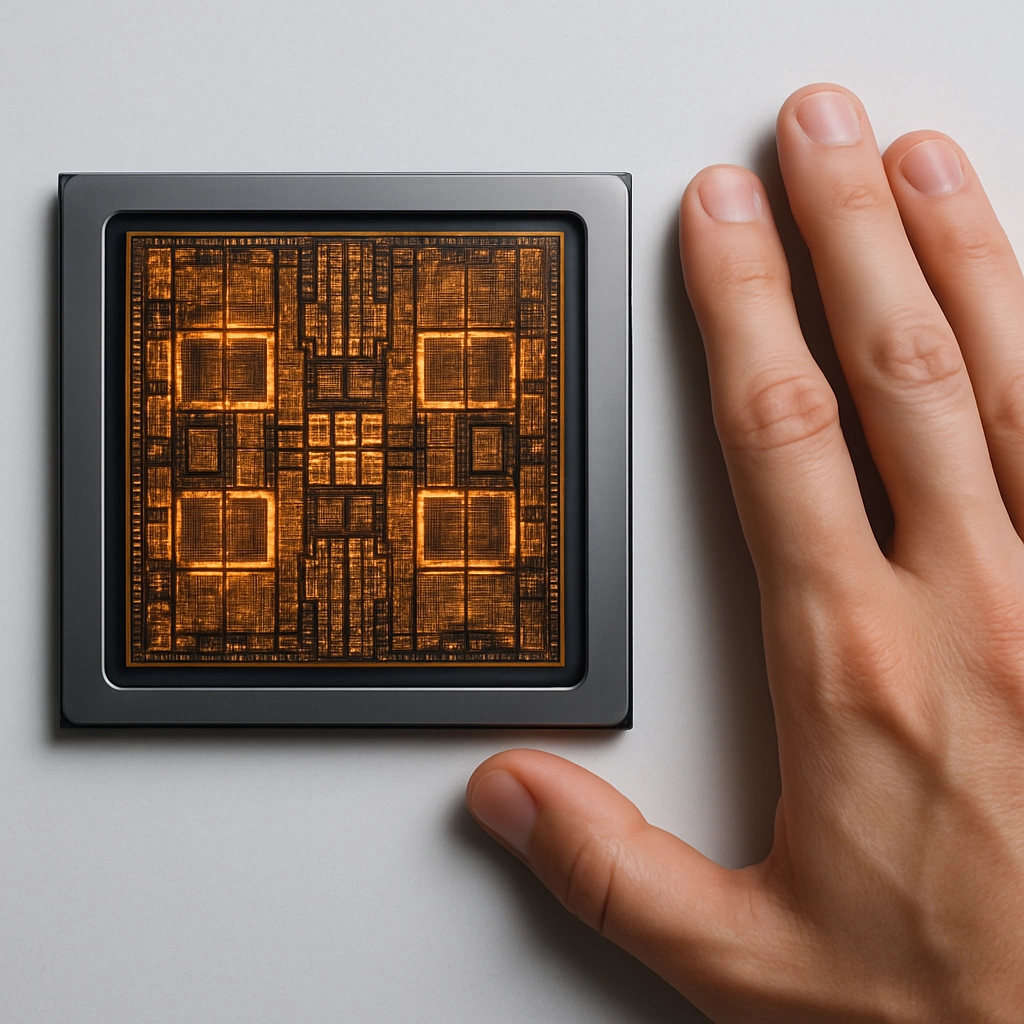
At its core, the Grace CPU is a high-performance, energy-efficient processor built on the Arm architecture. This is a significant departure from the x86 architecture that dominates the server market (think Intel and AMD). By using Arm, NVIDIA gains the ability to create a custom, highly integrated system, achieving unparalleled power efficiency and bandwidth. The most jaw-dropping statistic from the announcement is the sheer memory bandwidth the Grace CPU will support when paired with its GPU counterpart. This connection, enabled by NVIDIA's own NVLink-C2C interconnect, will deliver over 900 GB/s of total bandwidth. To put that in perspective, that is nearly ten times the bandwidth of current PCI Express connections.
How Grace Solves the Data Bottleneck Problem
To understand the true impact of Grace, one must understand the concept of the Von Neumann bottleneck. This is the fundamental limitation where the speed of data transfer between the CPU and memory is far slower than the speed at which the CPU can process that data. For AI training and inference, this is a catastrophic problem. A GPU can process billions of calculations in a second, but if it has to wait for a slow CPU and memory system to feed it data, it sits idle. The result is wasted time, energy, and money.
NVIDIA’s solution with Grace is to eliminate this bottleneck. The design integrates the CPU and memory via a super-fast, low-power interconnect. This is not just a faster cable; it is a fundamental re-engineering of the system architecture. The Grace CPU features a massive LPDDR5X memory subsystem that provides incredible bandwidth while consuming significantly less power than traditional server memory (DDR5). This is crucial for deploying massive AI models, where memory capacity and speed are the primary constraints.
A perfect example of this in action is the training of a trillion-parameter model. Using traditional x86 servers, data movement between the CPU, GPU, and storage becomes a chaotic and energy-draining dance. With the Grace CPU, the entire system becomes a unified, coherent memory pool. The data simply flows from the CPU to the GPU with minimal latency. This means scientists training models for drug discovery or climate modeling can achieve results in weeks instead of months, while using a fraction of the electricity.
Real-World Applications: From Scientific Discovery to Enterprise AI
The potential of the Grace CPU is not locked in a theoretical future; it is being designed for concrete, world-changing applications. One of the most significant use cases is in digital twins. Imagine simulating the entire human heart for medical research, or modeling the airflow around a new airplane design. These tasks require a mind-boggling amount of compute and memory. The Grace CPU supercharges the simulation pipeline, allowing for more detailed and accurate models to be built and run in real-time.
Another critical application is in the training of Recommender Systems which power the world's largest online platforms. These systems require reading and processing massive tables of data from memory. The Grace CPU’s unprecedented memory bandwidth allows these inferencing tasks to become nearly instantaneous. Furthermore, its energy efficiency is a game-changer for the growing number of companies looking to build their own AI infrastructure. By reducing power draw, companies can lower their carbon footprint and operational costs, making AI deployment more sustainable and accessible.

The Future of Data Centers: Energy Efficiency as a Cornerstone
The sweeping trend in the data center industry is a relentless push for energy efficiency and sustainability. Data centers consume an estimated 1-2% of the world's electricity, a figure that is rapidly growing with the boom in generative AI. Traditional CPUs can be incredibly power-hungry, converting a large portion of their energy into heat rather than compute. The Grace CPU is built with an Arm-based architecture that is inherently more power-efficient than x86 for certain workloads.
NVIDIA claims the Grace CPU delivers 2x the performance per watt compared to a leading x86 CPU in the same form factor. For a data center operator, this is a revolutionary statistic. It means they can either double their compute capacity within the same power envelope, or achieve the same compute power while significantly reducing their electricity bill and cooling requirements. This leads to a lower Total Cost of Ownership (TCO), faster deployment times, and a much smaller environmental footprint. The Grace CPU is not just a faster chip; it is a greener chip.
The Grace CPU is likely to be the cornerstone of the next generation of hyperscale data centers. These facilities, run by companies like Amazon, Google, and Microsoft, operate at a scale that makes even a 10% improvement in power efficiency worth hundreds of millions of dollars. The ability to run more AI workloads in the same square foot of data center space, without exceeding power limits, is a strategic advantage that will shape the competitive landscape of cloud computing for years to come.
The Competitive Landscape: x86 vs. Arm in the Data Center
For decades, the data center market was an almost exclusive duopoly between Intel and AMD (x86). The introduction of the Grace CPU signals a major shift toward Arm-based processors. While Arm has long been the dominant architecture in the mobile world, its move into servers represents a maturity and capability that is now ready for prime time. Companies like Amazon (with its Graviton series) have already made significant headway in this space. However, NVIDIA’s Grace CPU is unique because it is not a standalone server chip; it is a true system brain designed to work perfectly with its GPU accelerators.
This integration is the key differentiator. Anx86 server might have great CPU performance but a slow connection to the GPU. The Grace CPU eliminates that weakness. For workload specific to AI and HPC, this integrated architecture will likely outperform any mix-and-match combination of parts from other vendors. This is a bet on the idea that the future of computing is about optimized systems, not just isolated components.

Conclusion: The New Center of the AI Universe?
The NVIDIA Grace CPU is more than a processor; it is the manifestation of a vision where computing is no longer a general-purpose tool but a purpose-built engine for specific, monumental tasks. It represents a fundamental solution to the problem of data movement, which has become the single greatest barrier to progress in AI and science. By obliterating the bottleneck between the CPU and memory, Grace unlocks new levels of performance and efficiency that were previously unimaginable.
The arrival of the Grace CPU is a clear signal to the rest of the technology industry. The era of treating the CPU as a sovereign, general-purpose unit is ending. The future belongs to highly integrated, purpose-built system architectures that are optimized for the specific flow of data required by machine learning. For scientists, data center operators, and engineers, the Grace CPU offers a path to doing more with less: more compute, less power, less time, and less complexity. It is a bet on the future of accelerated, sustainable, and intelligent computing. The question is no longer whether this future will arrive, but how quickly the world will adapt to it.