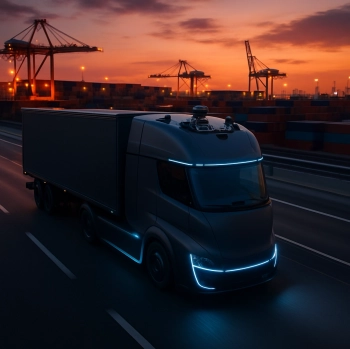
The Connected Car Paradox: Why Unsecured Connectivity Architecture Now Defines Vehicle Safety
What happens when the most advanced feature of your car—its connectivity—becomes its greatest vulnerability? This is the central question facing the automotive industry today. As vehicles transform from mechanical machines into software-defined platforms with persistent internet connections, the architecture that enables navigation, entertainment, and autonomous driving functions has created a sprawling attack surface. The irony is stark: the very technology designed to make driving safer and more convenient is introducing risks that could compromise both digital privacy and physical safety. Why is this happening, and how can manufacturers address the disconnect between connectivity and security? This article explores the critical importance of secure connectivity architecture for connected vehicles, drawing from expert analysis and industry developments.
The connected vehicle revolution is undeniable. By 2025, industry estimates predict over 70% of new vehicles will be connected to the internet, cellular networks, and cloud services. These vehicles will generate massive amounts of data—from telemetry and location information to driver behavior and entertainment preferences. Yet, as vehicles become rolling data centers on wheels, the security of the underlying architecture has often lagged behind feature development. The consequences of this disconnect are already being felt, with researchers demonstrating successful remote attacks on vehicle systems through vulnerable cloud interfaces and insecure hardware modules.
The core problem, as highlighted by cybersecurity experts, is that automotive security has traditionally focused on physical protection—locking doors, immobilizers, and tamper-resistant ECUs. Modern connectivity introduces entirely new threat vectors: over-the-air (OTA) updates, third-party app ecosystems, and V2X (vehicle-to-everything) communication channels. A single misconfigured cloud API could expose millions of vehicles to remote control manipulation. As automotive software architect Maria Hernandez recently noted at the Connected Vehicle Expo, "We're building the world's largest IoT network on wheels, but applying security models designed for standalone hardware."
Section 1: The Evolving Threat Landscape for Connected Vehicles
The security challenges facing connected vehicles are not merely theoretical. High-profile incidents have demonstrated the real-world implications. In 2015, researchers Charlie Miller and Chris Valasek famously hacked a Jeep Cherokee through its Uconnect infotainment system, sending commands to the vehicle's CAN bus to disable brakes and steering. This attack targeted the vehicle's cellular connection, bypassing physical access entirely. Since then, researchers have found critical vulnerabilities in cloud APIs of major automakers, allowing unauthorized access to vehicle functions like remote start, door lock, and GPS tracking.
The Expansion of Attack Surface
Modern vehicles contain over 100 million lines of code across dozens of ECUs (Electronic Control Units). Each internal communication bus, external wireless interface (4G/5G, Bluetooth, Wi-Fi, GPS), and cloud service endpoint represents a potential entry point. The industry has shifted from a limited threat model (key fob with rolling codes) to an unbounded one where attackers can operate from anywhere in the world. Notable examples include:
A 2023 study by Upstream Security found that remote attacks now represent over 50% of automotive cyber incidents, with 40% targeting cloud and mobile app interfaces. This shift underscores the urgency of architecting security from the ground up rather than bolting it on after deployment.
Section 2: Why Traditional Automotive Security Architecture Fails
Traditional automotive security was designed for a closed, isolated environment. Each vehicle operated independently with minimal external communication. Modern connected vehicles break this model entirely. Why does existing architecture fail? The answer lies in three fundamental mismatches:
Trust Models
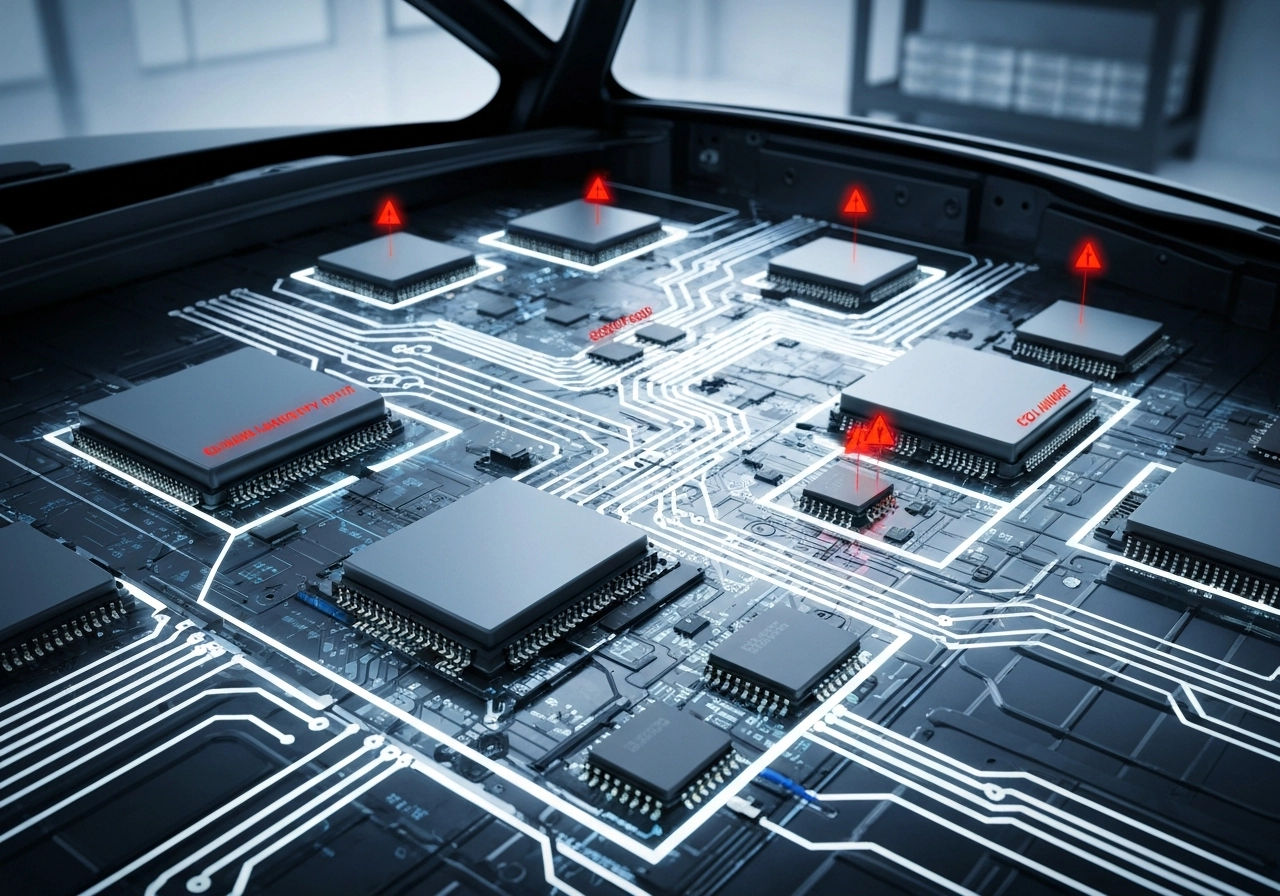
Classic automotive security operates on a zero-trust model internally? Not exactly. Many legacy ECUs assume trust because communication occurs within the vehicle's physical boundaries. Connectivity obliterates these boundaries. A compromised telematics unit can now masquerade as a legitimate bus member, injecting fraudulent messages. Cryptographic authentication between ECUs is still not ubiquitous across the industry, particularly on critical safety systems.
Update Pacing
Software security patches for vulnerabilities often lag behind discovery by months or years due to physical dealership visits. OTA update capabilities vary widely across manufacturers. Even with OTA, some systems require in-person software updates because of hardware compatibility constraints. This creates a dangerous window of vulnerability. The WannaCry ransomware attack, which exploited SMB vulnerabilities, demonstrated how quickly unpatched systems can be compromised. Automotive systems face similar windows but with physical safety consequences.
Supply Chain Complexity
A single vehicle contains components from dozens of suppliers, each with their own security practices. A security flaw in a third-party infotainment module could provide a causal path to braking systems. Recent supply chain attacks like SolarWinds highlight the difficulty of vetting every component. Automotive OEMs rarely have full visibility into the security posture of every supplier's software stack, creating composite attack surfaces that no single entity fully secures.
Section 3: The Connectivity Architecture that Matters Now
Industry leaders now recognize that security must be embedded into the connectivity architecture from the beginning. This involves several key design principles. How can manufacturers implement these principles effectively?
Secure by Design Principles
Critical safety functions must be logically isolated from entertainment and convenience features. This means using hardware-based isolation mechanisms like ARM TrustZone or Intel SGX to separate CAN bus controllers from infotainment processors. Any communication between zones must pass through a security gateway that validates message origin, type, and context. Tesla's approach of separating Autopilot and Media Control Units is a leading example.
V2X and Infrastructure Security
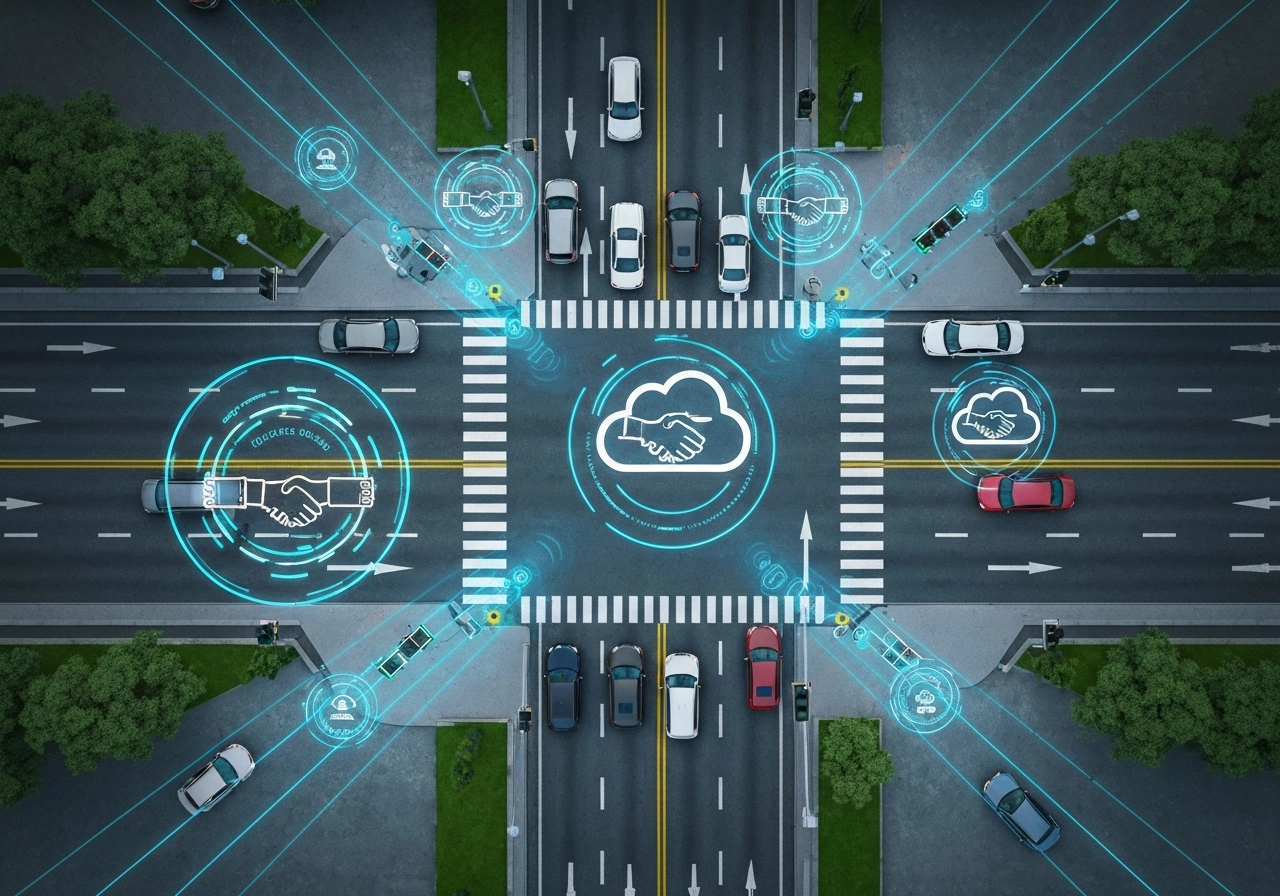
Vehicle-to-infrastructure communication protocols like 5G C-V2X require robust PKI (Public Key Infrastructure) to authenticate messages between vehicles and infrastructure nodes. Without proper certificate validation, malicious actors could inject false traffic light status or hazard warnings. The US Department of Transportation’s V2X security credential management system (SCMS) provides a framework, but deployment remains fragmented across states and manufacturers. Real-world tests in urban areas show that even minor delays in PKI validation can cause operational issues in time-critical safety applications.
Section 4: Real-World Applications and Architecture Implementations
Theoretical security frameworks are insufficient without practical implementations. Several automotive players are demonstrating how to build connected vehicle security into their architectures. These examples illustrate the tangible steps being taken today.
Example 1: Volvo's Centralized Compute Platform
Volvo's latest EV platform uses a centralized computer unit running NVIDIA Orin chips that handles all infotainment, connectivity, and autonomy tasks. This platform runs safety-critical applications and convenience features on separate software containers with no shared memory space. The system verifies every software update's signature before applying it, and maintains an immutable event log for forensic analysis. Volvo’s approach demonstrates that even with high computational consolidation, security can be achieved through careful virtualization and hardware isolation.
Example 2: BMW's eCall System with End-to-End Encryption
BMW's latest connected car platform uses end-to-end encryption for all communication between the vehicle's telematics unit (TCU) and BMW Cloud. The TCU generates unique session keys for each cloud session, with certificates issued by an internal PKI that is regularly refreshed. This prevents eavesdropping or replay attacks, especially critical for emergency call systems that must operate reliably even during network congestion. The company has open-sourced parts of their security framework so other manufacturers can adopt similar standards.
Example 3: Waymo's Sensor Integration Layer
Waymo's autonomous fleet requires redundancy not just in hardware but in security architecture. Each sensor—LiDAR, radar, camera—produces data that must be authenticated and timestamped to prevent spoofing or data injection. Waymo uses dedicated hardware security modules (HSMs) within each sensor mounting unit that digitally sign every data packet. The vehicle's on-board computer verifies signatures before fusing sensor data for decision-making. This architecture prevents a compromised LiDAR unit from feeding false data that could cause a collision.
Section 5: The Role of Regulations and Standards
Industry standards and government regulations are evolving to reflect the connected vehicle security imperative. Why are these standards critical, and how are they shaping the industry?
UN Regulation No. 155 and ISO/SAE 21434
The United Nations Economic Commission for Europe (UNECE) Regulation No. 155, effective since January 2023, mandates that new vehicle types must have a Cybersecurity Management System (CSMS) in place. This regulation requires manufacturers to demonstrate continuous security management throughout a vehicle's lifecycle, including vulnerability reporting, risk assessments, and security updates. ISO/SAE 21434 provides the technical framework for implementing these requirements. Non-compliance means a vehicle cannot be sold in regulated markets like the EU, Japan, and South Korea. This regulation is forcing global supply chains to adopt consistent security practices.
North American Developments
The US National Highway Traffic Safety Administration (NHTSA) issued voluntary cybersecurity guidelines in 2016, updated in 2022. However, the absence of mandatory regulations has led to fragmentation across states and models. Tesla, GM, and Ford have largely adopted UNECE-like practices voluntarily for their global platforms, but budget models from smaller manufacturers may lack equivalent protection. The recent Cybersecurity and Infrastructure Security Agency (CISA) focus on automotive OEMs suggests mandatory frameworks may be on the horizon.
Section 6: The Future of Connected Vehicle Security Architecture
Looking ahead, the security of connected vehicles will depend on architectural decisions made today. What should manufacturers prioritize in the next five years?
Quantum-Resistant Cryptography
With quantum computing on the horizon, current cryptographic algorithms (RSA, ECC) will become breakable. Vehicle ECUs that remain in service for 15+ years must be upgradable to post-quantum cryptographic (PQC) standards. The NIST PQC standardization process is nearing completion, and forward-thinking OEMs are already including hardware accelerators for lattice-based signature algorithms. Toyota and BMW have joined research consortia exploring PQC integration for long-life vehicle components.
Artificial Intelligence for Threat Detection
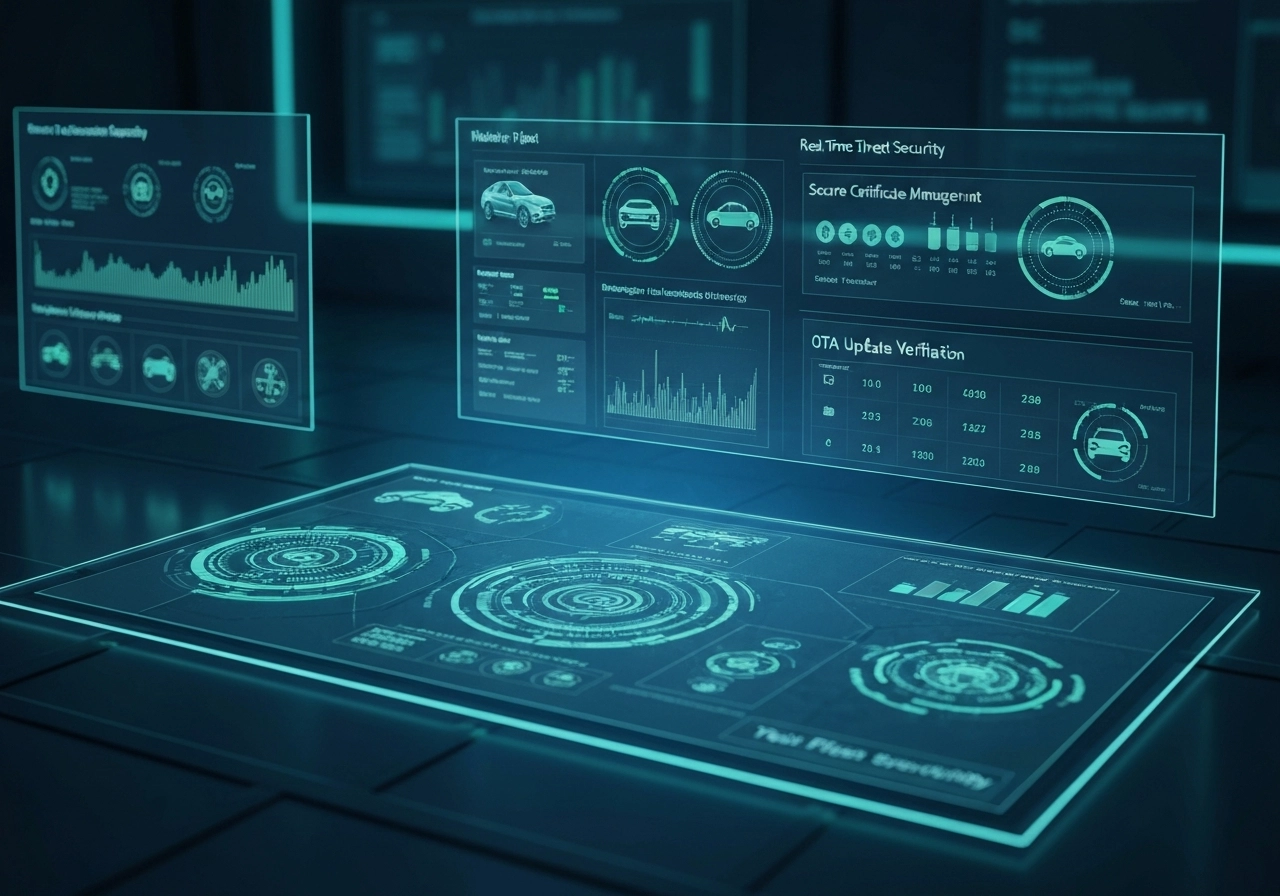
AI/ML models trained on vehicle CAN bus traffic can detect anomalies indicative of cyber attacks in real-time. Several startups are deploying lightweight neural networks that run on vehicle domain controllers to detect CAN message injection. These models can distinguish between normal driving behavior (sudden braking due to obstacle) and malicious brake commands (decoupled from driver input). Ripple motion in the steering wheel CAN messages might indicate a replay attack even when the vehicle is parked. The challenge is ensuring the AI models themselves aren't poisoned during training.
Hardware Root of Trust
The ultimate defense lies in hardware-based security modules that provide immutable identity for each vehicle component. Apple's T2 chip and Google's Titan M demonstrate how hardware roots-of-trust can secure consumer devices. Automotive versions are emerging, such as Infineon's AURIX TC4x series with integrated HSMs supporting up to NIST SP 800-193 security requirements. These chips verify firmware signatures before boot, authenticate OTA updates, and provide isolated key storage. Standardizing their adoption across all ECUs could eliminate entire classes of attacks.
Sustainable Security Economics
Perhaps the biggest challenge is financial. Adding security hardware and software increases vehicle cost by an estimated $50-$200 per unit. For high-volume, low-margin models, this represents a significant additional expense. However, the cost of a major security incident—recalls (average $1.1 billion per incident for automotive), legal liabilities, brand damage—is far higher. Architected security must be seen as an investment in brand trust and regulatory compliance rather than an optional feature. The automotive industry can learn from consumer electronics where secure platforms (iOS, Android) have become market differentiators.
The connected vehicle security paradox is solvable, but only if the industry pivots from retroactive patching to proactive architecture design. Manufacturers that embrace hardware-secured, software-defined platforms with continuous vulnerability management will lead the next era of automotive safety. Those that continue to treat security as an afterthought risk leaving their customers—and their reputations—vulnerable to attack. The road ahead is connected, but it must also be secure.
Conclusion
What we have learned is that connected vehicle security is not just about stronger firewalls or better encryption—it's about fundamentally rethinking the connectivity architecture that underlies modern vehicles. The threat is real and growing, with remote attacks as the dominant vector. But the solutions are also clear: hardware-based isolation, zero-trust internal communication, robust OTA update mechanisms, and adherence to international standards like UN R155.
Why this matters now more than ever is the accelerating adoption of V2X, autonomous driving functions, and over-the-air software updates. With millions of vehicles entering service with decade-long lifecycles, the architectural decisions made in 2024 will determine security postures until 2035. Every manufacturer must prioritize connectivity architecture security as a core engineering requirement, equal in importance to crash safety and emissions compliance.
How will the industry respond? The winners will be those that treat their vehicles as secure, evolving digital platforms rather than static hardware devices. For consumers, the message is to ask about a vehicle's security architecture before purchase—does it have hardware security modules? Can it receive OTA security patches? Is its cloud communication encrypted end-to-end? In the connected vehicle era, cybersecurity is the new crash safety, and connectivity architecture matters most.