
What Is NanoCo’s Nanoclaw Sandboxed Agent and Why Does It Matter?
What exactly is a sandboxed agent in the modern landscape of artificial intelligence and cloud computing? Why are developers and organizations suddenly paying close attention to NanoCo’s Nanoclaw architecture, and how does it promise to reshape secure agent deployment? In an era where automated software agents are performing critical tasks—from managing data pipelines to orchestrating infrastructure decisions—the challenge of balancing flexibility with security has never been more pressing. NanoCo has introduced Nanoclaw, a sandboxed agent framework designed to isolate agent execution environments, minimizing attack surfaces while maximizing operational efficiency. This article dives deep into the mechanics, rationale, and real-world implications of this emerging technology, answering the fundamental questions that every developer and decision-maker should consider.
Section 1: The Core Concept – Why Sandboxed Agents Are Becoming Essential
Sandboxing is not a new idea. Operating systems and web browsers have long used isolation techniques to prevent malicious code from affecting core processes. However, applying sandboxing to autonomous software agents introduces a unique set of requirements. Agents, unlike static scripts, can make decisions, invoke external services, and modify data in real-time. If a compromised agent gains high-level privileges, the consequences can range from data corruption to complete system compromise.
NanoCo’s Nanoclaw agent architecture addresses this by running each agent within a lightweight, ephemeral container that enforces strict resource limits and network policies. The agent cannot access host memory, system files, or other unrelated agents unless explicitly permitted. This is a departure from traditional agent frameworks that often run within the same process or virtual machine, creating a shared risk environment. With Nanoclaw, each agent exists in a micro-isolated bubble, and communication between agents requires explicit authentication tokens.
Practical Application: Consider a financial services company that uses multiple AI agents to analyze transaction patterns, detect fraud, and execute trades. Under a traditional setup, if one agent is compromised via a malicious prompt injection, it could potentially influence other agents or leak sensitive market data. With Nanoclaw’s sandboxed approach, a compromised agent is instantly contained. It cannot write to disk outside its ephemeral volume, and its network calls are limited to pre-approved endpoints. The fraud detection agent can be safely halted and restarted without interrupting the trading agent, ensuring business continuity.
Furthermore, the sandboxing mechanism includes a security policy engine that can dynamically adjust permissions based on the agent’s current behavior. If an agent unexpectedly attempts to access a database it was not authorized for, the sandbox can escalate an alert and optionally revoke network access in real-time. This represents a significant advancement over static access control lists.
Section 2: How Nanoclaw Enforces Isolation at Scale
The technical architecture of Nanoclaw is built around three layers: the agent runtime, the isolation layer, and the orchestration layer. The agent runtime is a stripped-down execution environment that provides only the libraries and tools necessary for the agent’s task—no shell access, no package managers, and no persistent storage beyond a small scratch space. The isolation layer leverages Linux namespaces and cgroups, but with a custom security module that monitors system calls for anomalous patterns. The orchestration layer manages the lifecycle of thousands of such sandboxed agents simultaneously, handling scheduling, health checks, and secure key rotation.
One standout feature is the “least privilege by default” policy. An agent starts with absolutely zero permissions. As it runs, it can request specific capabilities—such as access to a Redis cache or an external API—but only if the request is cryptographically signed and matches a predefined policy. This is not merely a configuration option but is enforced at the kernel level using eBPF (extended Berkeley Packet Filter) programs that intercept and validate every system call.
Real-World Example: A large e-commerce platform deploys hundreds of Nanoclaw agents to handle customer support triage, inventory management, and personalized recommendation generation. During a peak shopping season, one agent responsible for inventory forecasts begins consuming excessive memory due to a bug in its training model. Under a non-sandboxed system, this could degrade performance of adjacent agents or even crash the host. With Nanoclaw, the agent’s memory limit is hard-enforced; it is automatically terminated when it exceeds the threshold, and a clean copy is spawned without affecting other agents. The orchestration layer detects the pattern and can even roll back to a previous version of the agent’s code, all while maintaining audit logs for compliance.
Moreover, Nanoclaw’s isolation extends to network traffic. Each agent’s egress is routed through a dedicated proxy that performs deep packet inspection. This prevents data exfiltration even if an agent is tricked into sending sensitive data. The system also supports mutual TLS between agents, ensuring that inter-agent communications are both encrypted and authenticated at all times.

Section 3: The Developer Experience – Building Sandboxed Agents Without the Pain
A common concern with heavily sandboxed environments is that they slow down development or introduce too much friction. NanoCo has clearly invested in developer-centric tooling. The Nanoclaw SDK provides libraries in Python, JavaScript, and Go that abstract away the complexities of secure communication and resource negotiation. Developers write agent logic as if they are writing normal microservices, but the SDK automatically generates the necessary security manifests and sandbox profiles.
The platform includes a local development mode: Nanoclaw Desktop Simulator, which runs a full sandbox on the developer’s machine using Docker-in-Docker. This means developers can test agent behavior under the same restrictions they will face in production, catching security or resource issues early. The simulator also generates detailed logs of every security decision—such as why a particular API call was blocked—allowing developers to refine their agents iteratively.
Practical Application: A startup building a multi-agent system for automated cybersecurity incident response uses Nanoclaw. The developers create agents that each specialize in a different area: log analysis, threat intelligence enrichment, and automated blocking. Initially, they use the Nanoclaw Desktop Simulator to prototype. During testing, they discover that the log analysis agent was attempting to open a network socket to an unreachable internal server due to a misconfiguration. The simulator flagged this as a policy violation and provided exact line number references. The team quickly corrected the agent’s code to use the correct endpoint. This process took minutes instead of hours of debugging in a traditional VM environment. Once satisfied, they deploy using Nanoclaw’s YAML-based configuration, which is validated against the cluster’s master security policy before any agent is started.
Additionally, Nanoclaw supports hot-reloading of security policies without restarting agents. This allows DevOps teams to respond to emerging threats by tightening policies across all running agents immediately. The developer portal provides real-time dashboards showing agent security posture, resource utilization, and trust score—a metric that aggregates audit events into an overall reliability indicator.
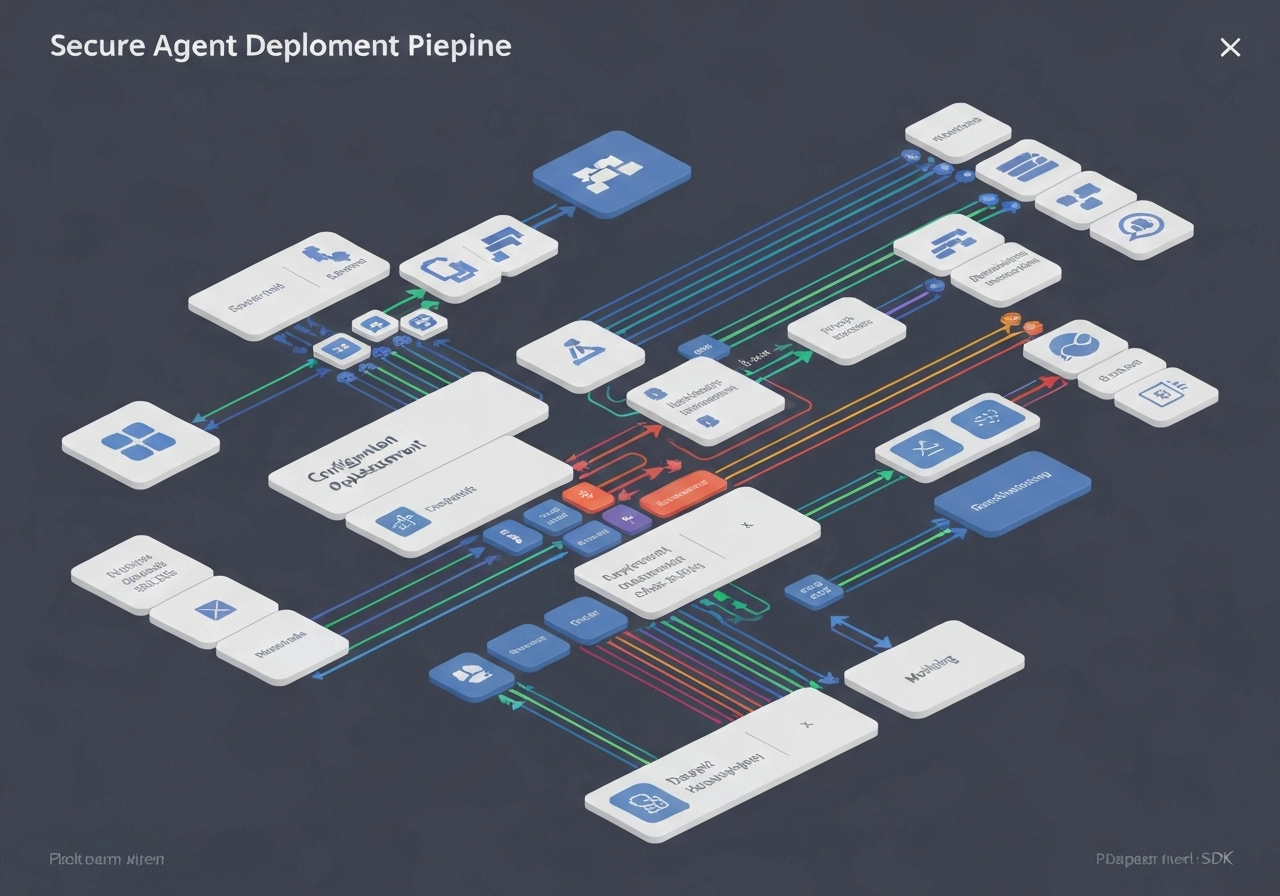
Section 4: Use Cases That Benefit Most from Nanoclaw’s Architecture
While any environment running autonomous agents can benefit from sandboxing, certain scenarios are particularly well-matched to Nanoclaw’s capabilities:
- Multi-tenancy SaaS Platforms: When a single platform hosts agents for many users (e.g., a no-code automation service), the consequences of a malicious or buggy agent impacting other tenants are severe. Nanoclaw’s hard isolation guarantees tenant separation.
- Edge Computing with Unreliable Hardware: Agents running on IoT devices or at the network edge may operate in physically insecure or resource-starved environments. A sandboxed agent with strictly limited resource usage prevents a single malfunctioning agent from exhausting battery or RAM on a critical device.
- AI-Driven Content Moderation: Agents that parse user-generated content must be protected from prompt injection or adversarial inputs that could cause them to act unethically. Sandboxing ensures that even if an agent is manipulated, its ability to cause harm is nil.
- Automated Trading and Financial Operations: Agents that directly interact with market data and execute trades must operate under the highest level of containment to prevent catastrophic losses from unauthorized actions.
Real-World Example: A government agency uses Nanoclaw agents to automate public records processing and redaction. Each agent accesses a specific subset of documents, runs a redaction algorithm, and outputs anonymized data. Because the documents may contain sensitive personal information, any cross-contamination or data leak is unacceptable. The sandboxed approach ensures that even if a redaction agent encounters a malformed file that exploits a potential vulnerability, the agent cannot exfiltrate data to an external server because its network egress is strictly limited to a controlled output queue. Furthermore, each agent’s session is ephemeral—its storage is fully wiped after task completion, leaving no residual sensitive data on disk.
The platform also excels in incident response automation where speed and safety are critical. Security teams can deploy a forensic agent into a compromised network segment, knowing that its sandbox will prevent it from spreading the infection. It can safely collect evidence, send alerts, and even initiate network blocks without risking the integrity of the broader environment.
Section 5: Comparative Analysis – How Nanoclaw Stands Against Other Sandboxing Approaches
To appreciate Nanoclaw fully, it helps to compare it with established sandboxing techniques: traditional virtual machines (VMs), containers without enhanced security, and language-level sandboxes (like WebAssembly or Java’s Security Manager).
VMs offer strong isolation but at a heavy cost in terms of startup time (seconds to minutes) and resource overhead (each VM requires its own OS kernel). Containers are lighter but traditionally share the host kernel, making them vulnerable to kernel-level exploits. Language-level sandboxes enforce policy at runtime but often limit the types of operations agents can perform without stepping outside the sandbox.
Nanoclaw’s differentiator is its combination of lightweight containerization with kernel-level security enforcement via eBPF, plus a high-level policy language that is declarative and easy to audit. It also provides cross-agent secure channels that are difficult to implement manually with standard containers. The orchestration layer integrated directly with monitoring tools like Prometheus and Grafana makes it production-ready out of the box.
Practical Application: A DevOps team initially tried implementing isolation using vanilla Docker containers with custom security scripts. They faced issues with policy drift, complex manual configuration, and difficulty debugging permission errors. After migrating to Nanoclaw, they achieved the same level of isolation with half the code and significantly fewer false positives. A benchmark showed that Nanoclaw agents started in 300 milliseconds versus 15 seconds for equivalent VMs, and the memory overhead per agent was only about 5 MB, compared to 128 MB for a minimal VM.
Moreover, Nanoclaw integrates software supply chain verification at the sandbox level. Before an agent starts, its container image’s signature is verified against a trusted registry using Sigstore. If the image has been tampered with or is unsigned, the sandbox will refuse to launch it. This feature is often missing in roll-your-own solutions and is becoming a regulatory requirement in sectors like healthcare and defense.
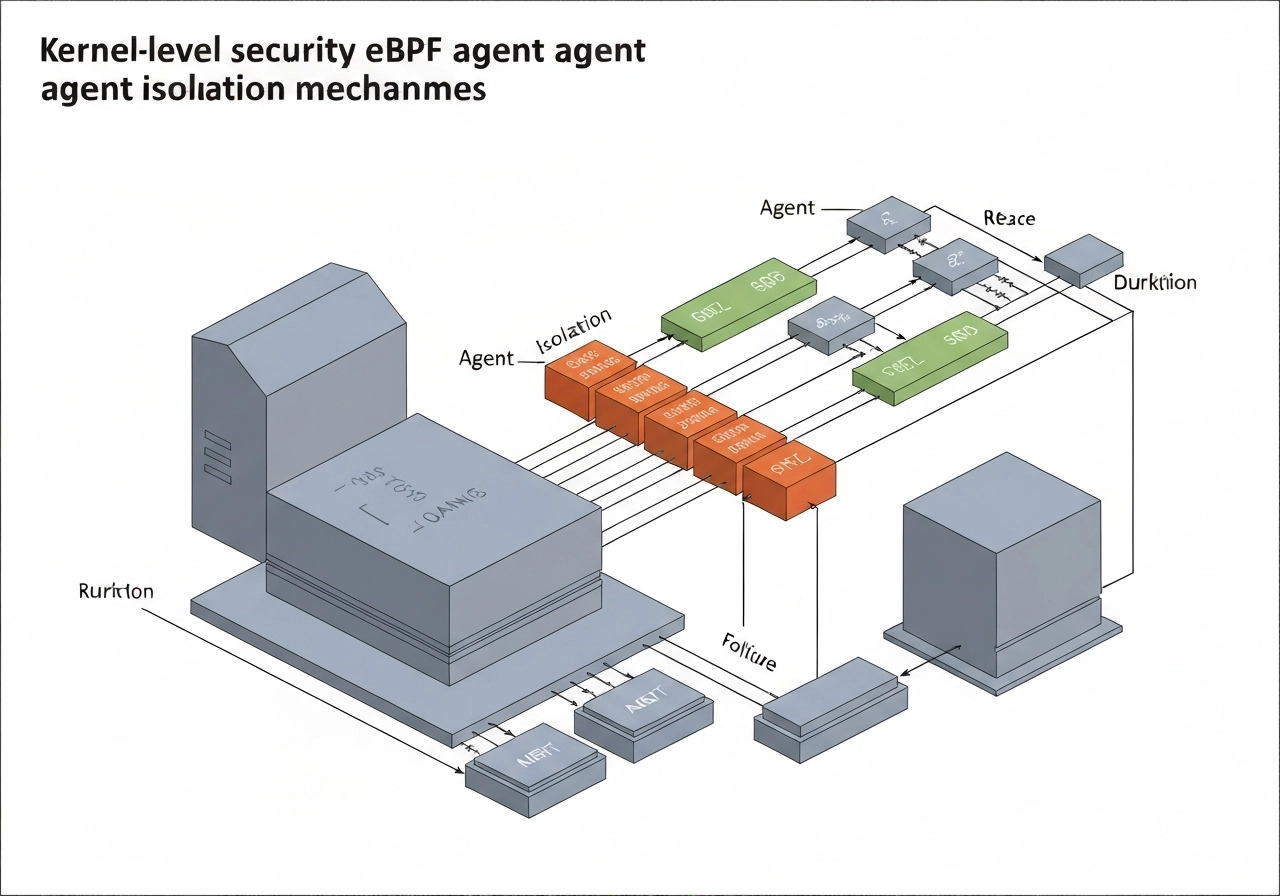
Section 6: The Future and Limitations of Nanoclaw Sandboxed Agents
No technology is perfect, and Nanoclaw has its limitations. The current implementation requires a modern Linux kernel with eBPF support, which may not be available on legacy systems or all cloud platforms. The learning curve for writing custom eBPF policies, while abstracted by the SDK, still requires understanding of system call semantics. Additionally, performance overhead, though minimal, is non-zero—particularly for agents that perform many system calls or high-frequency I/O operations.
Looking ahead, NanoCo is reportedly working on cross-platform support including Windows and macOS, as well as integration with serverless computing environments like AWS Lambda or Azure Functions. They are also exploring hardware-based isolation using Intel SGX and AMD SEV for agents that require protection even from root users on the host machine.
Future Application Scenario: Consider a hospital network that wants to deploy diagnostic AI agents on patient data. With future versions of Nanoclaw, these agents could run inside secure enclaves where not even the cloud provider can access the data. Each agent would have a verifiable attestation report proving that it is running in a genuine hardware-secured environment, meeting the most stringent HIPAA requirements. This aligns with the growing trend toward confidential computing.
The open-source community has also begun contributing pre-built security templates for common agent types (web scrapers, database bots, etc.), which will lower the barrier to entry. As the agent ecosystem grows, Nanoclaw could become a standard layer akin to how Kubernetes standardized container orchestration—offering a repeatable, secure way to deploy and manage agents at any scale.
In conclusion, NanoCo’s Nanoclaw is a response to the maturing needs of autonomous agent operations. It doesn’t just add security as an afterthought; it bakes it into the fabric of how agents are built, deployed, and monitored. For organizations moving beyond simple scripts into complex, multi-agent architectures, the question is no longer “can we afford sandboxing?” but “can we afford not to?”. The sandboxed agent paradigm, as exemplified by Nanoclaw, may well become the default standard for responsible, secure automation in the age of AI.