
Singapore Develops Asia’s First AI-Based Mobile App for Shark and Ray Fin Identification to Combat Illegal Wildlife Trade
What if a simple photograph taken with a smartphone could instantly identify a species of shark or ray from its sliced fin, helping customs officers and conservationists shut down a global trafficking network worth billions of dollars? Why is it so difficult to stop the illegal trade of shark and ray fins, even though it drives some of the world’s most endangered marine species toward extinction? How can cutting-edge artificial intelligence transform a routine inspection at an airport into a powerful weapon against wildlife crime? This article explores the groundbreaking launch of Asia’s first AI-driven mobile application for identifying shark and ray fins, a tool developed in Singapore that promises to revolutionize enforcement efforts and protect vulnerable ocean species.
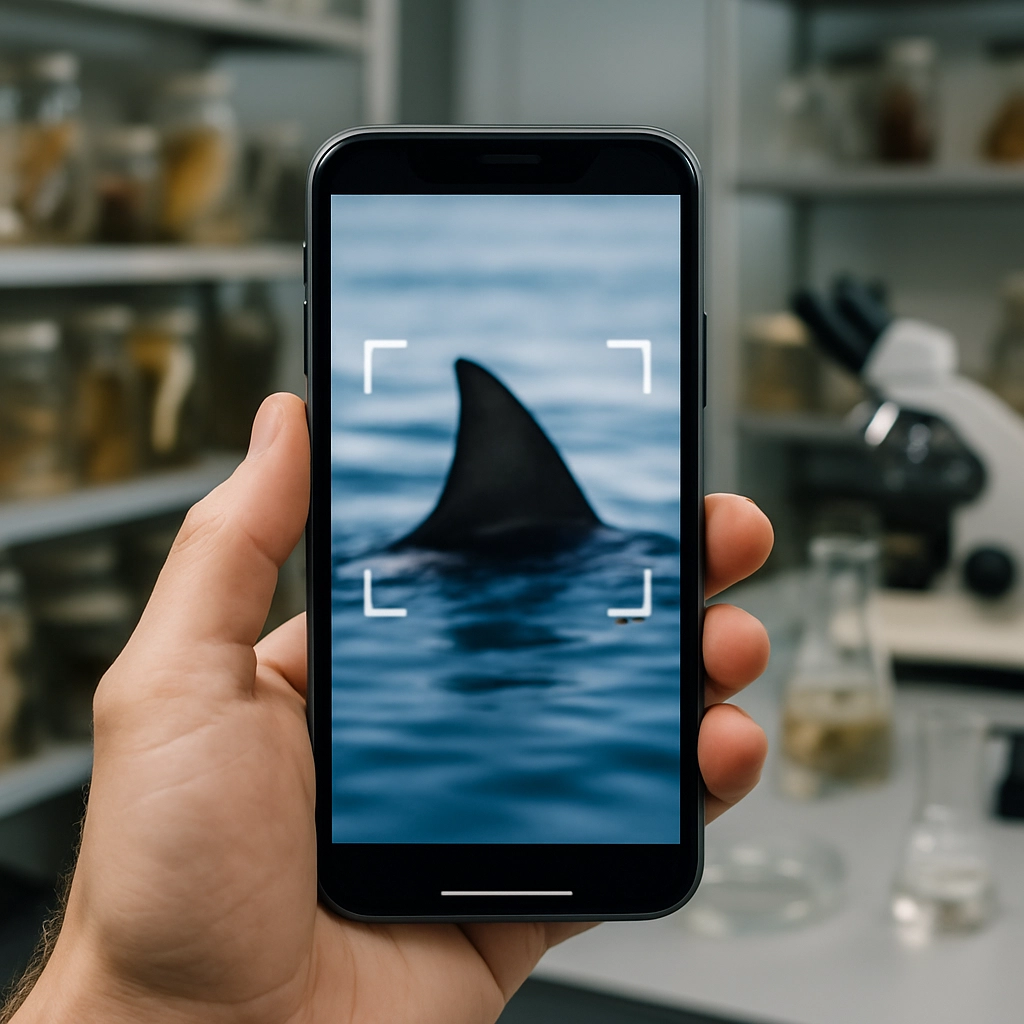
The Crisis: The Dark World of Shark Fin Trafficking
Understanding the Scale of the Problem
Every year, an estimated 73 million sharks are killed primarily for their fins, which are used in the traditional delicacy of shark fin soup. This practice has driven numerous species, including the great white, hammerhead, and oceanic whitetip shark, to the brink of collapse. The trade is not only devastating to marine biodiversity but is also often conducted illegally, with fins being processed and transported across international borders with alarming ease. Conservation groups estimate that the global shark fin trade is worth hundreds of millions of dollars annually, making it a lucrative business for organized crime syndicates that exploit weak enforcement and porous borders.
Challenges in Identification: One of the most significant obstacles in combating this illegal trade is the difficulty in identifying the species once the fins are removed from the body. Fins are often dried, trimmed, and bundled together in shipments, making it nearly impossible for frontline enforcement officers to visually differentiate between legal and protected species. Traditional methods require sending samples to specialized laboratories for genetic or microscopic analysis, a process that can take weeks and is impractical for routine inspections at ports of entry.

The Innovation: Asia’s First AI-Powered Fin Identification App
How the Technology Works
In June 2022, Microsoft Singapore, in collaboration with the Singaporean government’s National Parks Board (NParks) and a team of conservation scientists, announced the development of a first-of-its-kind mobile application that leverages artificial intelligence (AI) to identify shark and ray fins from a simple photograph. The app, which runs on Azure cloud services, uses deep learning algorithms trained on an extensive dataset of fin images, covering more than 40 species of sharks and rays that are commonly traded or protected under the Convention on International Trade in Endangered Species of Wild Fauna and Flora (CITES).
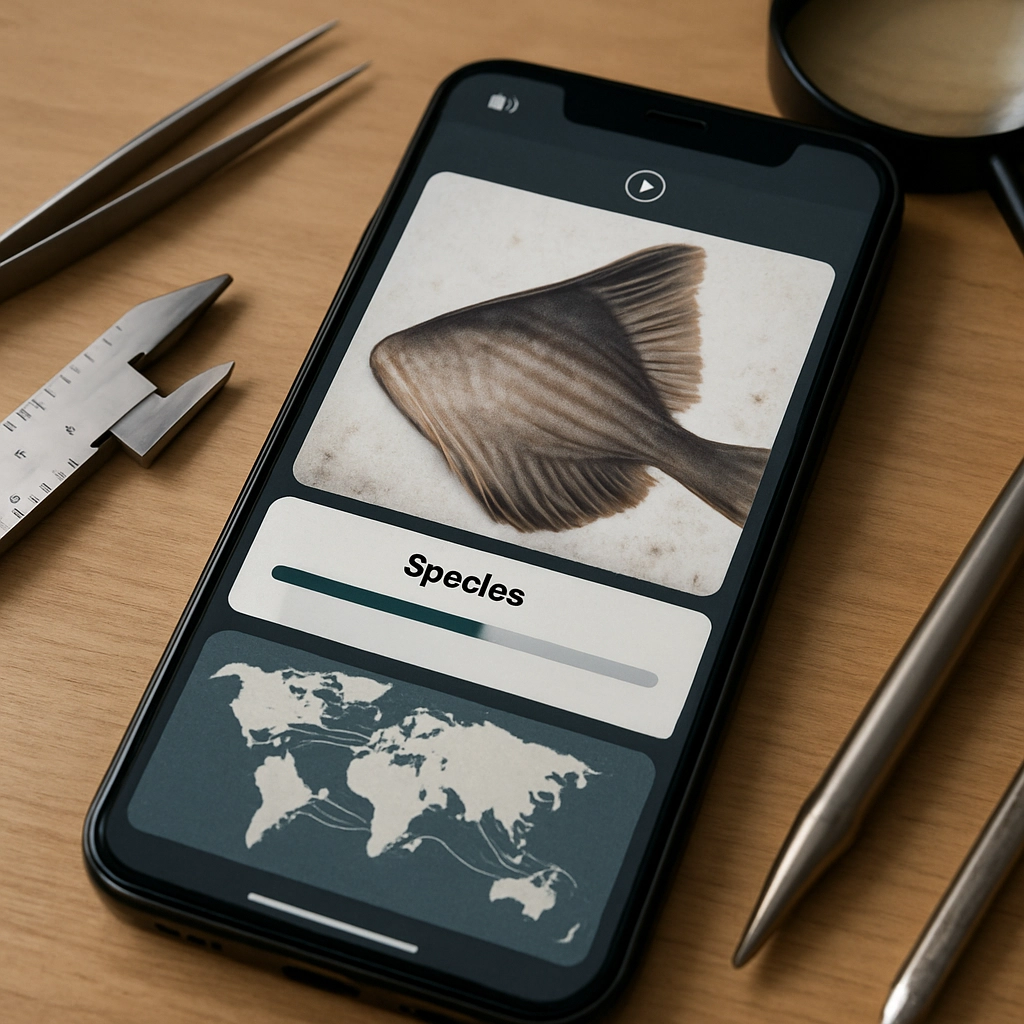
The user simply points their smartphone camera at a fin—whether it is whole or sliced—and takes a photo. The AI model analyzes the morphological features of the fin, such as its shape, texture, color patterns, and the spacing of internal cartilage structures that are visible on the surface. Within seconds, the app returns a species identification with a confidence score, along with information about its conservation status and legal trade restrictions. The entire process can be completed without an internet connection, as a compressed version of the AI model is stored on the device, making it practical for use in remote areas or field locations with limited connectivity.
Real-World Application and Impact
From Lab to Frontline: Deploying the Tool
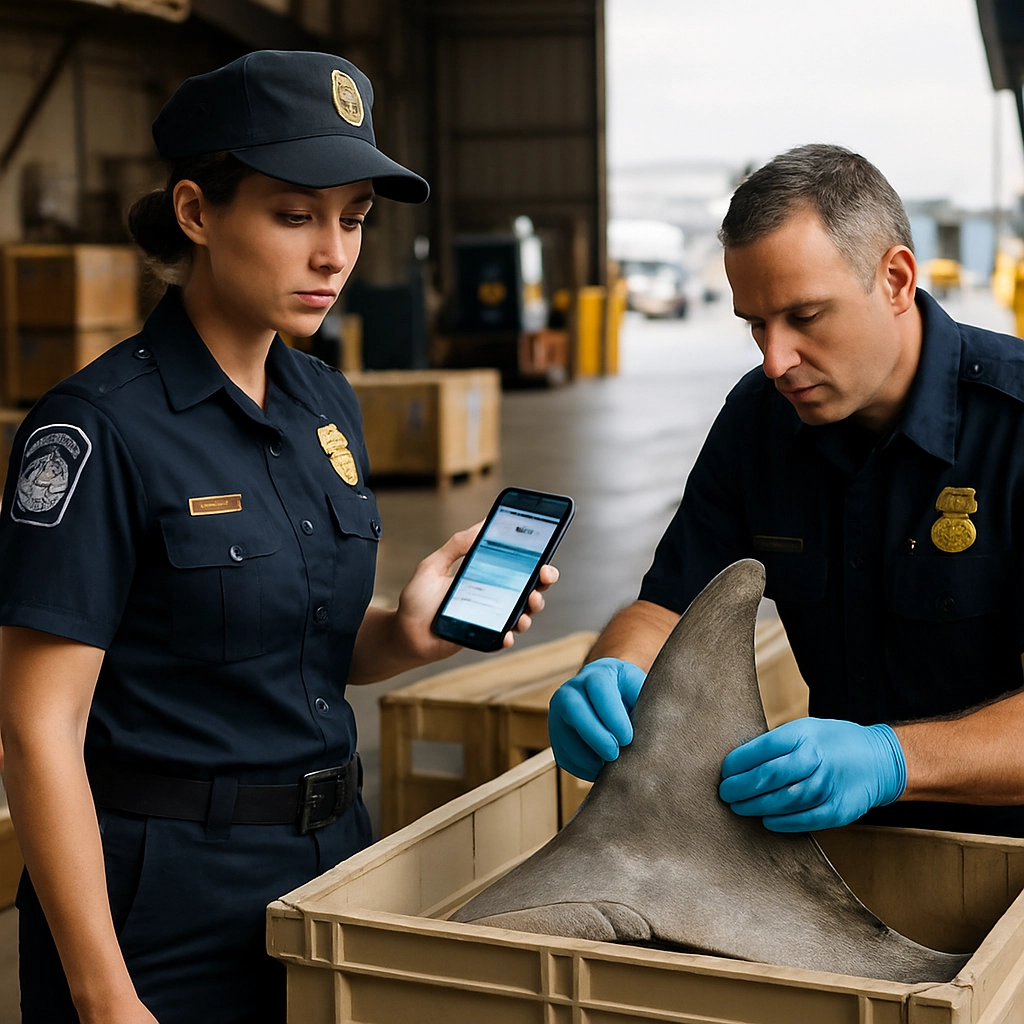
This app is not a theoretical concept; it has already been tested and deployed in key enforcement scenarios across Southeast Asia. For example, during a pilot phase at Singapore’s Changi Airport and the Port of Singapore, customs officers used the app to identify over 200 samples in a matter of hours, a task that would have previously taken weeks in a laboratory. In one instance, the app helped detect a shipment of fins belonging to the critically endangered scalloped hammerhead shark, which were falsely declared as a non-protected species. The seizure led to the arrest of a trafficking ring and the suspension of a trade license.
Practical Benefits: The app dramatically reduces the time and cost of enforcement. It empowers non-specialists—such as customs officers, port authorities, and wildlife inspectors—to make informed decisions on the spot. This real-time identification capability acts as a powerful deterrent to traffickers, as the risk of detection increases. Furthermore, the AI model is continuously updated with new data from seizures and research, meaning it becomes more accurate over time.
Example of Success
Consider a scenario at a major fishing port in Indonesia. A routine inspection of a cargo container reveals several boxes of dried fins. Without the app, the inspector would have to take photos, send them to a central lab, and wait for a week—during which time the container could be released. With the app, the inspector snaps a picture and instantly learns that 60% of the fins are from a CITES-listed species. The container is immediately detained, and enforcement action is taken. This speed is critical in disrupting complex supply chains that often involve multiple countries and transit points.
Challenges and Future Directions
Limitations and Ethical Considerations
While the AI app is a breakthrough, it is not a silver bullet. Challenges remain, including the need for high-quality training data that covers the vast diversity of fin shapes across different species, age classes, and regions. Poor lighting, damaged fins, or overlapping features can still reduce accuracy. Additionally, there are ethical considerations about the use of AI in law enforcement, such as avoiding bias in training datasets and ensuring that the app is used responsibly to target actual criminals rather than inadvertently criminalizing traditional, sustainable fisheries.
Expanding the Technology
The team behind the app is already working on expanding its capabilities. Future versions may include the ability to identify fins from video footage, real-time tracking of shipments, and integration with other wildlife trade databases. There are also plans to make the app available to conservation partners in other biodiversity hotspots, such as Africa and South America, where illegal fishing and fin trafficking are also rampant. The ultimate goal is to create a global network of AI-powered identification tools that can close loopholes in wildlife trade enforcement.
Conclusion: A New Era in Wildlife Conservation
The launch of Asia’s first AI-based mobile app for shark and ray fin identification marks a significant leap forward in the fight against illegal wildlife trade. By bridging the gap between advanced artificial intelligence and on-the-ground enforcement, this tool empowers everyday officers to become guardians of the ocean. The question is no longer whether we can identify a fin, but whether we can act fast enough to save the species. With innovations like this, hope is emerging from the depths of the sea. The future of conservation is not just in laws and penalties—it is in the smart, accessible technology that puts knowledge directly into the hands of those who need it most.