
What Is Spectrum-X Ethernet, and How Is It Revolutionizing AI Networking?
What happens when traditional Ethernet hits its limits in the age of AI? Why are data centers struggling to keep up with the demands of large-scale machine learning? How is NVIDIA's Spectrum-X Ethernet platform changing the game? In this article, we explore these questions and delve into the transformative technology that is reshaping the networking landscape for artificial intelligence workloads.
Section 1: The Challenge—Why Traditional Ethernet Falls Short for AI
Traditional Ethernet has been the backbone of data center networking for decades, offering reliable connectivity for general-purpose applications. However, as AI workloads—particularly large language models (LLMs) and deep learning training—become more prevalent, the limitations of standard Ethernet become glaringly obvious. AI traffic patterns are fundamentally different: they involve massive parallel data transfers, high-frequency communication between thousands of GPUs, and extreme sensitivity to latency and packet loss. In a typical AI training cluster, a single packet drop can stall the entire job, wasting precious compute time and energy.
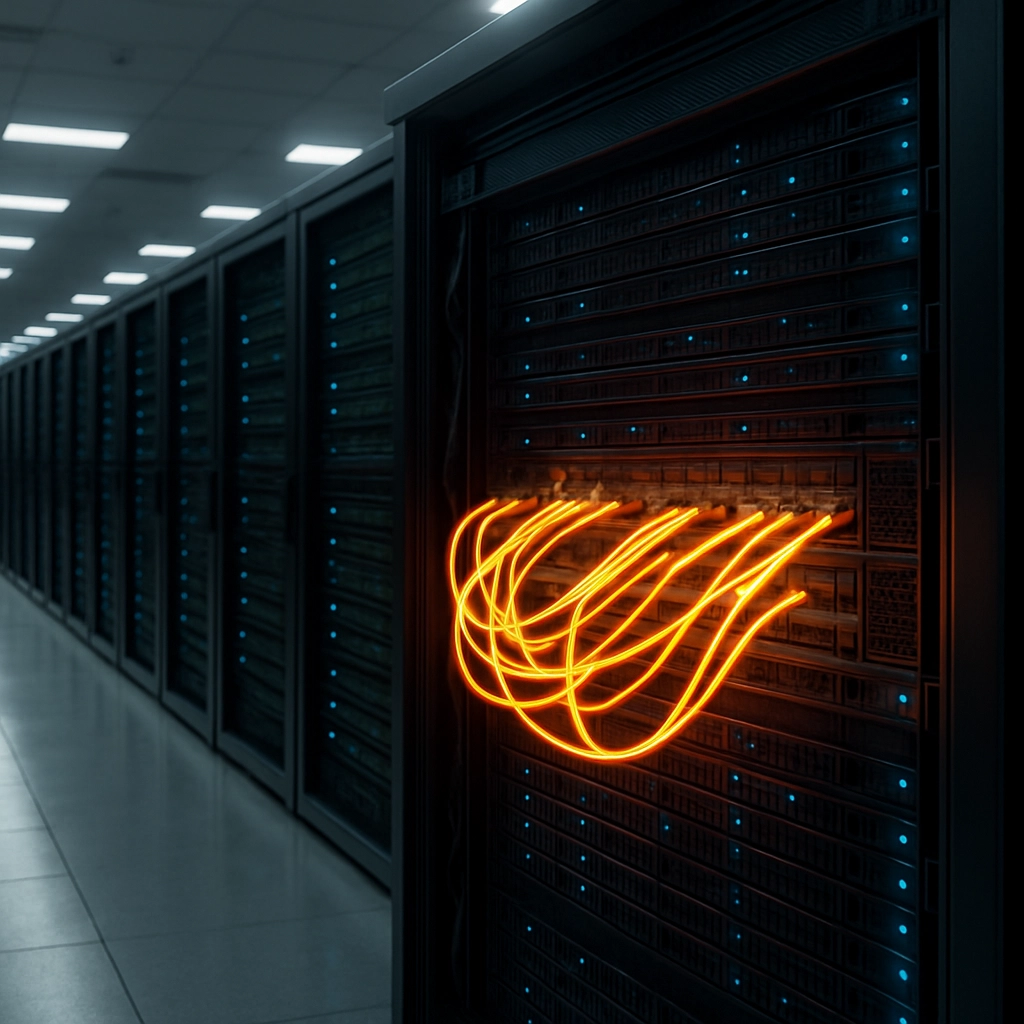
Standard Ethernet relies on lossy transmission, which is acceptable for web browsing or file transfers, but catastrophic for AI. Moreover, traditional switches lack the intelligence to prioritize GPU-to-GPU traffic over less critical data flows. As AI clusters scale from hundreds to tens of thousands of GPUs, the need for a purpose-built networking solution becomes non-negotiable. This is where NVIDIA's Spectrum-X Ethernet steps in.
Section 2: Understanding Spectrum-X—A Purpose-Built AI Networking Platform
Spectrum-X is an end-to-end Ethernet-based networking platform specifically designed for AI workloads. It combines the Spectrum-4 switch (a high-performance, 51.2 Tbps Ethernet switch) with BlueField-3 DPUs (data processing units) and a suite of software optimizations. Unlike generic Ethernet, Spectrum-X introduces adaptive routing, congestion control, and telemetry that are fine-tuned for the unique traffic patterns of AI training and inference.
The platform uses what NVIDIA calls “lossless Ethernet”—a breakthrough that prevents packet drops entirely by dynamically adjusting flow rates and rerouting traffic around bottlenecks. This is critical because even a single millisecond of delay can cause GPU idle time, reducing overall cluster efficiency by up to 40%. Spectrum-X ensures that all-to-all communication (where every GPU talks to every other GPU) happens at wire speed without collisions.
Real-world example: In a test deployment using an NVIDIA DGX SuperPOD cluster, Spectrum-X demonstrated 95% effective bandwidth utilization compared to about 60% for standard Ethernet under similar conditions. This translates to faster model training times and lower total cost of ownership (TCO) for enterprises.
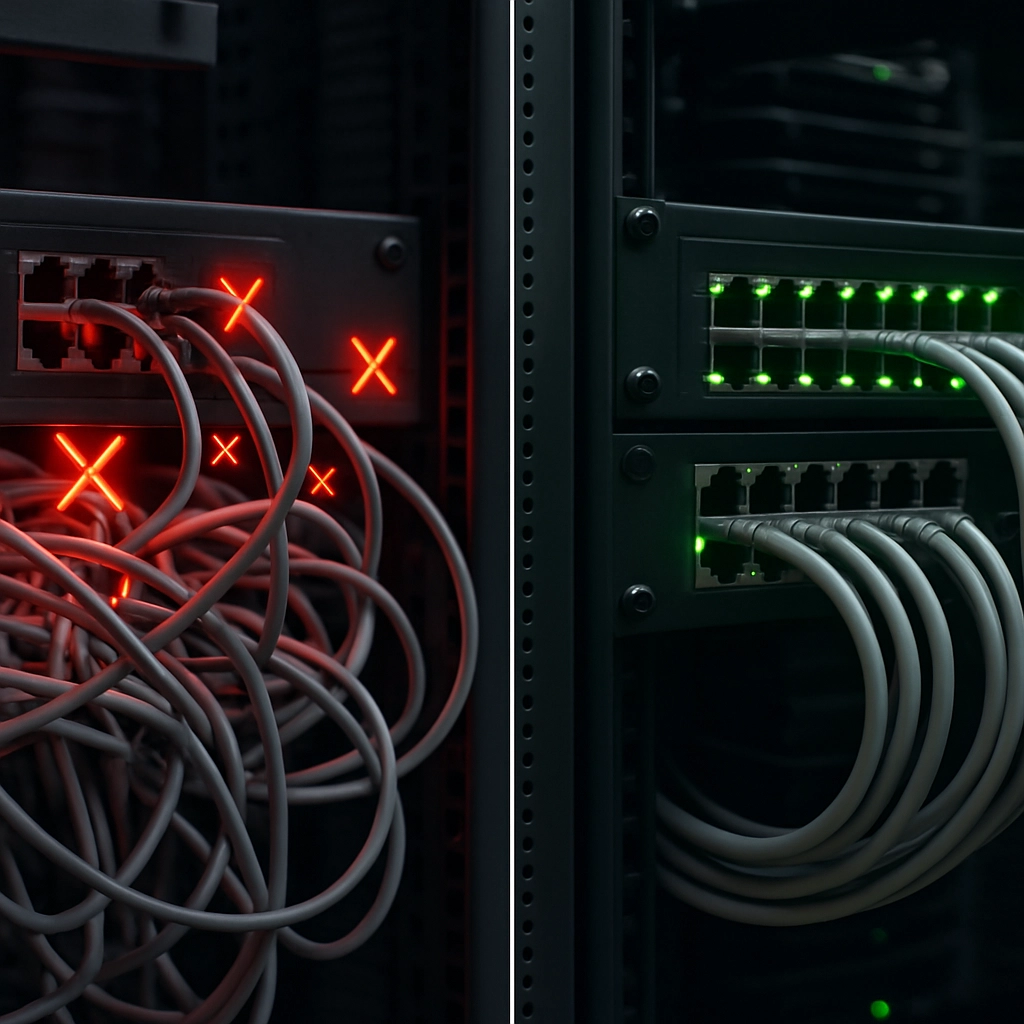
Section 3: The Technology Behind Spectrum-X—Adaptive Routing and Congestion Control
Adaptive Routing
At the heart of Spectrum-X is adaptive routing, which allows the switch to dynamically select the best path for each data packet rather than relying on fixed routing tables. This is essential for AI workloads where traffic intensity varies unpredictably. Traditional Ethernet uses equal-cost multipath (ECMP), which can cause hash collisions and lead to congestion on certain paths. Spectrum-X's adaptive routing uses per-packet load balancing, ensuring that no single link becomes oversaturated.
Congestion Control
Spectrum-X also integrates fine-grained congestion control that operates at the granularity of individual flows. The BlueField-3 DPUs act as smart NICs that detect congestion in real-time and signal back to the switch to adjust transmission rates. This closed-loop system prevents TCP incast (a common problem in AI clusters where many clients request data from a single server simultaneously) and maintains low tail latency.
Practical application: When training a GPT-4-sized model across 10,000 GPUs, the network must handle bursts of all-to-all communication that can saturate links. Spectrum-X's congestion control ensures that these bursts are managed without packet loss, keeping GPU utilization near 100%. According to NVIDIA, this can reduce training time by up to 30% compared to standard Ethernet.

Section 4: Real-World Applications—Where Spectrum-X Makes a Difference
Spectrum-X is not just a theoretical advancement; it's already being deployed in production environments. For instance, HPC and AI clouds like those run by hyperscalers are using Spectrum-X to interconnect their GPU clusters. One notable early adopter is CoreWeave, a cloud provider specializing in AI, which reported 2x performance improvement in training throughput after migrating from standard Ethernet to Spectrum-X.
Another application is in financial services, where AI models for algorithmic trading require ultra-low latency and deterministic networking. Spectrum-X's lossless Ethernet ensures that trades are executed within microseconds, giving firms a competitive edge. Scientific research also benefits: climate modeling and drug discovery simulations often involve massive parallel computing over thousands of nodes, and Spectrum-X enables these simulations to complete faster and more reliably.
In the automotive industry, autonomous vehicle developers use Spectrum-X in their data centers to train perception models. The platform’s ability to handle Real-Time Priority (RTP) traffic means that critical data streams (like sensor data) never get delayed by bulk transfers.

Section 5: The Future of AI Networking—Why Spectrum-X Is a Game-Changer
As AI models continue to grow in size and complexity, the demand for faster, more intelligent networking will only increase. Spectrum-X represents a paradigm shift from general-purpose Ethernet to purpose-built AI networking. It addresses the three key challenges: performance (lossless, low-latency), scale (supports tens of thousands of GPUs), and programmability (via BlueField DPUs and open APIs).
NVIDIA is also working on integrating Spectrum-X into the larger NVIDIA AI Enterprise stack, which includes frameworks like Megatron-LM and NeMo. This means that future AI models will be trained, optimized, and deployed using a fully NVIDIA-optimized infrastructure, from GPU to network. The addition of Spectrum-X’s Multi-Rate Communications (MRC)—a feature that dynamically adjusts the data rate per link based on demand—further enhances efficiency.
In the next five years, we may see Spectrum-X become the standard for all AI-focused data centers, much like InfiniBand became the standard for HPC. The key takeaway is that network is no longer a bottleneck—it's now a strategic accelerator for AI innovation.
To summarize: Spectrum-X reverses the traditional trade-off between Ethernet’s flexibility and performance. It provides the reliability of InfiniBand with the cost-effectiveness and familiarity of Ethernet. For any organization building an AI infrastructure, the question is not why to adopt Spectrum-X, but how soon can they start.