What, Why, and How: NVIDIA’s RTX AI Garage and Hermes Agent Unleash the Future of Autonomous Intelligence
What if you could build an AI agent that thinks, learns, and acts autonomously—right from your garage? Why is NVIDIA’s latest revelation—the RTX AI Garage and the Hermes Agent—set to redefine the boundaries of local computing and decentralized AI? How can developers and businesses harness this power to create real-world solutions without relying on massive cloud infrastructures? In this comprehensive article, we explore the nuts and bolts of NVIDIA’s groundbreaking initiative, the Hermes Agent, and the DGX Spark, unpacking their significance, technical prowess, and practical applications. From software agents to hardware accelerators, discover how this ecosystem empowers innovation in business AI, automation, and digital transformation.
Section 1: The Dawn of Local AI—NVIDIA’s RTX AI Garage Ecosystem
NVIDIA’s RTX AI Garage is not just a platform; it’s a philosophy that democratizes AI development. This initiative provides developers with a complete suite of tools, SDKs, and pre-trained models optimized for RTX-powered PCs, enabling them to build, test, and deploy AI agents locally. The term “Garage” evokes the birth of iconic tech startups—where creativity meets tinkering. Today, it means giving every developer access to the same foundation of AI capabilities that used to require vast data centers.
The core strength lies in hardware: RTX GPUs are engineered with Tensor Cores, which accelerate matrix operations critical for deep learning inference. But the RTX AI Garage goes beyond hardware; it includes software layers like the NVIDIA AI Enterprise suite and the newly announced Hermes Agent.
Real-world example: Imagine a small e-commerce business using an RTX 4090-powered workstation to run a conversational AI agent that handles customer service queries 24/7, all without sending sensitive data to the cloud. This reduces latency, enhances privacy, and cuts operational costs. The RTX AI Garage makes such local deployment seamless.

Section 2: The Hermes Agent—Autonomous Intelligence on the Edge
The Hermes Agent is the star of the show. Developed by NVIDIA researchers, it’s an autonomous AI agent designed to operate on edge devices like the DGX Spark. Unlike traditional AI models that require constant internet connectivity and cloud computation, Hermes Agent can reason, plan, and execute tasks locally. It uses a combination of large language models (LLMs) and reinforcement learning to adapt to new environments without human intervention.
Why is this important? Current AI agents often depend on cloud APIs for each step of a complex task, leading to high latency and data privacy risks. Hermes Agent changes this by embedding the inference directly on the device. It can parse user intents, break down tasks into sub-goals, and orchestrate a series of actions—such as querying databases, controlling IoT devices, or generating reports—all from a single local command.
Technical deep dive: At its core, the Hermes Agent uses a modular architecture: a language module for natural language understanding, a reasoning module based on neural symbolic logic, and a planning module that leverages NVIDIA’s cuOpt for path optimization. This allows it to handle multi-step workflows with high accuracy, even in offline scenarios.
Practical application: In healthcare, a Hermes Agent running on a local DGX Spark in a clinic could automatically retrieve patient records, compare symptoms against a medical knowledge base, and generate preliminary diagnostic reports—all without exposing sensitive health data to external servers. This is a game-changer for compliance and speed.
Section 3: DGX Spark—The Powerhouse for Local AI Deployment
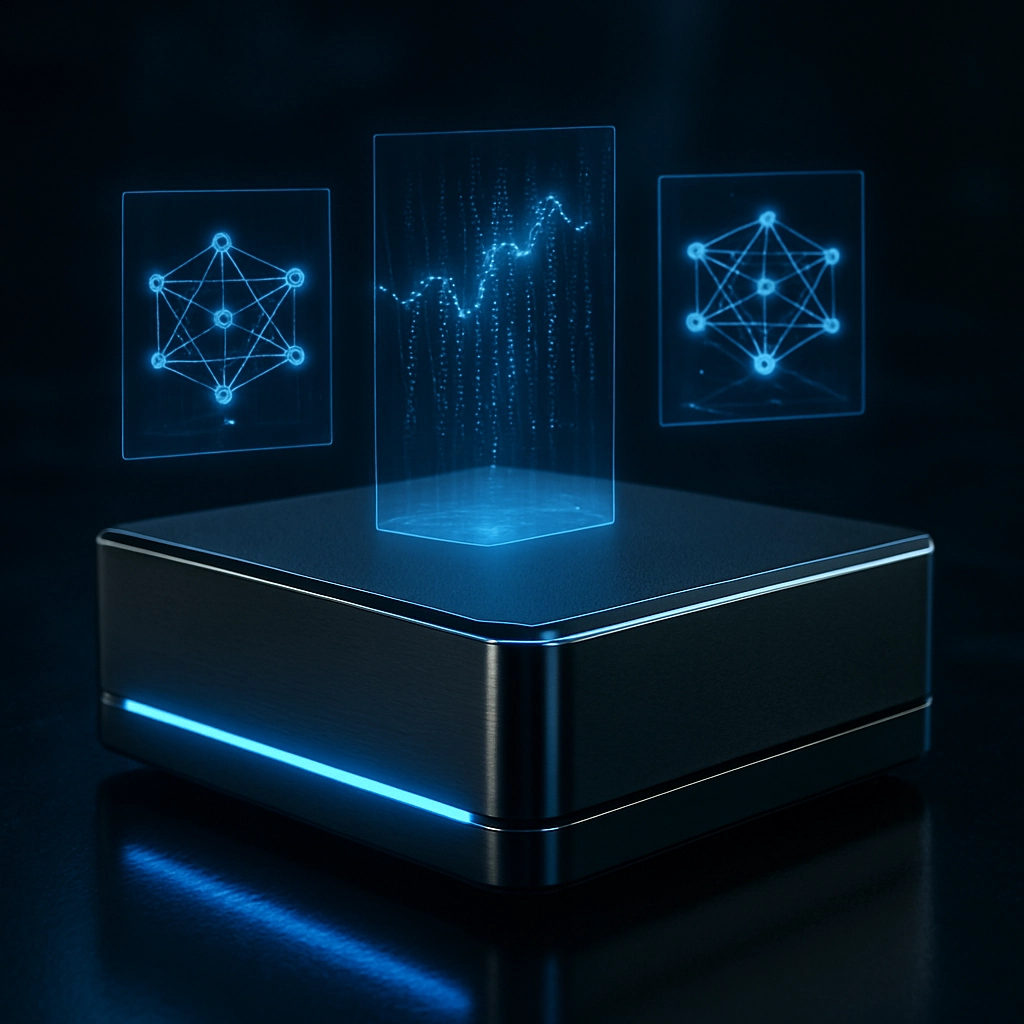
The DGX Spark is the specialized hardware that brings the Hermes Agent to life. Think of it as a supercomputer in a compact box, packing NVIDIA’s Grace Hopper architecture for both CPU and GPU workloads. It is optimized for AI inference and training at the edge, offering raw computational power that rivals many cloud instances but with minimal power consumption and footprint.
What makes the DGX Spark unique is its memory bandwidth: with NVIDIA’s NVLink interconnect, the CPU and GPU share a unified memory pool, eliminating data transfer bottlenecks. This is crucial for large models like GPT-scale LLMs that must be loaded entirely in memory for fast inference. The DGX Spark can run multiple Hermes Agent instances simultaneously, making it ideal for enterprises needing high-throughput local AI.
Real-world example: A manufacturing plant uses DGX Spark units to monitor production line sensors in real-time. Each unit runs a Hermes Agent that analyzes data streams for anomalies, predicts equipment failures, and triggers maintenance alerts—all while keeping operations offline for cybersecurity. This reduces downtime by 40% compared to cloud-dependent solutions.
Section 4: Transforming Business AI through Automation and Digital Transformation
For businesses, the combination of RTX AI Garage, Hermes Agent, and DGX Spark is a catalyst for digital transformation. Traditional approaches to automation often require fragmented tools for different tasks: chatbots for customer service, RPA scripts for backend processes, and separate analytics engines. NVIDIA’s ecosystem unifies these under a single local AI agent.
Impact on Business AI: Companies can now deploy intelligent agents that adapt to their unique workflows. For example, a logistics firm using the DGX Spark to run a Hermes Agent can automate everything from route planning and inventory tracking to customer communication, all through a single natural language interface. This reduces the need for multiple software licenses and simplifies maintenance.
Automation at scale: Because the Hermes Agent can learn from local data without sharing it, it becomes smarter over time, fine-tuning its behavior to company-specific patterns. This is especially valuable in sectors like finance where model accuracy depends on proprietary datasets. The local deployment ensures compliance with data protection regulations like GDPR.
Case study: A mid-sized real estate agency deploys a DGX Spark in its main office. The Hermes Agent handles listing updates, schedules viewings, generates property descriptions, and even negotiates initial offers via email, all while maintaining a human-in-the-loop for final approvals. This boosts agent productivity by 30% and allows the team to scale operations without hiring more staff.
Section 5: Overcoming Challenges and Looking Ahead—The Future of Autonomous Edge AI
No technology is without challenges. For the RTX AI Garage and Hermes Agent, the primary hurdles include model size (large LLMs still require substantial RAM), power consumption for continuous operation, and the need for specialized developer expertise. However, NVIDIA is actively addressing these with model compression techniques (e.g., pruning, quantization) and simplified APIs that abstract away complexity.
Another challenge is ensuring that autonomous agents make ethical decisions. Hermes Agent incorporates ethical AI guardrails—pre-configured rules that prevent it from performing harmful actions, such as executing illegal commands or accessing unauthorized data. This is built into the reasoning module.
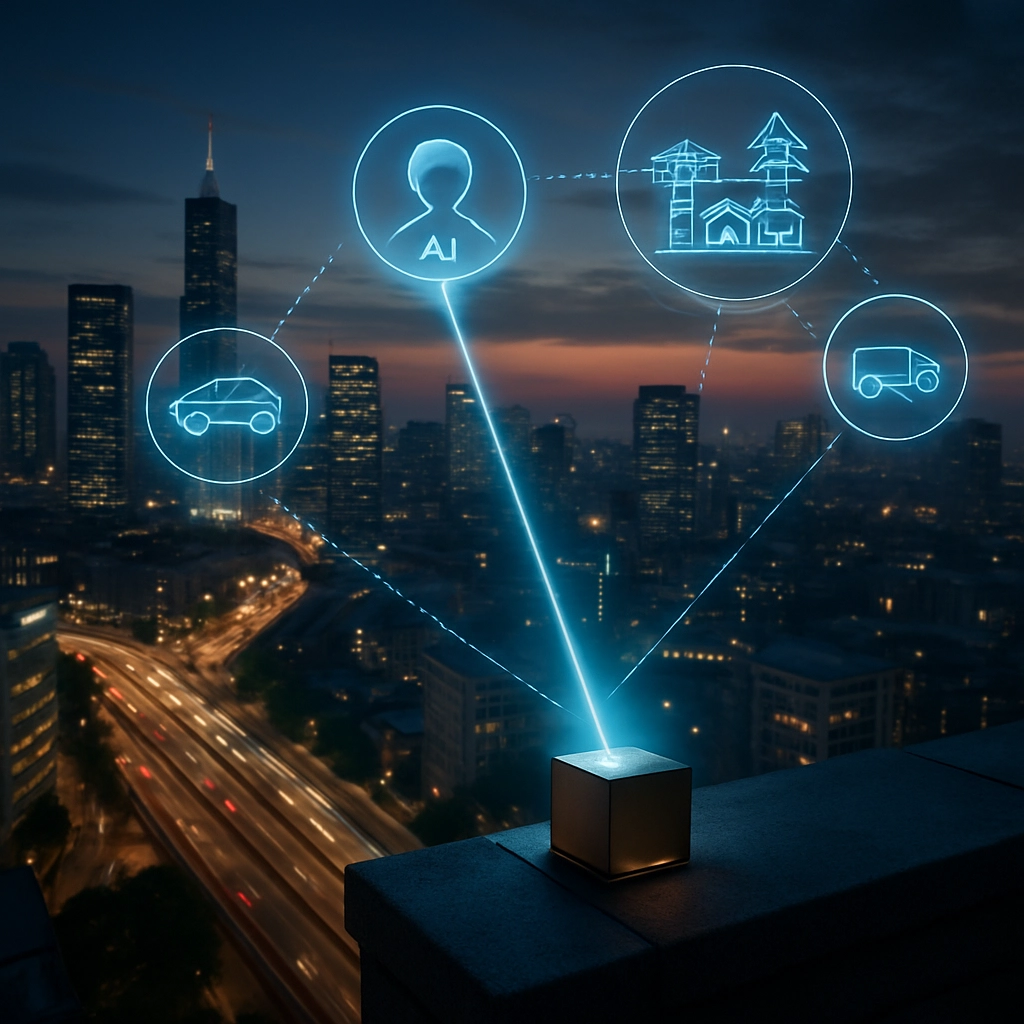
Future vision: We are moving toward a world where every smart device—from cars to factories—runs a local Hermes-level agent. The DGX Spark could become as ubiquitous as a router in homes and businesses. This decentralized AI reduces dependency on internet connectivity and cloud monopolies, fostering a more resilient and private digital ecosystem.
Web optimization note: For developers interested in building similar solutions, NVIDIA provides extensive documentation and community forums within the RTX AI Garage portal. The learning curve is steep, but the payoff in performance and autonomy is immense.
Section 6: Practical Steps to Get Started with NVIDIA’s Ecosystem
If you’re inspired to dive into the RTX AI Garage, here’s a straightforward roadmap. First, assess your hardware: any PC with an RTX 20 series or later can begin experimenting, but for full Hermes Agent capabilities, a DGX Spark is ideal for production deployments. Second, install the NVIDIA AI Enterprise tools from the NVIDIA Developer Zone, which include the Hermes Agent SDK and pre-trained models.
Third, experiment with sample projects: the RTX AI Garage repository on GitHub provides examples for building a local chatbot, a data analysis agent, or an IoT controller. Fourth, fine-tune the Hermes Agent on your own data using NVIDIA’s transfer learning toolkit, which supports common datasets without needing to train from scratch.
Key takeaways for business leaders: Investing in this ecosystem now gives a competitive edge in automation and digital transformation. The cost of a DGX Spark is recovered quickly through reduced cloud bills and increased operational efficiency. Moreover, the local deployment model aligns with tightening data sovereignty laws globally.
Final thought: The era of garage-startups producing world-changing AI is here again, but this time, the garage itself is powered by NVIDIA’s RTX AI. The Hermes Agent and DGX Spark are not just announcements—they are invitations to build the next generation of intelligent, autonomous systems. Whether you are a solo developer or an enterprise CTO, the tools are in your hands. Now, what will you create?