Dell and NVIDIA: The Perfect Alliance for the Enterprise AI Revolution
What does it truly take for a legacy enterprise to not just adopt, but master Artificial Intelligence? Why are industry giants like Dell and NVIDIA joining forces to create a new category of computing? And how can your organization bridge the gap between AI hype and tangible, real-world results? The answer lies not in a single product, but in a profound shift in infrastructure, strategy, and partnership. This article dives deep into the groundbreaking collaboration between Dell Technologies and NVIDIA, exploring how their new AI factories and agent-based architectures are poised to redefine the enterprise landscape.
1. The Dawn of the Enterprise AI Factory
For decades, data centers were the silent engines of business, processing transactions and storing data. Today, they are being reborn. The traditional data center is evolving into a specialized machine: the AI Factory. This is not a metaphor; it is a physical and logical architecture designed to produce one thing—intelligence. The core concept, as highlighted in the NVIDIA and Dell partnership, is that AI is not a single application you install. It is a continuous, data-intensive process that requires unprecedented compute power, networking speed, and storage throughput.
The partnership directly addresses the primary bottleneck for enterprises: complexity. Building an AI factory from scratch requires expertise in GPU hardware, high-speed networking (like NVIDIA Spectrum-X and Dell PowerSwitch), and sophisticated software stacks. By offering validated, pre-configured systems, Dell and NVIDIA remove the guesswork. Imagine a factory that can spin up a new AI model training job in minutes instead of weeks. This is the promise. This architecture allows businesses to move from experimental, siloed AI projects to a centralized, company-wide capability.
The Practical Shift: From Box to Factory
Consider a large retail chain wanting to implement a dynamic pricing and inventory optimization model. Previously, they might have bought a few servers and struggled with data pipelines. With the AI Factory model, they acquire a turnkey system from Dell that integrates NVIDIA's Hopper GPUs, BlueField DPUs for data acceleration, and Dell's PowerScale storage. The result? The training time for their pricing model drops from weeks to days, and deployment becomes a standard, repeatable process.
The image for this section should depict the physical transformation of a data center into an AI factory. 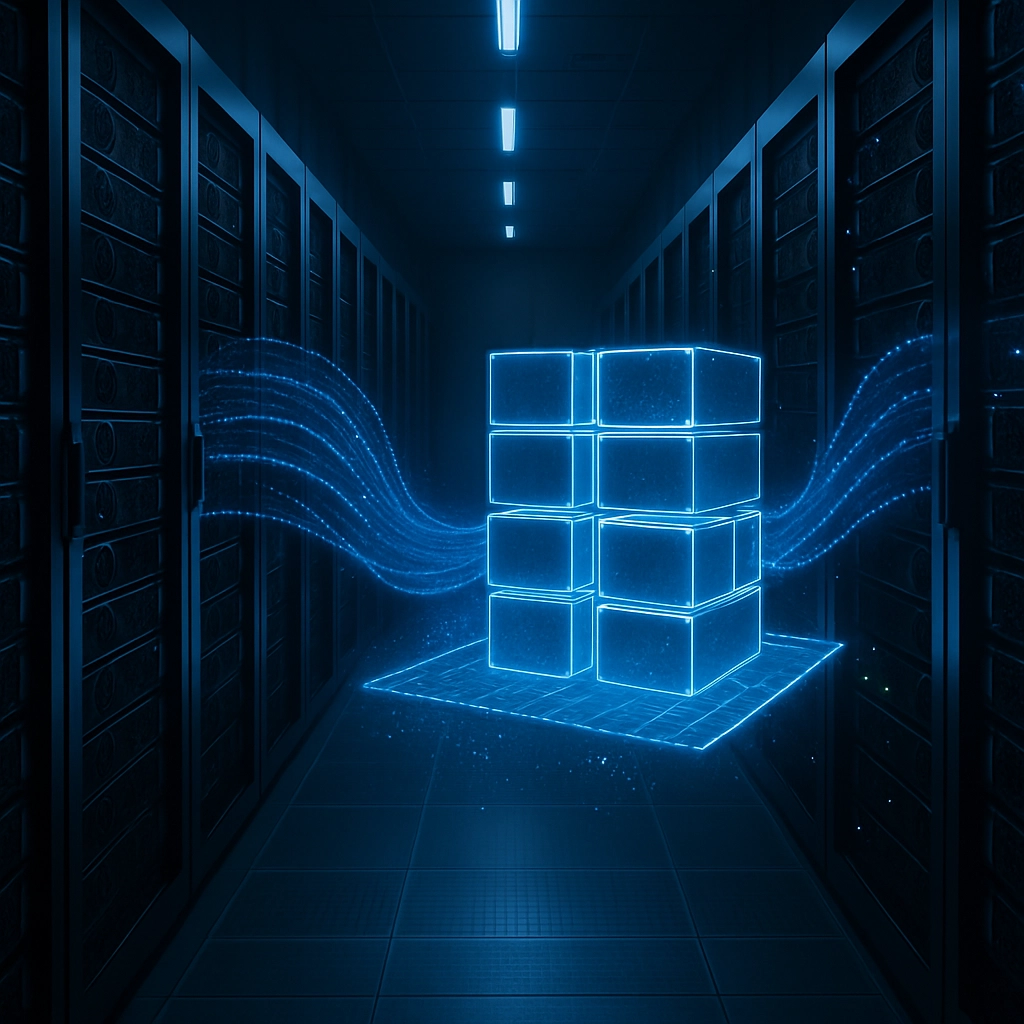
2. Demystifying the 'Agent': The New Architecture of Work
The most disruptive concept introduced in this partnership is the rise of the AI Agent. An agent is not a simple chatbot. It is an autonomous, goal-oriented software entity that can perceive its environment, reason about a complex task, take action, and learn from the results. Dell and NVIDIA are architecting for an 'Agentic Enterprise' where thousands of these specialized agents work in concert, much like a skilled workforce, to tackle business processes from start to finish.
This is a fundamental shift from the 'query-response' model (like asking ChatGPT a question) to a 'task-completion' model. An agent doesn't just tell you how to fix a network outage; it diagnoses the root cause, opens a ticket, applies a configuration patch, verifies the fix, and then logs the entire process. This requires a specific infrastructure: low-latency inference, massive parallel compute for multi-model chains, and secure data isolation for each agent’s 'state'.
Practical Example: The Autonomous Supply Chain Agent
Imagine a supply chain disruption—a storm closes a shipping port. A traditional system sends an alert. An AI Agent, however, is constantly monitoring weather feeds, inventory levels, and logistics schedules. Upon detecting the storm, it activates. It re-routes shipments using a routing algorithm, negotiates with backup suppliers via a negotiating agent, updates the ERP system, and schedules alternative manufacturing runs. This entire chain of actions, coordinated by multiple specialized agents, happens in minutes, saving the company millions.
A visual representation of this agentic framework would show agents as intelligent nodes. 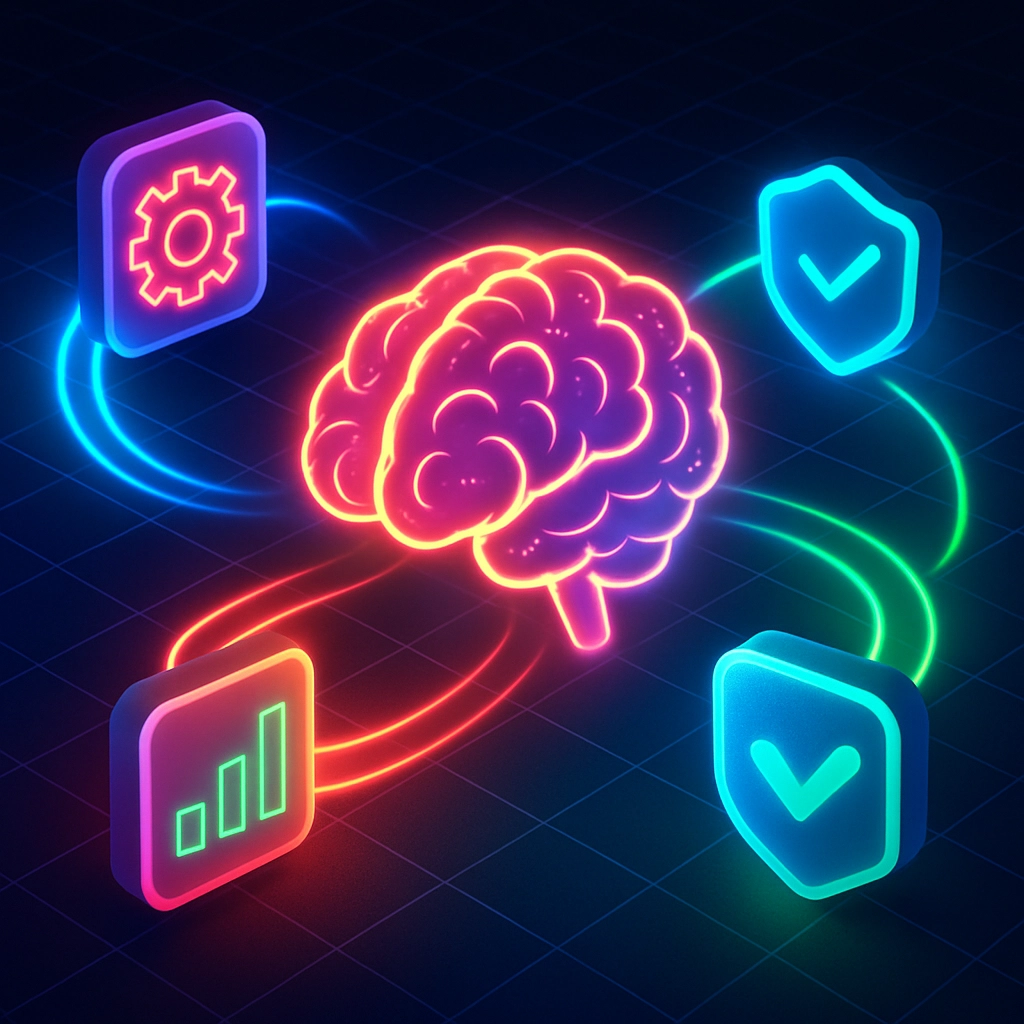
3. The Bedrock: Infrastructure for the Agentic Era
Why is this partnership so critical? Because agents are insatiable consumers of resources. They don't just run one neural network; they run chains of them. They require real-time data from multiple sources. They need to be checkpointed and restored instantly. Dell’s flagship products—the PowerEdge servers, PowerScale storage, and PowerSwitch networking—are being specifically re-engineered and validated with NVIDIA’s full stack (CUDA, AI Enterprise, and NeMo) to handle this load.
A key innovation is the use of DPUs (Data Processing Units). NVIDIA’s BlueField DPUs offload critical tasks like data security, virtualization, and networking from the main CPU. In an agentic system, this is vital. A DPU can isolate and encrypt the memory of one agent from another, preventing a rogue agent from accessing sensitive corporate data. This creates a secure, multi-tenant environment for the agent workforce.
The Storage Revolution: Data as the Fuel
Agents are useless without data. Dell’s PowerScale is not just storage; it is a high-performance data pipeline. It can ingest, filter, and serve data to agents at speeds that keep the GPUs fully utilized. For a financial services firm using an agent to manage high-frequency trading, milliseconds matter. The validated stack ensures that the data path from the storage array, through the network, into the GPU memory is as short and fast as possible, eliminating latency overhead.
An image representing the infrastructure layer should highlight the hardware and its integration. 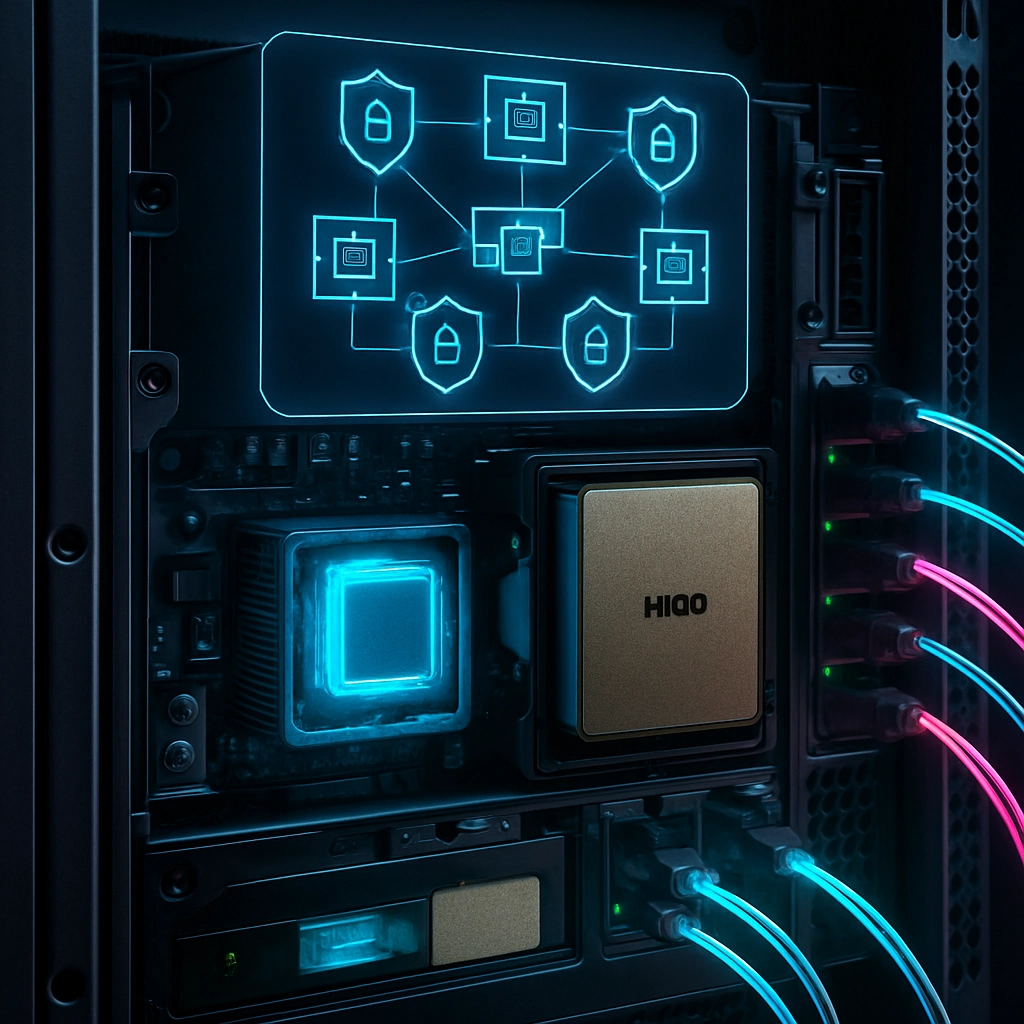
4. From Validation to Velocity: The Partnership's Secret Sauce
The true value proposition here is not the hardware itself, but the validation and simplification. Dell is known for its global supply chain, support, and enterprise trust. NVIDIA provides the cutting-edge AI platform. The magic happens when their engineering teams collaborate to produce 'Reference Architectures.' These are blueprints for specific use cases—like a 'Customer Service Agent AI Factory' or a 'Cybersecurity Analyst Agent System.'
This reduces the implementation timeline from months to days. An enterprise buying these systems knows they will work out of the box. This is the 'secret sauce' of velocity. It allows the CTO to focus on the high-value business logic (what the agents should *do*) rather than spending 80% of the budget on getting the infrastructure to work. This partnership has created a 'validated design' for NVIDIA's new GPU architecture, Grace Blackwell, ensuring the fastest time-to-value for the next generation of AI.
Real-World Impact: Accelerating Time-to-Market
A medical imaging AI company using this stack can train a new diagnostic model in a fraction of the time. They don't need to hire a team of infrastructure engineers to tune the network and storage. Dell and NVIDIA have already done that. They can just order a 'Dell AI Factory with NVIDIA for Medical Imaging' and start their model training immediately. This rapid deployment is the catalyst that will push AI from experimentation into the mainstream of business operations.
For this section, imagine a visual metaphor of acceleration. 
5. The Future Enterprise: A Symphony of Agents
What does the final destination look like? It is the Self-Service Enterprise. An organization where an executive can ask, 'Agent, what is our current margin on product X, and can we increase it by 3% without altering our capex?' The agent then orchestrates a team of sub-agents: a finance agent analyzes costing, a procurement agent scans for cheaper raw materials, a marketing agent runs a price elasticity simulation, and a manufacturing agent checks production capacity. It returns with a complete, actionable plan.
This vision requires absolute reliability. The partnership delivers this through redundancy, predictive analytics for system health (powered by AI), and a shared roadmap for security. Dell’s robust hardware lifecycle management combined with NVIDIA’s software updates creates a platform that is both cutting-edge and stable. This is the 'trust layer' essential for enterprises to delegate critical decisions to AI.
The Strategic Imperative
Companies that fail to build this agentic infrastructure will be left behind. The competitive advantage is not just having the best GPT model; it’s having the infrastructure to deploy, manage, and scale a *symphony of agents* across your entire value chain. Dell and NVIDIA are not just selling servers and GPUs; they are selling a new operating model for the 21st-century enterprise. The time to start building your AI factory is now.
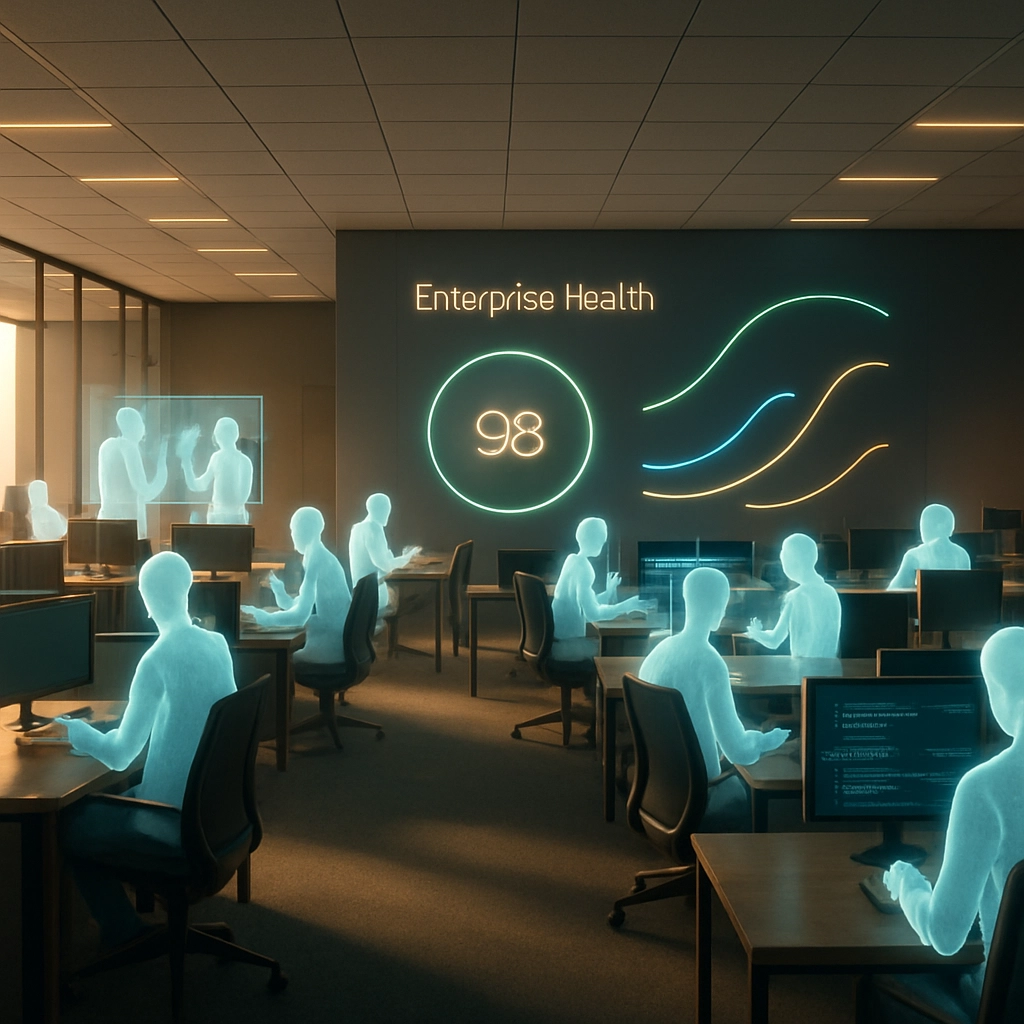
For the final image, illustrate the end-state vision of the enterprise.