
The Digital Health Revolution in the Valencian Community: A Journey Towards Inclusive, Ethical, and Efficient Care
What does the future of public healthcare look like when it prioritizes ethics, inclusivity, and efficiency equally? How can a regional government transform its health system to be both cutting-edge and deeply human? Why is the digital transformation of health a matter of social justice, not just technology? These are the critical questions driving the Valencian Community's ambitious digital health initiative, a pioneering project that is reshaping how citizens access and interact with their medical care.
Section 1: The Foundation - Why Digital Health Must Be Inclusive and Ethical
The digital transformation of the Valencian Community’s health system is not merely an IT upgrade; it is a fundamental rethinking of the relationship between the citizen and the state. The core principle is that digitalization must reduce, not widen, the digital divide. The initiative is built on the recognition that a portion of the population, particularly the elderly, those with disabilities, and people in rural areas, are at risk of being left behind by purely virtual care. The goal is to create a 'co-responsible' model where technology empowers patients without excluding those who are not digitally literate.
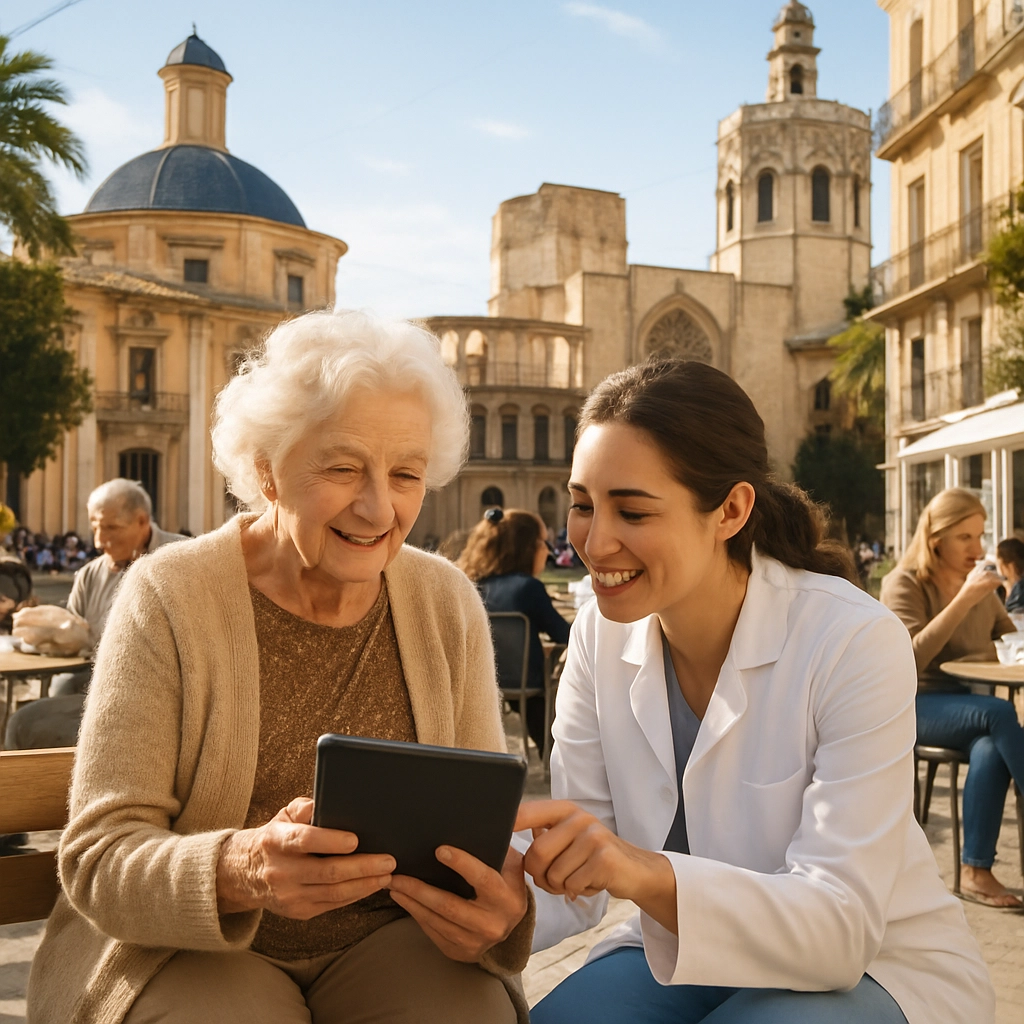
The ethical framework is equally rigorous. Any new digital tool or platform is assessed not only for its technical efficacy but also for its ethical implications. This includes data privacy, algorithmic fairness, and the potential for technology to dehumanize care. The strategy, as outlined by the regional government's Health Department, is to ensure that digital tools are complementary to, and not a replacement for, the essential human touch of doctors, nurses, and community health workers. Real-world application: The 'Salud Responsable' portal allows citizens to manage their own health data and appointments, but it is complemented by a network of 'digital health agents' in local community centers who help people register and use the service.
Section 2: The Core Platform - A Single, Integrated Digital Identity for Health
The cornerstone of the entire transformation is the creation of a unique, secure digital identity for every citizen that integrates seamlessly across all healthcare touchpoints. This is not a simple login; it is a patient-centric, interoperable system that allows for the continuity of care across primary care centers, hospitals, emergency rooms, and specialized clinics. The single digital patient record is the lynchpin, ensuring that a neurologist in Alicante can instantly access the allergy information entered by a pharmacist in Castellón, provided the patient has consented to this data sharing.
This eliminates the dangerous and inefficient practice of patients carrying paper files or repeating their medical history to every new doctor. The system is built on interoperability standards (such as HL7 FHIR) to ensure data can flow securely and privately. Practical impact: A diabetic patient who suffers a hypoglycemic episode while visiting a different city within the Valencian Community can be treated immediately in the local emergency room without having to recall their medication list, as the doctor can access their certified, up-to-the-minute clinical history.
Section 3: Artificial Intelligence for Diagnosis and Prevention (AI as a Second Opinion)
The Valencian health system is integrating Artificial Intelligence not to replace doctors, but to act as a diagnostic aid and a tool for preventive medicine. One of the key pilot projects involves using machine learning algorithms to analyze medical images, such as mammograms and retinal scans, to identify early signs of cancer and diabetic retinopathy. The AI functions as a 'second pair of eyes', flagging potential anomalies for a human radiologist to review. This helps in reducing workload, preventing human error from fatigue, and dramatically speeding up diagnosis, especially in resource-constrained settings.
Beyond diagnosis, AI is used for population health management. Algorithms analyze anonymized data from electronic health records to predict disease outbreaks, identify at-risk populations (e.g., for chronic heart failure readmission), and optimize resource allocation like vaccine distribution. Real-world example: A pilot program in the region of La Ribera used AI to analyze historical data and predict a 30% increase in emergency room visits during a specific heatwave. This allowed the hospital to preemptively schedule more staff and resources, significantly improving patient wait times and outcomes.

Section 4: Telemedicine and Remote Monitoring - Breaking Down Geographic Barriers
A major focus of the digital health strategy is to use technology to overcome the geographic and logistical barriers that prevent citizens in rural or mountainous areas from accessing timely care. The Valencian Community comprises large rural and coastal areas, and a central part of the plan is the deployment of robust telemedicine services. This includes real-time video consultations with specialists in urban centers, remote monitoring of vital signs for chronic patients using wearable devices that send data directly to their care team, and digital care plans for conditions like hypertension and diabetes.
The initiative has been especially crucial for mental health services, where long waiting lists and stigma are significant challenges. A dedicated tele-mental health platform provides access to psychologists and psychiatrists via secure video link, allowing patients to attend appointments from the privacy of their own homes. Practical application: A farmer in a remote village in the province of Valencia can now have a follow-up appointment with a dermatologist in the city without needing to travel for hours, using a high-quality camera attached to his local primary care center's computer. Data from his smartwatch (heart rate, steps) is automatically shared with his cardiologist in a different city via the secure platform.

Section 5: Governance, Data Privacy, and the Human Element
The success of any digital health transformation rests on its governance and the trust of its citizens. The Valencian Community has established a robust ethical and legal framework for managing the vast amounts of sensitive health data. A dedicated committee, including patient advocates, doctors, legal experts, and data scientists, oversees all data governance policies. This includes transparent consent mechanisms, strict data anonymization for research, and a 'right to explanation' for any AI-driven clinical decision that affects a patient's care.
Equally important is the continuous training of healthcare professionals. The system does not just roll out new software; it invests heavily in training doctors, nurses, and administrative staff to use digital tools effectively and empathetically. The role of the nurse is evolving to become a 'digital navigator' who helps patients use apps and portals. The philosophy is that technology should free up clinicians' time from administrative tasks (like filling out forms) so they can spend more time actually talking to and listening to their patients. This is the true definition of 'digital humanism' in action.
Section 6: The Road Ahead - A Model for the Future of Public Health
The journey of the Valencian Community is not complete, but it is already a beacon for other public health systems worldwide. The key lessons are clear: digital transformation must start with human values, not just technical ones. It must be designed to be inclusive from the outset, proactively addressing the digital divide. It requires significant investment in both technology and human capital, especially in training and ethical governance. The project has already shown measurable results: reduced waiting times for specialties, improved patient satisfaction scores (especially for telemedicine), and better clinical outcomes for chronic disease management through remote monitoring.
As the system evolves, the regional government is looking towards even more advanced applications, such as using generative AI to automatically summarize complex patient records for doctors, and deploying predictive models to anticipate hospital bed demand. However, the ultimate metric of success will not be the number of apps deployed or the volume of data collected. It will be whether the system makes citizens feel more cared for, more in control of their health, and less alone in their journey toward wellness. The Valencian Community is proving that with the right vision, digital health can be a powerful tool for a more humane and efficient society.