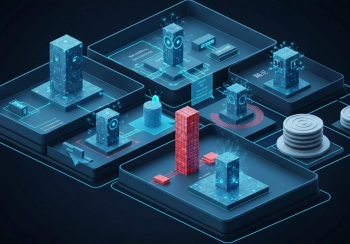
What, Why, and How: OpenClaw Agents Are Revolutionizing Every Organization
What if your business could instantly adapt to any digital environment without rewriting code? Why are traditional automation approaches failing to deliver the flexibility modern enterprises desperately need? And how can OpenClaw Agents solve this critical challenge? These questions are driving a seismic shift in the way organizations approach digital transformation, automation, and artificial intelligence. The answer lies in a groundbreaking innovation from NVIDIA called OpenClaw—a framework that enables AI agents to interact with software interfaces exactly as humans do, but at machine speed and scale. This article explores the profound implications of OpenClaw Agents for every organization, from startups to global enterprises.
Section 1: The Dawn of Agentic AI and OpenClaw
What Are OpenClaw Agents?
OpenClaw Agents represent a new category of autonomous AI systems that can understand and manipulate graphical user interfaces (GUIs) across any application or operating system. Unlike traditional bots that rely on rigid APIs or hardcoded scripts, OpenClaw agents learn to observe, interpret, and act upon visual and textual elements on a screen—similar to how a human would click, scroll, and type. This is achieved through a combination of computer vision, large language models (LLMs), and reinforcement learning, all optimized by NVIDIA’s accelerated computing platforms.
Why This Matters
The core value of OpenClaw is universal adaptability. In a world where organizations use hundreds of different software tools—CRMs, ERPs, custom legacy systems, cloud apps—the ability to automate across all of them without costly integration projects is transformative. According to NVIDIA’s blog, OpenClaw reduces the time to deploy automation from weeks to hours, enabling organizations to automate processes that were previously considered too complex or fragile.
Real-World Example
Consider a multinational logistics company that uses three different legacy systems for tracking shipments. Previously, automating a cross-system workflow required custom API development for each legacy system, costing thousands of dollars and taking months. With OpenClaw, an agent can be trained by simply demonstrating the workflow once—watching a human user click through the processes—and then replicate it autonomously. The agent learns the visual layout of each system and handles any variations in interface design.
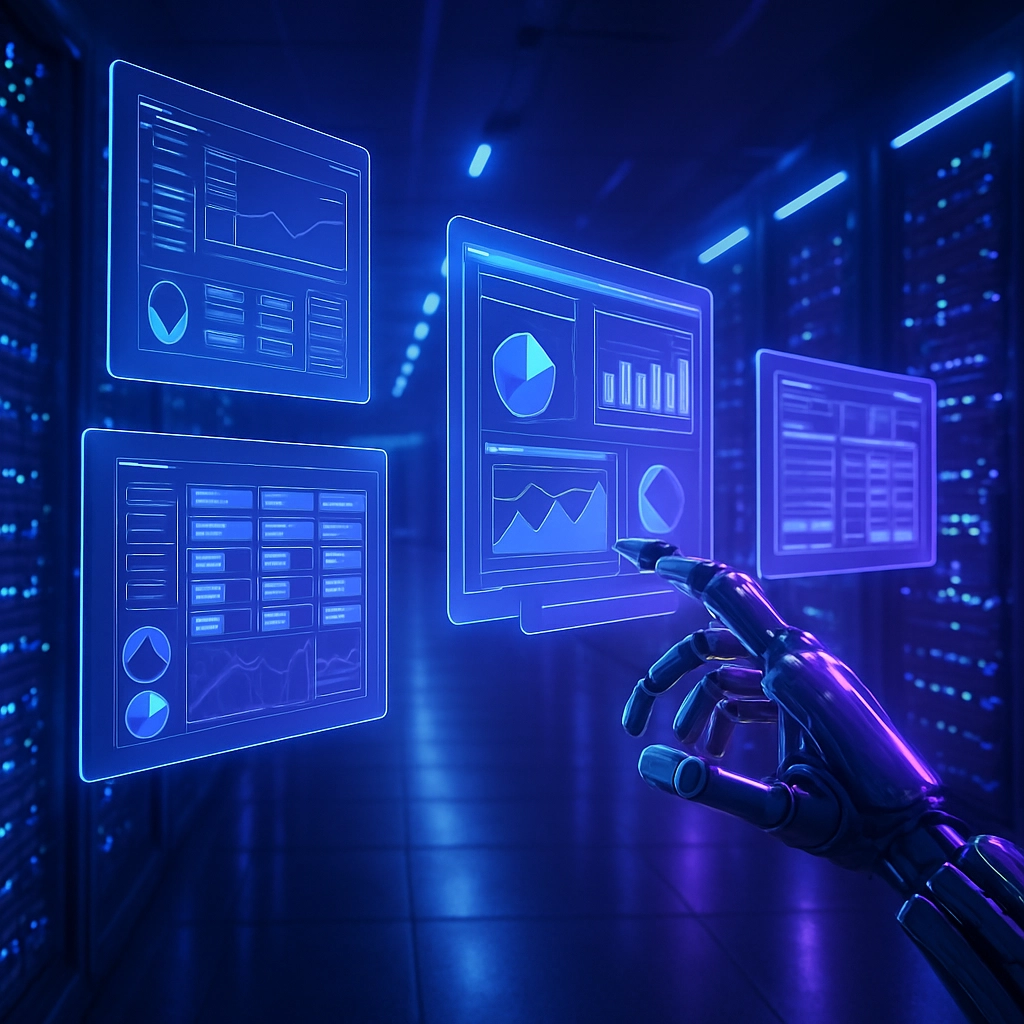
Section 2: The Architecture Behind OpenClaw
How Does It Work?
OpenClaw is built on a modular architecture that combines several AI components. The first is a vision encoder that processes screenshots or video feeds of a GUI, identifying buttons, text fields, menus, and other interactive elements. This is paired with a language model that understands the context—reading on-screen text, interpreting instructions, and planning the next action. Finally, a policy network decides the optimal sequence of mouse movements, clicks, and keyboard inputs to achieve the goal. NVIDIA’s blog highlights that this entire stack is trained end-to-end using simulation and real-world data, achieving human-level accuracy on complex tasks.
Deep Explanation: Training Approach
Training OpenClaw agents involves two key phases. First, they undergo imitation learning where they observe thousands of human demonstrations of common tasks—filling out forms, extracting data, navigating multi-step workflows. Second, they use reinforcement learning in a simulated environment to refine their strategies, learning to recover from errors (e.g., a pop-up window appearing unexpectedly). The result is an agent that can generalize across unseen UIs and handle edge cases robustly.
Practical Application
In a healthcare setting, OpenClaw agents can automate patient record retrieval from multiple legacy hospital management systems. The agent logs into each system, navigates to the patient search screen, enters identifiers, extracts the record, and consolidates data into a standard format. It handles variations in system versions and screen layouts without human intervention, dramatically reducing administrative workload.
Section 3: Reshaping Business Operations
From IT to HR: Universal Applicability
OpenClaw Agents are not confined to IT departments. They can be deployed across every function of an organization: finance (reconciling invoices across software), human resources (onboarding new hires by filling multiple systems), customer service (extracting order details from chat logs and updating CRMs), and compliance (auditing transactions manually across secure but isolated systems). NVIDIA’s blog emphasizes that the key differentiator is the agent’s ability to work with any GUI—even those that are proprietary, obsolete, or lacking modern APIs.
Deep Explanation: Security and Governance
One major concern is security. OpenClaw agents interact with software as a human user would, meaning they can access sensitive data. To address this, NVIDIA’s framework includes guardrails such as action logging, behavior monitoring, and approval workflows for sensitive operations. For example, before an agent executes a financial transaction, it can be configured to request human approval. All actions are recorded to provide audit trails, ensuring compliance with regulations like GDPR or HIPAA.
Real-World Example
A large retailer uses OpenClaw to manage inventory across its e-commerce platform, warehouse management system (WMS), and point-of-sale (POS) system. When a new product arrives at the warehouse, the agent updates the WMS, adjusts availability on the website, and notifies the marketing team's dashboard. The entire process, which previously required multiple data entry clerks, now executes in seconds with near-zero errors.
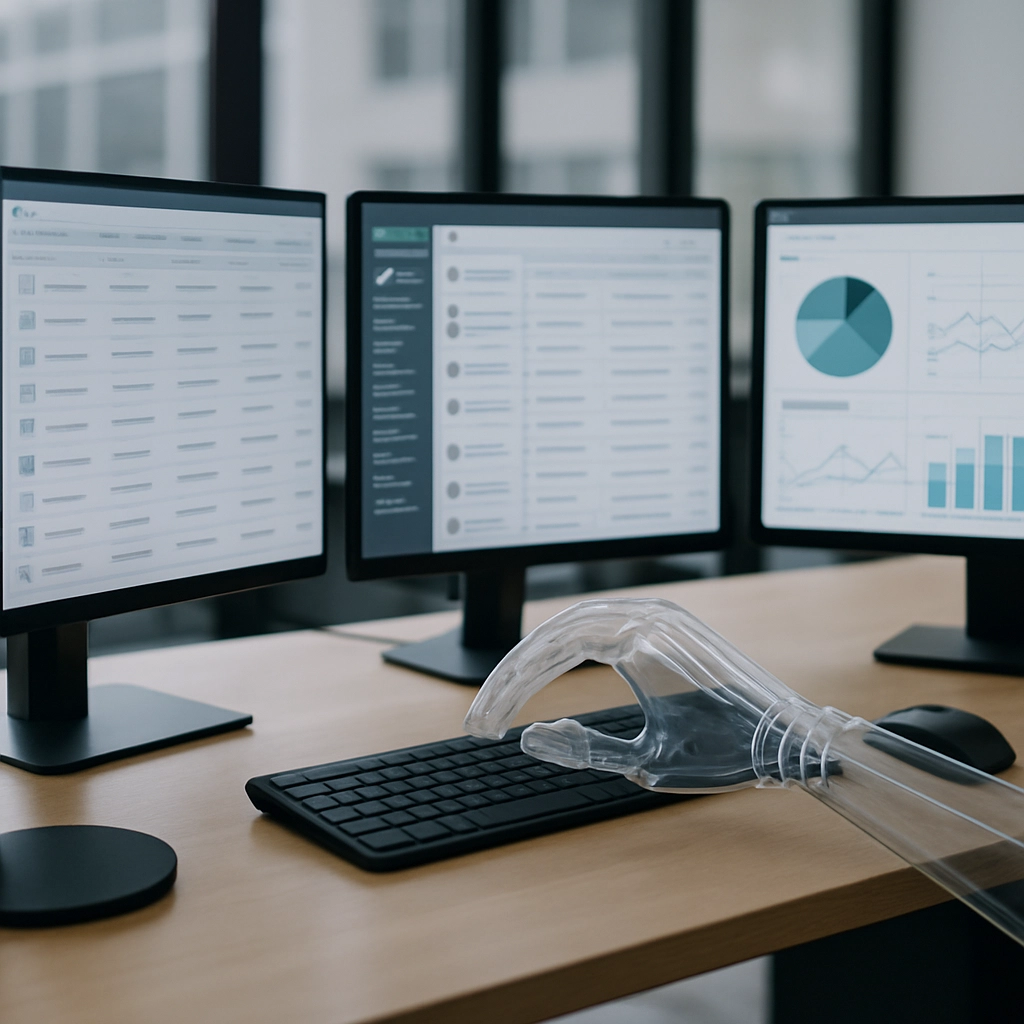
Section 4: Cost Efficiency and Scalability
Reducing Operational Costs
By eliminating the need for custom API integrations, OpenClaw slashes development and maintenance costs. NVIDIA’s blog notes that enterprises spend an average of 35% of their IT budget on integration and maintenance of legacy systems. OpenClaw can reduce this by up to 80%, as agent-based automations are non-invasive—they do not require changes to the existing software. Organizations can deploy agents on existing infrastructure via a lightweight container, scaling them horizontally as needed.
Deep Explanation: Scalable Automation
Traditional robotic process automation (RPA) platforms require each bot to be configured individually for each application. OpenClaw agents, however, can be pooled and shared. A single agent trained on one workflow can be duplicated to handle thousands of instances, each operating independently on different machines or virtual desktops. NVIDIA’s architecture supports orchestrating thousands of concurrent agents, handling load balancing and failure recovery automatically.
Practical Application
A financial services firm with 50 branch offices uses OpenClaw to automate monthly reconciliation of accounts across 10 different banking software packages. Previously, each branch had a staff member spending two days per month on this task. After deployment, a team of 20 virtual agents completes the reconciliation across all branches in under two hours, freeing human employees for higher-value analysis and client interaction.
Section 5: The Future of Work with OpenClaw
Human-Agent Collaboration
Rather than replacing workers, OpenClaw is designed to augment them. NVIDIA’s blog envisions a future where every employee has a personal AI agent that handles routine computer tasks, freeing them to focus on creative and strategic work. For example, a salesperson can ask their agent to “fetch the latest customer feedback from three different portals and prepare a summary” while they prepare for a client meeting. The agent works silently in the background, accessing the software on the user’s machine.
Deep Explanation: Continuous Learning
OpenClaw agents are not static. They employ continuous learning algorithms that allow them to improve over time. If an agent encounters a new interface version or an unexpected error, it logs the scenario, attempts to find a solution via trial and error, and if successful, updates its internal model. NVIDIA’s framework also supports federated learning, enabling agents across an organization to share learned behaviors without compromising sensitive data.
Real-World Example
A government agency uses OpenClaw to streamline citizen services. When a citizen submits an online application, the agent automatically checks data against multiple internal databases, verifies eligibility, and updates the status. The agent is constantly learning from new policy changes (e.g., a new form added) by observing human administrators handle the first few cases. Over six months, the agent’s accuracy and speed improved by 40%, handling 98% of cases autonomously.

Section 6: Getting Started with OpenClaw
How to Implement
NVIDIA provides a comprehensive developer toolkit for OpenClaw, including pre-trained base models, a Python SDK, and integration with its AI Enterprise platform. Organizations can start by identifying high-volume, repetitive GUI tasks that are currently performed by humans, such as data entry, report generation, or system navigations. The blog recommends a phased approach: first pilot with a single workflow, measure the improvement in speed and error rate, then scale to additional use cases.
Deep Explanation: Required Infrastructure
To run OpenClaw agents effectively, organizations need access to GPU-accelerated servers (on-premises or cloud) for training and inference. However, inference—the actual running of agents—can often be done on smaller, cost-efficient hardware. NVIDIA’s NGC catalog provides optimized containers and Helm charts for Kubernetes deployment. The blog states that even small teams with modest budgets can start with a single GPU workstation and expand as needed.
Practical Application
A mid-sized marketing agency deploys OpenClaw to automate the weekly process of pulling campaign performance data from Google Ads, Facebook Ads Manager, and their internal CRM. They start with a single agent running on a virtual machine with an NVIDIA T4 GPU. Within one month, the agent processes over 5,000 data points per week with zero errors, saving the analytics team 15 hours per week. The agency then scales to automate client reporting and keyword research.