
CIOs Are Enlisting Business Users to Vibe Code Their Own Apps: What, Why, and How?
What happens when the people who best understand business problems—the sales representatives, the supply chain managers, and the customer service agents—are given the keys to build their own software? Why are Chief Information Officers (CIOs) now actively recruiting these non-technical employees to create applications using revolutionary new tools? And perhaps most critically, how can organizations implement this shift safely and effectively without compromising security or data integrity? This article delves into the transformative trend of citizen development and the rise of low-code/no-code platforms, exploring a future where business users are not just passive consumers of technology but active creators of their digital destiny.
The Paradigm Shift: From IT Bottleneck to Business User Empowerment
For decades, the standard operating model for enterprise software development was rigidly clear: a business user identifies a need, submits a formal request to the IT department, and then waits. The wait could be weeks, months, or often, years. This traditional model created a massive bottleneck, with IT teams drowning in a sea of requests, struggling to prioritize projects, and often delivering solutions long after the original problem had evolved or become irrelevant. This backlog is a primary catalyst for the current shift.
The catalyst for change is the emergence of sophisticated low-code and no-code platforms. These visual development environments allow users to create applications by dragging and dropping logical components, configuring workflows, and connecting to existing data sources, all without writing a single line of traditional programming code. CIOs are now realizing that the people closest to the business pain points—the frontline workers—are best positioned to craft agile, tailored solutions. The role of the CIO is evolving from a gatekeeper of development to an enabler of innovation, a curator of tools, and a guardian of governance.
This paradigm shift is not about replacing IT. It is about augmenting it. By empowering business users (often called "citizen developers") to build simple, localized apps, IT can focus its scarce, highly skilled talent on complex, strategic, and enterprise-wide projects. This collaborative model promises to accelerate digital transformation, reduce shadow IT (where employees use unauthorized tools), and dramatically increase organizational agility.

What is 'Vibe Coding' and How Are Business Users Doing It?
The term 'vibe coding' has emerged to describe the informal, intuitive process by which non-technical users build applications. It is less about rigorous software engineering principles and more about reacting to a business need with speed and creativity. The tools enabling this are a new generation of low-code/no-code platforms such as Microsoft Power Apps, ServiceNow App Engine, and Mendix. These platforms provide a visual abstraction layer over complex programming logic.
A typical 'vibe coding' session involves a business user, say a marketing manager, who needs to automate the process of gathering feedback from a trade show. Instead of calling IT, they open a platform, select a pre-built template for 'Event Feedback Collection', customize it by adding specific questions from a dropdown menu, connect it to a SharePoint list where the data will live, and set up a simple approval workflow to send a summary to their boss. This entire process can be completed in a single afternoon, rather than a month.
Practical Application: Consider a global logistics company. A warehouse supervisor noticed that the manual process for tracking damaged goods was leading to significant delays. Using a low-code platform, she built a mobile app in two days. The app allowed floor workers to scan a barcode, take a photo of the damage, and automatically file a claim. This single app reduced damage reporting time by 80% and gave real-time visibility to the claims department. The CIO of the company described this as a "perfect example of edge computing and citizen development working in harmony."
The key enabler here is abstraction. The platform hides the database queries, the API calls, and the security protocols, presenting the user with simple, logical building blocks. This is not a trivial task; it requires powerful underlying architecture, but the result is a democratization of creation that was previously unimaginable.Why CIOs Are Championing the Citizen Developer Revolution
CIOs do not adopt new strategies on a whim. Their embrace of citizen developers is driven by hard-nosed business realities. Here are the primary reasons:

The Crucial Role of Governance
However, this empowerment does not come without guardrails. CIOs are not simply throwing the doors open and letting chaos reign. They are establishing robust governance frameworks. This typically involves:
A well-governed citizen development program is not about limiting creativity; it is about channeling it safely. As one article from CIO.com notes, the best programs offer a "clear path to production" with a built-in safety net, preventing the chaos of ungoverned shadow IT while harnessing the speed of citizen development.

Real-World Examples: Successes and Lessons Learned
The theory is compelling, but the proof is in the pudding. Several large organizations are already reaping the rewards of this approach.
Case Study 1: A Major Insurance Company. An underwriting analyst found a process for gathering policy renewal data was taking weeks. He used a low-code platform to build an app that extracted data from email forms, populated a central database, and automatically sent reminder emails. The process was cut to two days. The analyst said, "I felt like a genius, but the platform did all the heavy lifting."
Case Study 2: A Global Consulting Firm. The firm's CIO established an internal 'App Store' where citizen developers could submit their creations for limited use. One standout app was a timesheet entry tool built by a project manager, which connected to the firm's payroll system (under IT's careful guidance). It became so popular that it was officially adopted by the firm and eventually commercialized.
Lesson Learned: Beware of Spaghetti Logic. A well-known pitfall is that citizen developers, lacking formal training, can create apps with tangled, unmaintainable logic. For instance, an app might work perfectly in its pilot stage but break when data volume increases because the developer didn't understand database indexing. The lesson is that training and a strong code review process, even for low-code projects, is essential.
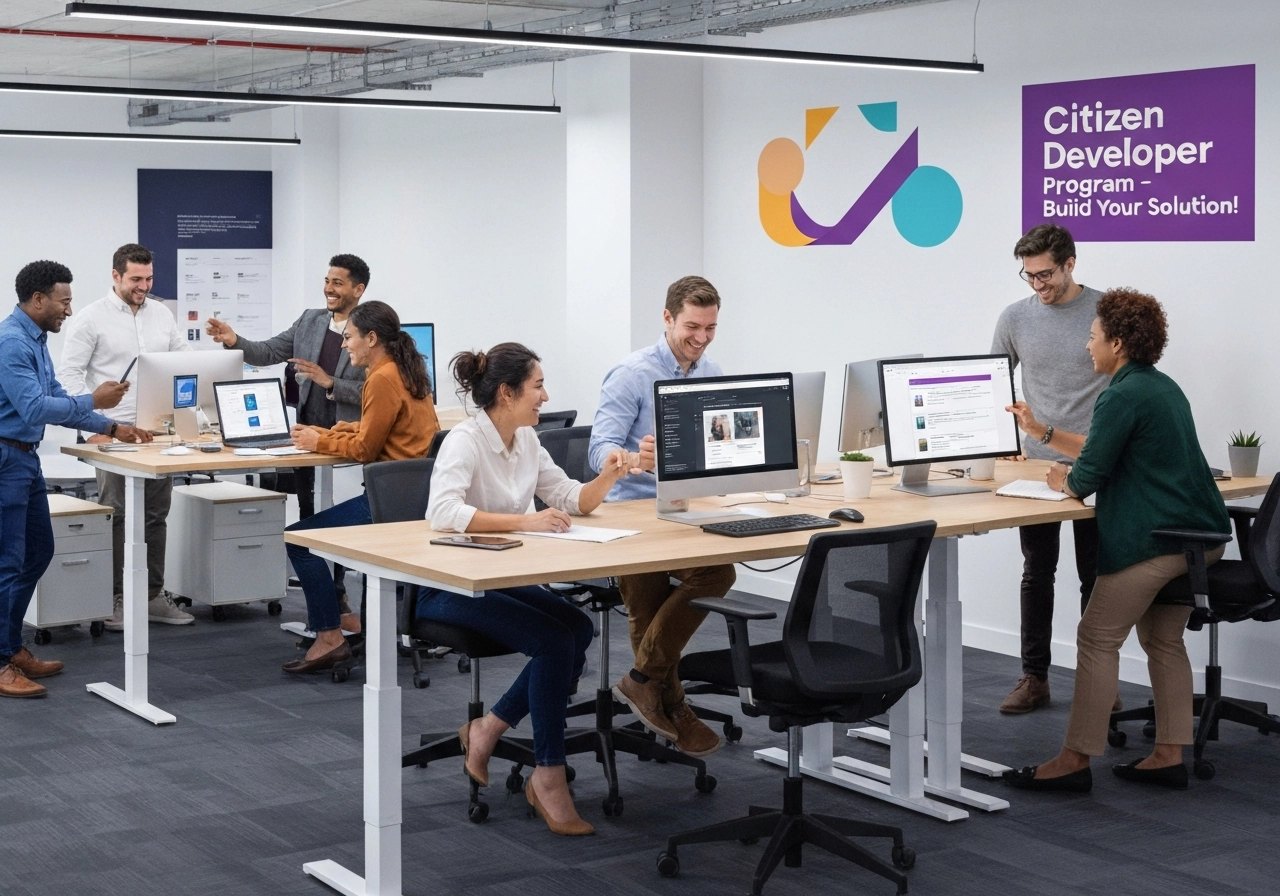
The Future of Work: CIO as the Architect of Digital Fluency
The role of a CIO is fundamentally changing. In the past, a CIO was primarily a technology manager, responsible for keeping the servers running and the networks secure. Today, and increasingly in the future, the CIO is an architect of digital fluency across the entire organization. This means fostering a culture where every employee, from the mailroom to the boardroom, has a basic understanding of how to leverage digital tools to do their job better.
The trend of business users coding their own apps is not a passing fad; it is a logical evolution of the digital workplace. Demographics are also driving this change. The incoming workforce (Gen Z) has never known a world without the internet and intuitive software. They expect to be able to customize their tools, just as they customize their phones. The modern CIO must meet them where they are.
The key takeaway is that the most successful digital transformations are not top-down, nor are they purely bottom-up. They are a symbiotic partnership between a forward-thinking IT department that provides the infrastructure, security, and platform, and empowered business users who bring the context, creativity, and drive. Vibe coding is the vehicle for this partnership. The CIO who masters this balance will lead their organization into a new era of agility, resilience, and innovation, turning every employee into a potential problem solver and co-creator of the company's digital future.
In conclusion, the question is no longer whether business users should be coding, but how we can best equip, enable, and guide them to do so safely and effectively. The answer, for forward-looking CIOs, is clearly yes.