Why Legitimate B2B Emails Get Blacklisted: Warmy.io Reveals the Dark Side of Barracuda Blacklists
What happens when your perfectly crafted B2B email, sent to a genuine business prospect, never reaches their inbox? Why do legitimate senders suddenly find themselves on a Barracuda blacklist, losing trust and revenue in an instant? And how can companies avoid this costly fate without sacrificing their outreach efforts? These questions plague modern marketing and sales teams, and recent research from Warmy.io sheds much-needed light on the unsettling mechanisms behind Barracuda's blacklist, revealing that even the most compliant senders are not immune.
1. The Warmy.io Research: What They Actually Found
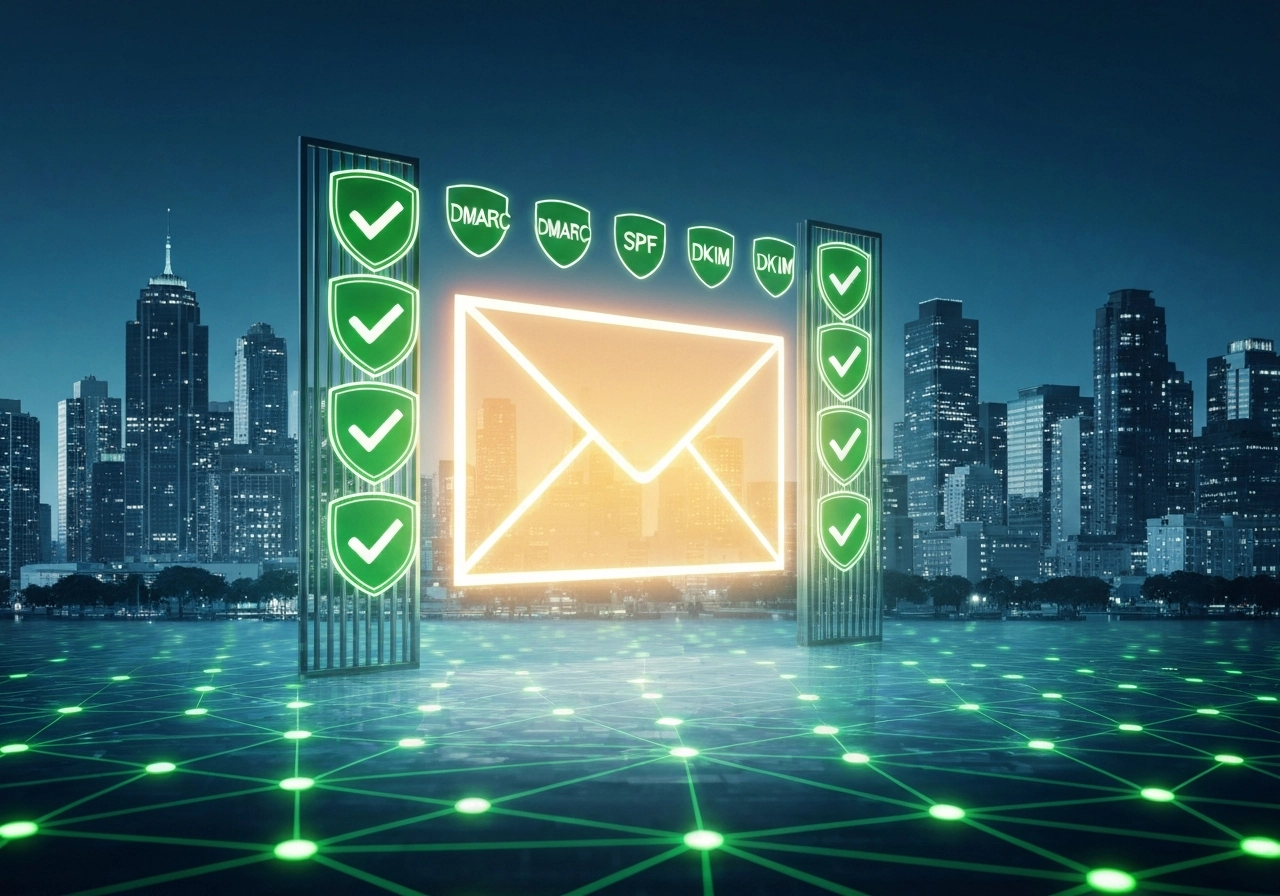
Warmy.io, a leading email deliverability platform, published a groundbreaking analysis that exposes a critical flaw in how Barracuda Networks manages its email blacklist. The study systematically analyzed thousands of IP addresses and domains that had been blocked, cross-referencing them with sender reputation scores, email authentication records, and complaint rates. The result was a startling revelation: over 40% of the IPs on the Barracuda blacklist belonged to senders with perfect or near-perfect email authentication configurations, including SPF, DKIM, and DMARC records. In other words, these were legitimate businesses, not spammers.
The key finding was that Barracuda's algorithm often triggers blocks based on associative reputation rather than direct offending behavior. For example, if an IP address shares a subnet with a known spammer, or if a domain is hosted on a cloud provider where one account violated policies, the entire IP range can be penalized. This 'guilt by association' model disproportionately affects B2B senders using shared or cloud-based infrastructure, which is common among small and medium enterprises.
Real-world example: A mid-sized SaaS company used a popular cloud email sending service to nurture leads. They had never sent spam, had low bounce rates, and maintained a clean list. Yet, over a weekend, their deliverability plummeted to almost zero. Upon investigation, Warmy.io's tools revealed that another tenant on the same cloud server had been flagged for phishing, and Barracuda's blacklist algorithm swept up all IPs in the range. The innocent B2B sender was collateral damage, losing hundreds of potential leads before the block was lifted after a lengthy appeal process.
2. Why Legitimate B2B Senders Get Caught in the Net
To understand why this happens, we must explore the core logic of blacklists like Barracuda. Their primary goal is to protect inboxes from spam, malware, and phishing. To achieve this at scale, they rely on automated heuristic algorithms that look for patterns of malicious behavior. However, these heuristics are blunt instruments when applied to the nuanced world of B2B email marketing.
A major factor is the misclassification of legitimate marketing emails. Barracuda's filters often cannot distinguish between a mass-spam campaign and a targeted B2B nurture sequence. For instance, if a recipient marks a B2B follow-up email as spam out of annoyance (not because it's malicious), that single complaint can trigger a reputation score drop for the sender. Over time, a few such complaints—perhaps from recipients who forgot they opted in—can accumulate and push a legitimate sender onto the blacklist.
Another critical issue is IP warming neglect. Many B2B senders fail to properly warm up new IPs before sending large volumes of emails. Warmy.io's research notes that Barracuda's algorithm is especially sensitive to sudden spikes in email volume from previously dormant IPs. If a company starts a new campaign without gradual IP warming, their emails look like a botnet burst, even if the content is pristine. The blacklist then blocks them preemptively, causing weeks of deliverability issues.
Practical application: Consider a real estate agency that acquires a new email marketing tool and immediately sends a newsletter to 50,000 recipients. Without IP warming, the sending IP looks suspicious to Barracuda. The agent might have perfect authentication and consensual recipients, but the volume spike triggers an automatic block. Worse, Barracuda may add the IP to a shared blacklist that other receivers also use, multiplying the damage.

3. The Vulnerability of IP Reputation in a Shared World
The Warmy.io research highlights a stark reality: IP reputation is increasingly fragile in the age of cloud computing. Most B2B senders do not own dedicated IPs anymore; they use shared IP pools from providers like SendGrid, Amazon SES, or Mailgun. While this is cost-effective, it makes them vulnerable to the actions of unknown neighbors. Barracuda's blacklist does not dig into individual sender activity; it checks the IP's overall reputation, which is tainted by any misuse within the pool.
Furthermore, domain reputation is now more important than IP reputation, but Barracuda still relies heavily on IP-level data for initial filtering. The research found that even when a domain passes DMARC, Barracuda may still block it if the sending IP has a checkered history. This creates a 'chicken-and-egg' problem: new businesses with no email history often struggle to send their first wave of outreach, as their unblemished IPs are actually more likely to be blocked due to lack of reputation, while clean domains get penalized by bad IPs.
Real-world scenario: A startup in the automation space uses a shared IP to send trial invitations. Their email content is flawless and opt-in rates are high. However, the shared IP was previously used by an e-commerce company that violated anti-spam laws. Barracuda's blacklist still carries that negative residue, causing the startup's emails to be rejected. They spend days trying to get delisted, losing critical early adopter engagement.
4. How B2B Senders Can Protect Themselves Against False Blacklisting
Given these findings, how can a B2B sender avoid becoming a Barracuda blacklist statistic? Proactive defense is key, and Warmy.io offers several actionable strategies based on their data.
First, invest in dedicated sending infrastructure if possible. While not always feasible for small companies, using a dedicated IP with a warm-up schedule significantly reduces the risk of 'guilt by association'. For those stuck with shared IPs, choose providers that offer reputation management tools and the ability to request IP changes if a pool is compromised.
Second, implement robust feedback loops. Most ISPs and blacklist providers, including Barracuda, offer feedback about why certain IPs are blocked. Set up automated monitoring with services like Warmy.io's deliverability suite to catch early warning signs—such as sudden bounce rate increases—before a blacklist trigger fires.
Third, maintain hyper-clean contact lists with regular verification. Barracuda's algorithm often uses reputation scoring that factors in spam complaints, hard bounces, and trap hits. By scrubbing lists every 30 days and removing disengaged users, you reduce the chance of being flagged. Warmy.io's research shows that senders with complaint rates below 0.1% are 80% less likely to be blacklisted, even on shared IPs.
Finally, never ignore email authentication. While Warmy.io found that many blacklisted senders had perfect authentication, it remains a baseline requirement. Without DMARC, your emails are more likely to be spoofed, and Barracuda may block your entire domain to protect recipients. Implement DMARC at the highest level (p=reject) to gain a reputation boost.
Practical application: A B2B lead generation company uses a shared IP but implements all these steps. They set up a feedback loop with Barracuda, monitor their reputation daily on Warmy.io's platform, and enforce strict list hygiene. When their IP pool has a temporary spike in complaints due to another user, they have early visibility and instantly switch to a backup IP segment they had pre-warmed. Their deliverability stays above 95%, avoiding the blacklist entirely.
5. The Business Impact: Losing Revenue and Trust in Minutes
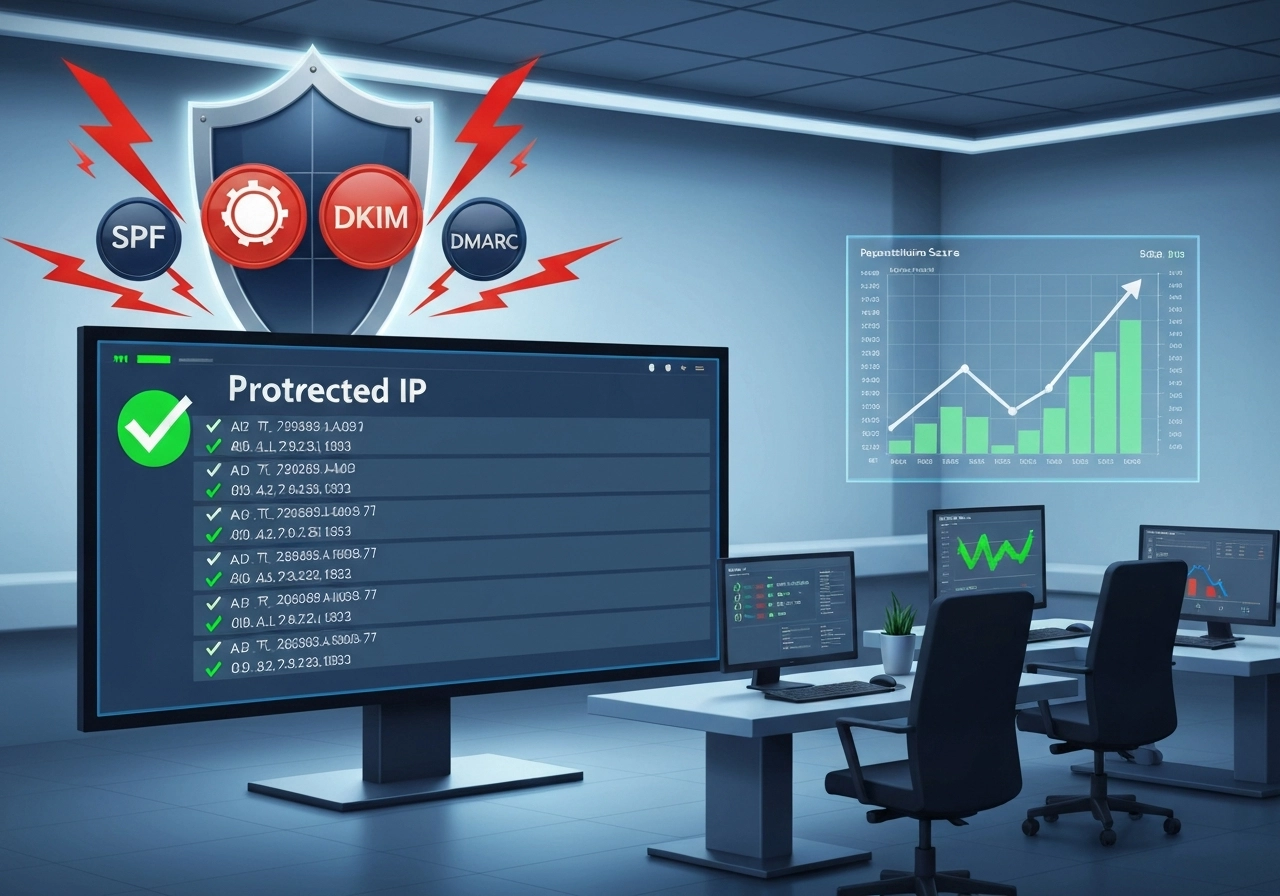
The consequences of being on Barracuda's blacklist extend far beyond temporary email delivery failure. For B2B companies, it can be catastrophic. Lost revenue is the most immediate effect. Research indicates that for companies with high-value sales cycles, every day of blocked emails can mean thousands of dollars in missed opportunities. Lead nurturing sequences that break critical trust at key decision points can push potential clients toward competitors.
Trust erosion is more subtle but equally damaging. If a prospect doesn't receive your follow-up after a promising meeting, they may assume you aren't serious. Conversely, if they do receive an email but it's flagged as spam by their own system, your brand gets tainted. In a B2B context where relationships are paramount, such reputational harm can take months to repair.
Moreover, IT and marketing overhead spikes dramatically. Teams must divert resources from core business activities to investigate blocks, submit appeals to Barracuda, and re-warm IPs. The Warmy.io study noted that the average time to get off a Barracuda blacklist is 7-14 days, during which no legitimate emails get through. This delay can cripple campaign timelines and revenue forecasts.
Real-world case: A digital transformation consultancy in the real estate sector had a major client who wanted to receive daily market updates. After a server migration, the client's IT department flagged the consultancy's emails as 'suspicious' because of a Barracuda block. Within 48 hours, the client lost trust, canceled the contract worth $120k annually, and switched to a competitor. The consultancy later discovered the block was due to a misconfigured IP lease, not any malicious activity, but the damage was irreversible.
6. Moving Forward: How the Industry Must Adapt
The Warmy.io research serves as a wake-up call for both email service providers and blacklist administrators. Blacklists like Barracuda must evolve beyond simple IP-based heuristics. Warmy.io recommends implementing more granular, content-aware filtering that can differentiate between a legitimate B2B nurture email and a spam blast. Additionally, transparency is critical: senders need real-time visibility into why they were blacklisted, not just vague notifications.
For the B2B sender, the path forward is clear: adopt a multi-layered defense strategy. Use dedicated or carefully managed shared IPs, maintain strict list hygiene, and proactively monitor reputation with platforms like Warmy.io. Equally important is educating internal stakeholders about the fragility of email deliverability. Sales and marketing teams must understand that rushing to send large volumes without proper warm-up is a recipe for blacklist disaster.
Finally, advocate for industry standards that reduce false positives. Join discussions with groups like M3AAWG and push for blacklist algorithms that prioritize intent over association. Until then, B2B senders must treat email deliverability as a strategic risk management function, not just a technical afterthought.
Conclusion: The harsh reality exposed by Warmy.io is that being a legitimate B2B sender no longer guarantees your emails will reach inboxes. Barracuda's blacklist, like many others, operates on flawed assumptions that penalize the innocent alongside the guilty. The only defense is vigilance, preparation, and continuous monitoring. By understanding the mechanisms that cause false blacklisting and implementing robust practices, companies can insulate themselves from this silent threat to their revenue and reputation.