
The Ultimate Cloud Gaming Revolution: What, Why, and How of GeForce NOW’s Thursday Drop with 007: First Light and the Ultimate Bundle
Imagine being able to play the most graphically demanding PC games on a mediocre laptop, a tablet, or even a smartphone, without compromising on visual fidelity or performance. What makes this possible? Why is Nvidia’s GeForce NOW service becoming the go-to platform for millions of gamers worldwide? And how does the latest ‘GeForce NOW Thursday’ update, featuring the nostalgic classic ‘007: First Light’ and the exclusive Ultimate Bundle, fit into this larger picture of digital transformation? The cloud gaming landscape is shifting rapidly, and with each Thursday announcement—dubbed ‘GeForce NOW Thursday’—Nvidia is not just adding games; it is redefining access, performance, and value. This week, the spotlight falls on a beloved Bond title reborn and a compelling membership offer that is turning casual players into devoted subscribers. Let’s dive deep into what this update means for you, the industry, and the future of gaming.
What exactly is happening? Every Thursday, Nvidia updates its cloud gaming library with new titles, offering instant access to a growing catalog. This week, the highlight is the arrival of ‘007: First Light’, a classic first-person shooter that returns to the service after a period of absence. But the bigger story is the Ultimate Bundle, a limited-time promotion that packages several high-value benefits to entice new subscribers. Why does this matter? Because it signals a strategic move to compete directly with other cloud platforms like Xbox Cloud Gaming and PlayStation Plus Premium by focusing on performance, exclusivity, and sheer value. How does it work? Through Nvidia’s powerful RTX server technology, which streams the game in real-time to any compatible device. Let’s break this all down.
Section 1: The Return of a Spy Classic – ‘007: First Light’ and Its Significance
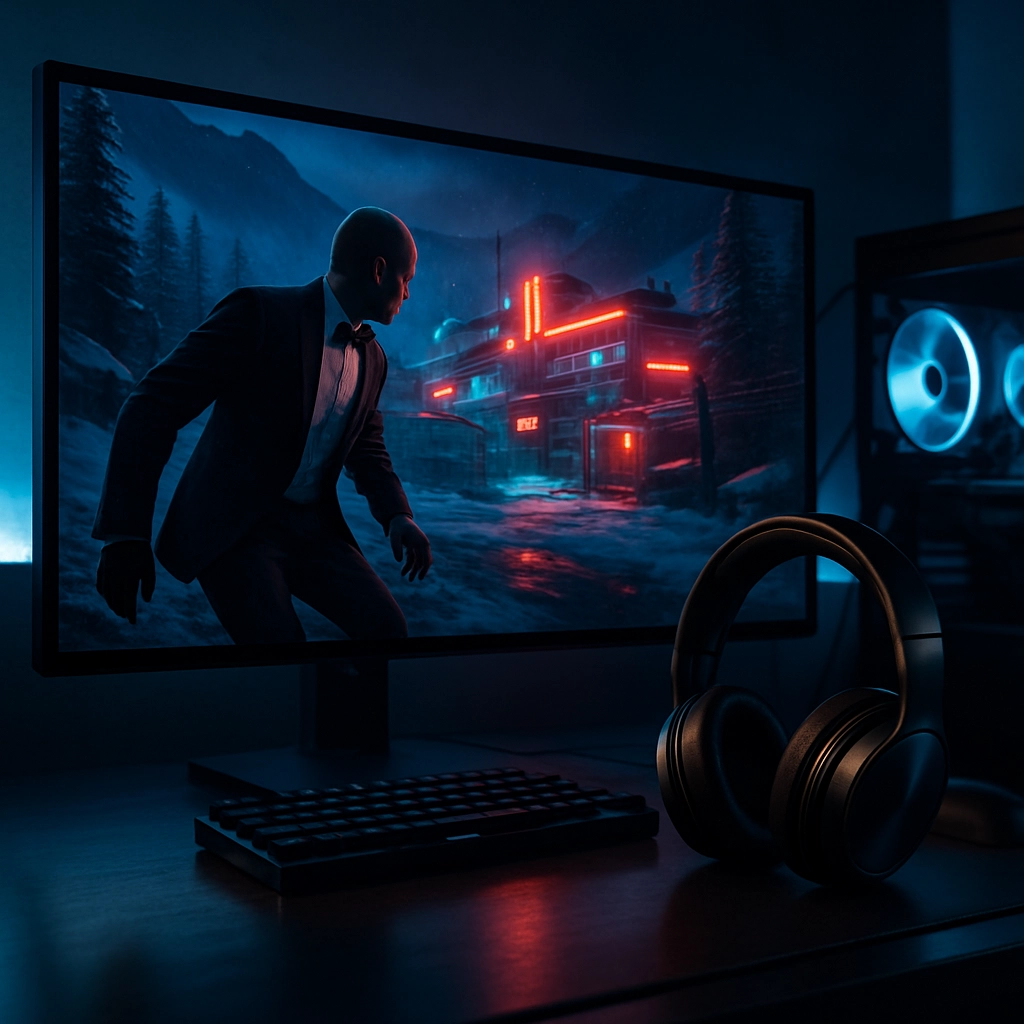
For many gamers, the name ‘007: First Light’ evokes a specific era of first-person shooters from the mid-2000s. Developed by Raven Software and originally released in 2006, the game explores the origin story of James Bond, taking players on a globetrotting adventure from Siberia to Shanghai. Its return to GeForce NOW is not merely a nostalgic wink; it is a strategic library expansion that targets a mature audience. Cloud gaming thrives on variety, and classic titles often have deep emotional pull, drawing in older demographics who may have missed the game or want to replay it without hardware constraints.
The practical application here is simple: accessibility. A player who owns a low-end Chromebook or an iPad can now enjoy a historically significant Bond title with ray-tracing-like visual improvements thanks to Nvidia’s streaming tech. This is a real-world example of how cloud gaming solves the ‘back catalog problem.’ You don’t need an expensive PC; you just need a stable internet connection and a subscription. The inclusion of ‘First Light’ in the Ultimate Bundle effectively transforms a legacy product into a modern, playable asset—a win for both rights holders and players.
Moreover, this highlights Nvidia’s approach to content curation. They are not just adding the latest AAA blockbusters; they are reviving classics that hold unique value. For example, imagine a father who wants to show his child the Bond games he grew up with. Without GeForce NOW, that would require digging out an old console or emulator. With it, it’s a few clicks away. This deepens the platform’s emotional connection with its user base.
Section 2: The Ultimate Bundle – Deconstructing the Value Proposition
Nvidia’s Ultimate Bundle for GeForce NOW is more than a simple discount; it’s a calculated offer designed to convert trial users into long-term subscribers. The bundle typically includes a free month of the Priority or Ultimate membership (depending on the promotion), exclusive in-game items, and sometimes even a game code. This week, the bundle is tied specifically to ‘007: First Light,’ offering a unique skin or early access to certain content. Why is this effective? Because it removes the biggest barrier to cloud gaming adoption: hesitation.
Many potential users are skeptical about latency, image quality, or the commitment of a monthly fee. A bundle like this provides a low-risk, high-reward entry point. To see this in action, consider a college student who only has a weak laptop. The Ultimate Bundle gives them access to RTX 4080-class performance for an entire month for free—enough time to fully test the service on demanding titles like ‘Cyberpunk 2077’ or ‘Baldur’s Gate 3.’ The result is a retention rate that is far higher than standard free trials because the bundle adds tangible value beyond just time; it includes digital goods that feed into the player’s identity.
This ties directly into digital transformation in the gaming industry. The old model of selling a physical disc is dying. Instead, the value is shifting to subscriptions and service packages. Nvidia’s Ultimate Bundle is a perfect example of this new paradigm—where the transaction is about access and experience, not hardware ownership.
Section 3: The Technical Backbone – How GeForce NOW Delivers High-End Performance
But let’s answer the ‘how’ behind the magic. GeForce NOW doesn’t rely on your local device’s GPU. Instead, the game runs on Nvidia’s powerful RTX servers in data centers across the globe. The server renders each frame, compresses it using advanced codecs like AV1, and streams it to your screen. Your input (mouse clicks, keystrokes) is sent back to the server with near-zero latency. This technology is evolving rapidly. With the Ultimate tier, subscribers get access to Nvidia’s supercomputer-class GPUs (like the RTX 4080 Super) that enable ray tracing and DLSS 3.5, the AI-powered upscaling technology that boosts frame rates while maintaining image quality.
A real-world demonstration is clear: compare playing ‘Alan Wake 2’ on a standard laptop versus via GeForce NOW Ultimate. The laptop may struggle to achieve 30 FPS at low settings, with visible aliasing and muddy textures. On GeForce NOW, the same laptop can stream the game at 4K resolution, 120 FPS, with full ray tracing enabled. This is not hyperbole; it is what the technology promises. For professionals, such as architects or content creators who game on the side, this also means they don’t need to invest in a second machine—their work laptop becomes a gaming rig on demand.
Section 4: The Intersection of Cloud Gaming and Digital Transformation
This weekly ritual of ‘GeForce NOW Thursday’ is not just about gaming; it’s a textbook case of digital transformation in the entertainment sector. For decades, gaming hardware was a linear path: you buy a console or PC, use it for 5–6 years, then buy a new one. Cloud gaming breaks this cycle entirely. The hardware becomes a service, and the consumer’s device becomes a dumb terminal. This is similar to the shift from owning DVD collections to subscribing to Netflix, but for gaming.
The business AI component here is subtle but crucial. Nvidia uses machine learning algorithms to predict network conditions and dynamically adjust bitrate and resolution to prevent stuttering. The AI also powers DLSS (Deep Learning Super Sampling) which reconstructs images to look like they were rendered at a higher resolution. Without these AI technologies, the latency would be unacceptable. For example, imagine playing a fast-paced multiplayer shooter like ‘Fortnite’ via cloud. The AI inside GeForce NOW predicts your next movement and loads textures preemptively, reducing the chance of lag. This is a direct application of AI to solve a real-world problem—network instability—that most users face.
Furthermore, this digital transformation extends to how games are purchased and managed. The GeForce NOW platform integrates with your existing storefronts (Steam, Epic Games Store, Ubisoft Connect). This means you don’t buy games on GeForce NOW; you use it as a cloud launcher for games you already own. This respects user investment in digital libraries while providing a superior streaming service—a smart hybrid model.
Section 5: Practical Implications for Gamers and the Industry
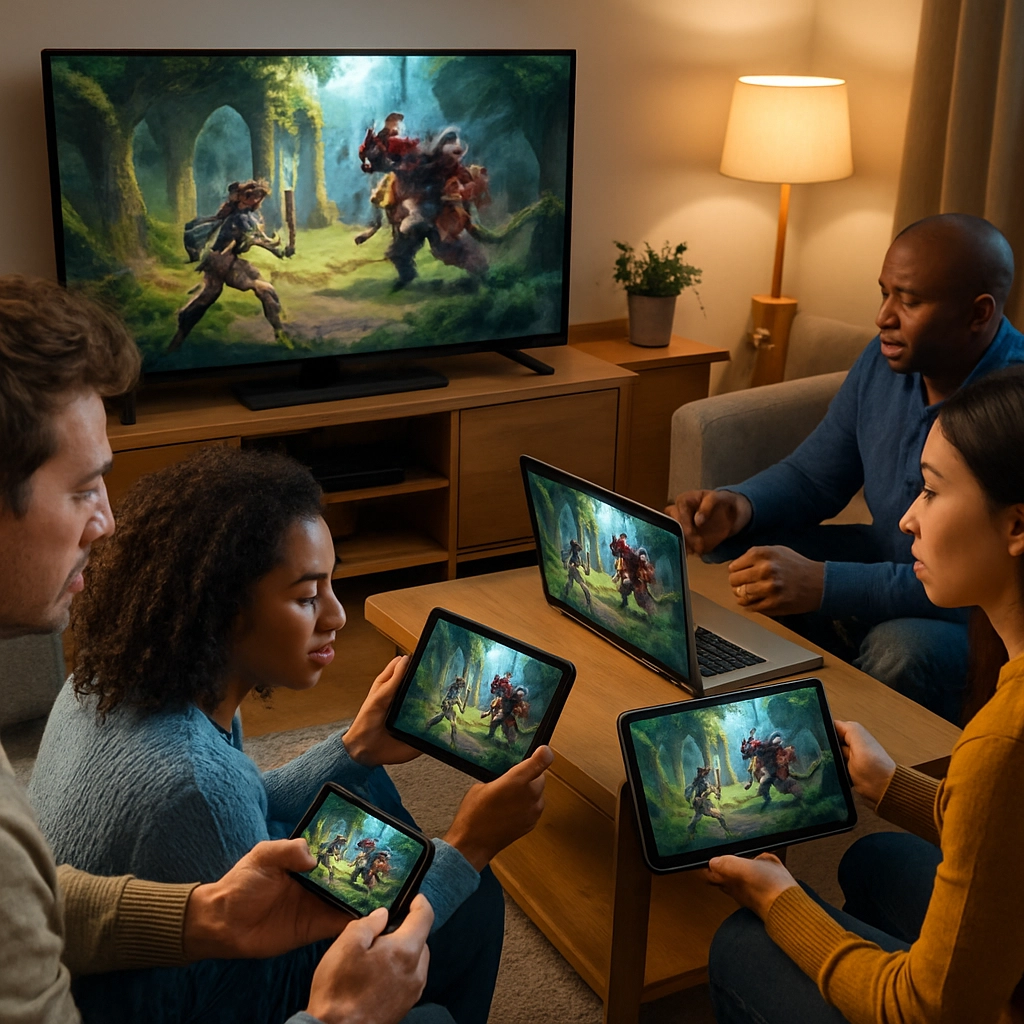
So what does this mean for you, the gamer? First, it means you can future-proof your gaming habits. You no longer need to worry about hardware upgrades every few years. A subscription to GeForce NOW Ultimate keeps you on the cutting edge for a fixed monthly fee. Second, the portability factor is immense. You can start a game on your desktop, continue on your tablet during a commute, and finish on your TV via a Shield device, all seamlessly.
For the industry, the model provides publishers with a direct-to-consumer distribution channel that bypasses physical retail and even console platform holder fees. This can increase profit margins for developers. A practical example: a small indie studio publishing a new title can reach GeForce NOW’s millions of subscribers instantly, even if the game is not optimized for low-end hardware. The service acts as a leveler, allowing great gameplay to shine regardless of the player’s device.
Section 6: The Future of GeForce NOW Thursday and the Ultimate Bundle Model
Looking ahead, the pattern of ‘GeForce NOW Thursday’ is likely to become a core marketing rhythm, similar to how Netflix drops new content on specific days. The Ultimate Bundle will probably evolve into a more personalized offer, perhaps leveraging AI to recommend games included in the bundle based on individual play history. We can also anticipate deeper integration with automation—for instance, automatic game launching when you start a session, or AI-generated playlists that queue games based on your mood.
The business model is also a harbinger for other industries. As digital transformation reshapes everything from real estate (virtual walkthroughs) to education (cloud-rendered 3D models), the same server-side rendering technology that powers GeForce NOW could be repurposed. Imagine viewing a high-fidelity 3D model of a house via a cloud service, or a medical student practicing surgery on a cloud-streamed simulation. The Ultimate Bundle philosophy—offering premium access with a trial—could become a standard template for B2B and B2C cloud services.
In conclusion, this week’s GeForce NOW Thursday update is far more than a game drop. It’s a statement about value, performance, and the accelerating shift toward a service-based gaming economy. Whether you are drawn by the nostalgia of 007: First Light or the sheer power of the Ultimate Bundle, the takeaway is clear: cloud gaming is no longer the future—it’s the present, and it’s being delivered every Thursday.